



The Climate of the Annapurna
Why is the Annapurna Circuit Trek Popular in Nepal? Annapurna Trekking is famous for its beautiful views and Nepal’s cultural heritage. It offers a different taste of the Annapurna trek. Before you book your Annapurna tour, why is the Annapurna trek so popular among trekkers? Some of the primary reasons why the Annapurna trek is famous are as follows:
14 Days Annapurna Circuit Trek
The Climate of the Annapurna Why Annapurna Circuit Trek is Popular in Nepal Flora and Fauna Area of Interest Activities in Annapurna…
Why Annapurna Circuit Trek is Popular in Nepal
The Annapurna Conservation Area, located north and west of Nepal, is the country’s largest protected area. Within the boundaries lies the famous Annapurna One (8091m). It forms the watershed for rivers such as the Kali Gandaki, Seti, and Marshyangdi. The area is globally recognized with various prestigious awards, such as the Deutscher Rieseburo-Verband Award for Tourism and Environment, the Tourism for Tomorrow-Asia Pacific, UNESCO’s Global 500, and many more.

The Climate of the Annapurna
The area has two distinct climate regions. The cis-Himalayan region in the south receives annual precipitation of 3000mm, and the trans -Himalayan region in the North gets less than 500mm. The area near Pokhara receives the heaviest rainfall in the country. The best time for trekking is September to December and spring, February to May. The mountains receive less rain, especially in the rain-shadow areas north of the Annapurna and Dhaulagiri ranges. These areas are arid year-round.
Flora and Fauna
The area has a habitat gradient from sub-tropical sal forest to perennial snow, harboring 28 ecosystems. Species include sal, schema, and Castanopsis in the lower belt; oak, laurel, blue pine, cypress, spruce, and fir in the middle belt; and birch, rhododendron, caragana, and other alpine scrubs in the higher belt. So far, researchers have recorded only 456 vascular plants here, including 38 orchid species and nine rhododendron species.
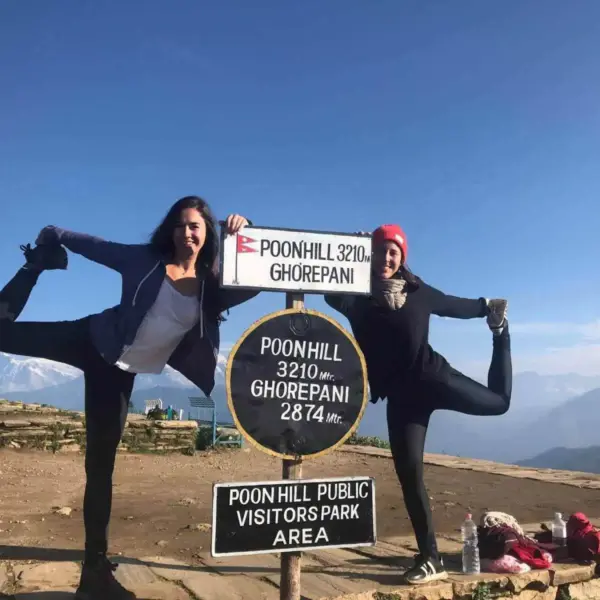
4 Days Ghorepani Poon Hill Trek
The Climate of the Annapurna Why Annapurna Circuit Trek is Popular in Nepal Flora and Fauna Area of Interest Activities in Annapurna…
The reserve is home to 101 mammals, 478 species of birds,41 species of reptiles, and 23 types of amphibians. Symbolic mammal species include the snow leopard, musk deer, Tibetan argali, Tibetan wolf, wild ass, and Tibetan antelope. Bird species found there include the golden eagle, demoiselle crane, and pheasant.
Area of Interest
The landscape comprises mountain peaks, alpine pastures, trans-Himalayan valleys, forests, lakes, glaciers, rivers, caves, and cultivated lands. Along with Annapurna, one of the peaks in the Annapurna range, the virgin peak of Machhapuchhre (6993m) stands majestically in the area. The area offers fascinating trekking routes. The 14-day Annapurna Circuit Trek takes visitors around the Annapurna range, giving them an unforgettable experience of the cis-Himalayan ecosystem. It also takes visitors across Thorung La Pass(5416m).
Along the route, strategic viewpoints like the popular Poonhill above Ghorepani offer trekkers a fascinating panoramic view of the Annapurna and Dhaulagiri ranges to the North. Many trekking routes offer unique viewpoints with stunning views of the Himalayan Peaks. You can reach Machhapuchhre Base Camp in 3 to 4 days from Ghadruk, and Annapurna Sanctuary Base Camp is 3 hr from Machhapuchhre Base Camp. Several hot springs are in the area, such as Tatopani along the trek from Poonhill down to Jomsom or Besisahar via Thorung-La to Muktinath, then by bus, 5 hr to Tatopani. And another at Jhinu towards Chhomrong.
The hot water springs are excellent places to relax and bathe after a challenging trek. The Kali Gandaki River flows through the world’s deepest gorge, Dana, from Jomsom to Tatopani and Tilicho (4919m), one of the world’s highest lakes. Another high-altitude lake, Damodar Kund (4890m), is believed to be a source of the Kali Gandaki River.
The area includes numerous settlements and enclaves inhabited by over 140000 people representing ten ethnic groups (Tibetan-Burman: Gurung, Thakali, Bhotia; ethnic Tibetan and Magar; and Indo-Aryan: Brahmin, Kshatriya, Kami, Damaged, Sarki). The more culturally rich areas lie to the North at Kagbeni, where you can explore Upper Mustang, the once-forbidden kingdom. Or trek toward the Muktinath (nirvana god)temple, the Hindu pilgrimage site at 3850m from sea level. A great example of religious tolerance is that a Hindu temple and a Buddhist monastery stand side by side, with the monastery providing care for Buddhist pilgrims after the Thorung La pass.
Activities in Annapurna
With a guide, visitors can choose activities based on their level of adventure and interest, including trekking, cultural programs, wildlife/birdwatching, village visits, mountain biking (popular on the Upper Mustang route), pony rides, etc.
Annapurna Trek Access
The nearest town for the circuit trek is Besisahar, some 175 km west. It is well connected by road, about a 7 to 8 hr bus ride. Visitors can hire a private car for a 6- to 7 hr drive if there is no traffic, and the next day they can reserve a private jeep for a 5-hour off-road ride to Dharapani, then start the trek. For Annapurna Base Camp, the nearest town is Pokhara, 178 km from Kathmandu, well connected by air and road, depending on visitors’ choice.
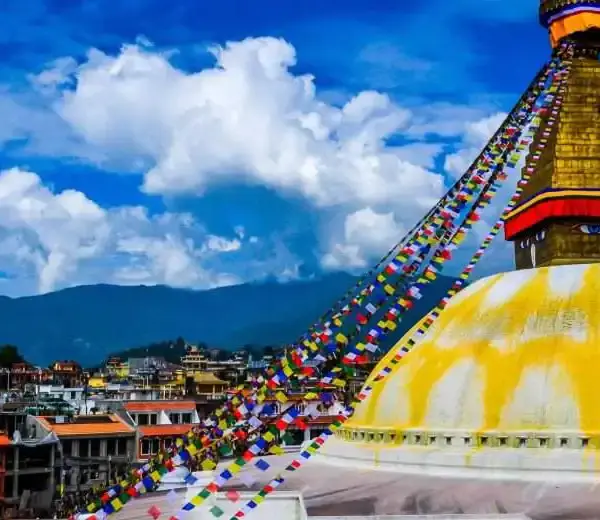
The Climate of the Annapurna Why Annapurna Circuit Trek is Popular in Nepal Flora and Fauna Area of Interest Activities in Annapurna…
If visitors want to fly, the bus takes 7 to 8 hr, and the flight takes 22 minutes. You can reach Naya Pool or Phedi by bus/taxi from Pokhara to start the Annapurna Base Camp trek: 1 hour 30 minutes to Naya Pool and 45 minutes to Phedi. For Upper Mustang, access is by road from Pokhara to Jomsom (8 to 9 hr or by air (25 minutes, or via the Kagbeni gateway to Upper Mustang or Lo Manthang, the Kingdom of the F, then continue to the forbidden.
The Annapurna trek is one of the best adventures for trekking, culture, Wildlife, Birdwatching, Village visits, and Upper Mustang biking.