



Is minic a cheanglaíonn formhór na ndaoine an turas go Campa Bonn Everest le Deireadh Fómhair agus Samhain, nuair a bhíonn na cosáin gnóthach agus na tithe tae lán le siúlóirí ó gach cearn den domhan. Idir mí na Nollag agus mí Feabhra, glacann an Khumbu carachtar go hiomlán difriúil, agus is minic a thagann na siúlóirí a roghnaíonn siúl sna míonna sin ar ais ag rá gurbh é an rud ba luachmhaire a rinne siad sna sléibhte.
Winter on this route is quieter, sharper, and more demanding than any other season. Based on our firsthand experience on My Everest Trip, winter reveals a quieter and more rewarding side of the Everest Base Camp trail. On clear winter mornings, the dry mountain air offers exceptionally clear views and makes the surrounding peaks look remarkably sharp.
Bíonn costais taistil níos ísle sa gheimhreadh i gcoitinne, agus le níos lú siúlóirí ar an gcosán, is minic a bhíonn níos mó ama ag úinéirí tithe tae chun seirbhís phearsanta a thabhairt. Is minic a thugann an turas sa gheimhreadh mothú níos láidre éachta mar go mbíonn an taithí níos ciúine agus níos déine.
Clúdaíonn an treoir seo an turas go Campa Bonn Everest sa gheimhreadh go mion. Gheobhaidh tú léargas soiléir ar shábháilteacht turas geimhridh EBC, cad a dhéanann airde do do chorp i ndálaí fuara, liosta pacála praiticiúil, miondealú réadúil ar an mbuiséad do 2026 go 2027, agus plean ullmhúcháin fhisiciúil a thugann an bunús is fearr is féidir duit sula dtosaíonn tú ar an gcosán.
Súil ghéar ar an Siúlóid Geimhridh i gCampa Bonn Everest
Seo forbhreathnú tagartha tapa sula dtéimid isteach sna sonraí.
| Mír | Mionsonraí |
| Fad an tSiúil | 12 go 14 Days |
| Na Míonna Geimhridh is Fearr | Nollaig, Eanáir, Feabhra |
| Airde Uasta | 5,545m (Cala Patthar) |
| Airde Champa Bonn Everest | 5,364m |
| Teocht i rith an lae | 5°C go -5°C |
| Teocht na hOíche | -10 ° C go -25 ° C. |
| Leibhéal Deacrachtaí | Dúshlánach |
| Costas Meán | USD 1,200 go USD 2,500+ |
| Lóistín | Tithe Tae |
| Riachtanas Treorach | Molta go hArd |
Cén Fáth a Roghnaíonn Roinnt Siúlóirí Séasúr an Gheimhridh
Tá buntáistí fíor ag baint le siúlóidí sa gheimhreadh agus is fiú iad a lua go beacht sula labhraímid faoi na dúshláin.
Is iad na cosáin shuaimhneacha príomhchúis a roghnaíonn go leor siúlóirí an geimhreadh. I mí Dheireadh Fómhair agus mhí na Samhna, bogann an cosán idir Lukla agus Namche Bazaar ar luas cosáin an-ghnóthach, agus na céadta siúlóir ag dul trí na seicphointí agus na lóistín céanna ar an sceideal laethúil céanna. I mí Eanáir, b'fhéidir go siúlfá ar feadh uair an chloig gan grúpa eile a fheiceáil. Beidh dhá nó trí bhord eile á n-áitiú ag an teach tae i Dingboche áit a suíonn tú don lón seachas fiche. Beidh an radharcphointe ag Kala Patthar agat le seasamh air gan scuaine. I gcás siúlóirí a bhfuil atmaisféar an tséasúir bhuaic rómhór dóibh, is é seo amháin a thugann údar maith don fhuacht.
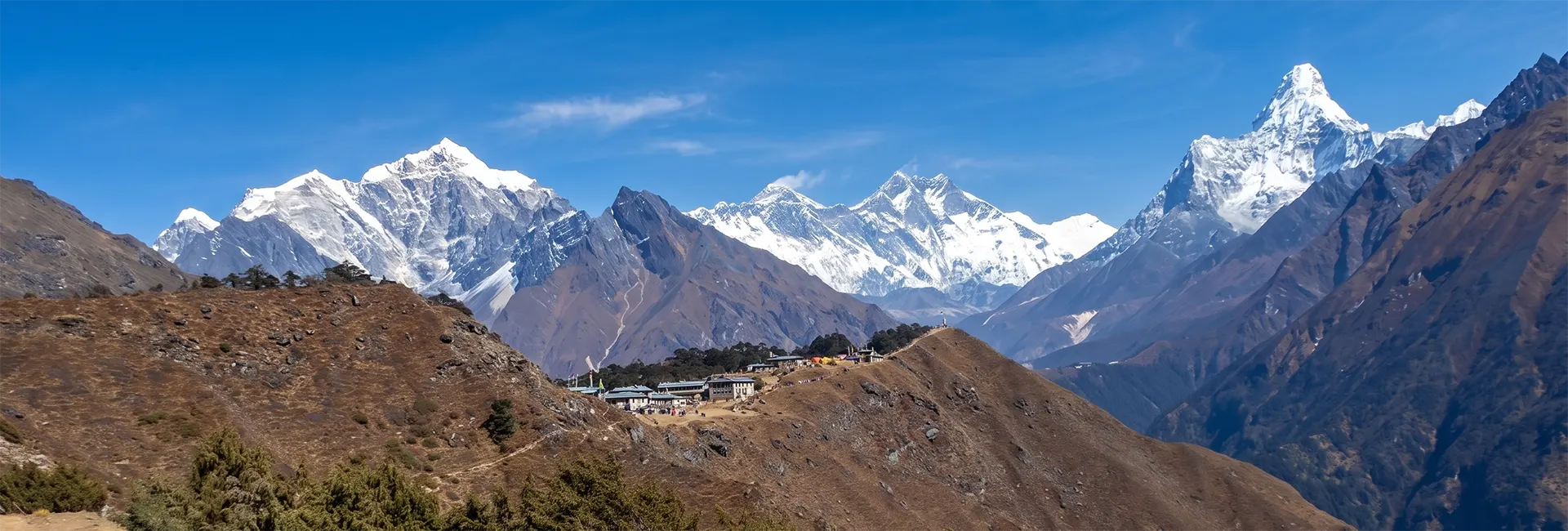
Is minic a bhíonn an radharc sléibhe ar fheabhas i rith an gheimhridh mar go dtugann an t-aer fuar tirim soiléireacht eisceachtúil ar laethanta geala. Ní bhíonn mórán taise san aer fuar tirim ag airde, agus bíonn dath gorm domhain géar ar an spéir ar maidin gheimhridh shoiléir os cionn Namche nó Tengboche a ghlacann go hálainn le grianghraif agus a fhágann go bhfuil cuma an-ghar ar gach buaic i bhfad i gcéin.
Lower travel costs are another advantage of winter trekking. Accommodation, guide services, and some trekking packages are often cheaper than during peak seasons, making winter a good option for budget-conscious trekkers.
Siúlóid 12 lá i gCampa Bonn Everest
Ceanglaíonn formhór na ndaoine an turas go Campa Bonn Everest le Deireadh Fómhair agus Samhain, nuair a bhíonn na cosáin gnóthach agus na tithe tae lán le…
Sábháilteacht ar Thuras Geimhridh EBC: Measúnú Réalaíoch
You need to understand EBC winter trek safety clearly before you commit to this season. Winter risks differ from other times of year, and some are far more serious. This section gives you an honest picture of each one.
The cold is the biggest challenge, and it deserves the most attention. On the lower sections of the trail, between Lukla and Namche, winter daytime temperatures are uncomfortable but manageable. Above 4,000 meters, particularly above Dingboche, altitude and temperature begin to matter in a different way.
I Lobuche agus Gorak Shep i mí Eanáir, bíonn an teocht i rith an lae idir 5°C agus -5°C de ghnáth, ag brath ar an ngrian agus ar an ngaoth. Is minic a thiteann an teocht san oíche faoi bhun -20°C, agus is féidir le gaotha láidre mothú i bhfad níos fuaire a dhéanamh. Tar éis luí na gréine, titeann siad níos faide fós, ag sroicheadh fiche nó níos ísle go minic agus an fhuacht gaoithe san áireamh. Sna coinníollacha seo, ní hamháin míchompord atá i gceist le héadaí neamhleora. Is féidir leis a bheith ina ábhar imní sábháilteachta tromchúiseach.
Ice on the trail above Namche is a consistent feature in winter. Sections of the path that are shaded by cliffs or north-facing slopes stay frozen for much of the day and become slippery underfoot. The trail between Lobuche and Gorak Shep, and the early morning climb to Kala Patthar, both have sections that require careful footing. Microspike attachments for your trekking boots are worth carrying from Dingboche onward. A fall on frozen ground at altitude is something you should not risk when it is so easily prevented.
Flight reliability at Lukla is more variable in winter than in autumn. Cold morning air, low cloud, and occasional fog can close the airport for a day or two at a stretch. This is not unusual, and experienced operators plan around it, but you’ll need to build buffer days into your Kathmandu stay at both ends of the trek.
Daylight hours in December and January are the shortest of the year. Many walking stages that feel relaxed on long autumn days require earlier starts in winter to reach the next guesthouse before dark. Your guide will manage the daily schedule, but pre-dawn starts are a regular part of the winter routine above Dingboche.
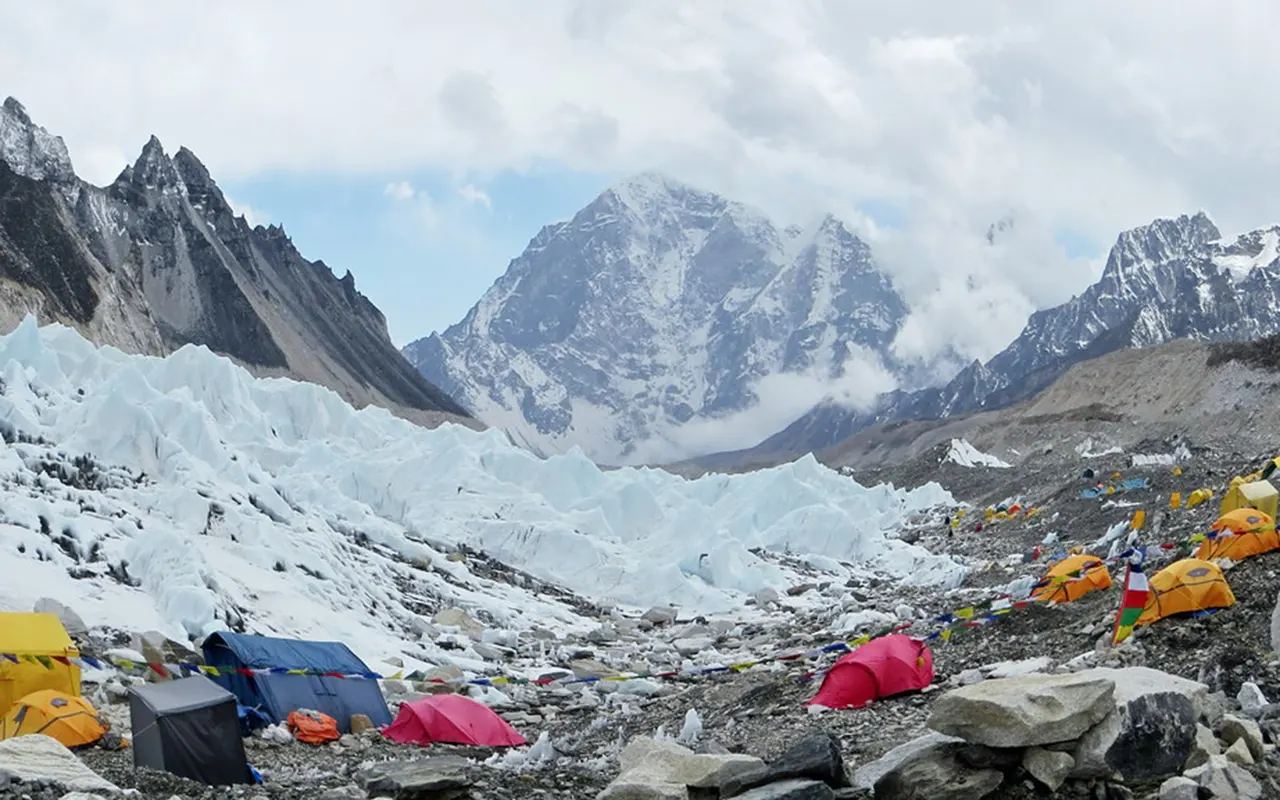
Cad a Dhéanann Airde do do Chorp sa Gheimhreadh
Is í an airde an phríomhábhar sláinte i gcónaí ar shiúlóid chuig Campa Bonn Everest sa gheimhreadh, agus cuireann an fuacht sraith castachta leis an gcaoi a bhfreagraíonn an corp agus is fiú í a thuiscint i gceart.
Os cionn 3,000 méadar, titeann an brú aeir agus laghdaíonn an ocsaigin atá ar fáil. Tarraingíonn do scamhóga an méid céanna aeir isteach ach baintear níos lú ocsaigine amach le gach anáil.
Cold temperatures compound this stress in a specific way. Your body has to cope with two challenges at once: staying warm while adapting to lower oxygen levels. Energy is consumed faster than in warm weather, appetite often decreases at altitude, and early symptoms of altitude adjustment can appear more quickly in cold conditions than in spring or autumn.
Acute Mountain Sickness (AMS) occurs in definable stages. Mild AMS is characterized by a headache within 24 hours of exposure to high altitude associated with fatigue, loss of appetite, and sleep disturbance. Moderate AMS is characterized by a headache that doesn’t go away with analgesics, nausea, and a significant decrease in energy and coordination. Severe AMS can progress to high-altitude pulmonary edema, which affects the lungs, or High-Altitude Cerebral Edema, which affects the brain. Both are life-threatening without immediate descent.
The prevention approach for altitude sickness on the winter route is the same as in any season, but requires stricter adherence because the body is already under thermal stress. Take the acclimatization days at Namche Bazaar and Dingboche without cutting them short. Use the rest days for short upward hikes, then return to sleep at the lower altitude.
Ól trí nó ceithre lítear uisce gach lá ó Namche ar aghaidh, fiú mura bhfuil tart ort, mar is minic a laghdaíonn aimsir fhuar do mhothú tart. Méadaíonn díhiodráitiú an baol tinneas airde agus tuirse, mar sin lean ort ag ól uisce go rialta i rith an lae mar aon le deochanna te.
Seachain alcól, a fhéadann an corp a dhíhiodráitiú agus comharthaí luatha tinnis airde a cheilt. Siúil ar luas mall, seasta agus labhair le do dhochtúir roimh imeacht faoi cibé an bhfuil Diamox oiriúnach do do chás.
Leideanna maidir le Siúlóidí Geimhridh i Neipeal: Cleachtais Sábháilteachta Laethúla
Beyond altitude management, these winter trekking Nepal tips cover the practical daily decisions that shape EBC winter trek safety on the ground.
Hiring an experienced licensed guide is one of the best decisions you can make for a winter trek. Your knowledgeable guide, familiar with the Khumbu region, will update you daily on the weather, help you on icy or snow-covered trails, communicate with teahouse owners about accommodation availability, and coordinate emergency assistance if needed.
Although trekking regulations in Nepal have changed in recent years, independent trekking policies can vary by region. Regardless of the latest rules, having a licensed guide during winter greatly improves both safety and the overall trekking experience.
Winter weather is generally more stable than the pre-monsoon period, but high-altitude conditions shift faster than most trekkers expect. A sudden drop in wind, unusual cloud formation around the high peaks, or an unexpected afternoon temperature change are all worth noting and discussing with your guide before deciding about the following day.
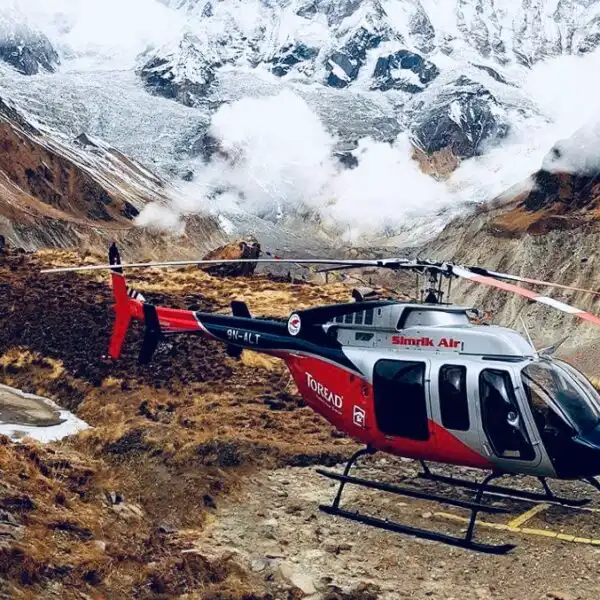
Tá sé simplí ach tábhachtach an próiseas aslonnaithe éigeandála a thuiscint sula mbíonn gá leis. Tá tarrtháil héileacaptair ar fáil ar fud réigiún Khumbu agus úsáidtear go rialta í. Caithfidh d’árachas taistil aslonnú héileacaptair ó airde a chlúdach go sainráite. Bíodh uimhreacha teagmhála éigeandála do sholáthraí árachais agus do ghníomhaireachta siúlóide agat i gcónaí, ní hamháin i do ghuthán. Draenálann cadhnraí níos tapúla i ndálaí fuara, agus níl fón a fhaigheann bás ag Lobuche úsáideach in éigeandáil.
Is nós geimhridh é tosú go moch gach lá a dhéanann difríocht shuntasach. Is é lár na maidine an chuid is cobhsaí agus is teo de lá geimhridh sa Khumbu. Má fhágann tú do theach tae faoi sheacht nó seacht a tríocha a chlog, beidh tú ag an gcéad cheann scríbe eile i bhfad sula n-imíonn an solas agus sula dtiteann an teocht go géar go déanach san iarnóin. Is féidir teacht ar theach aíochta tar éis dorchadas i ndálaí cúig chéim déag faoi bhun an lae a sheachaint le smacht ag tús an lae.
Liosta Pacála Geimhridh Iomlán
Ní rogha é an trealamh ceart a fháil le haghaidh siúlóide i gCampa Bonn Everest sa gheimhreadh. Is ionann na míreanna thíos agus an caighdeán íosta le haghaidh eispéireas sábháilte agus réasúnta compordach.
Proper layering is essential in winter. Start with moisture-wicking thermal base layers for the upper and lower body. Merino wool is particularly effective because it manages moisture, resists odor over multiple days, and retains warmth even when damp. Over the base layer, add a warm fleece or softshell jacket as your main insulation for walking. Your outer layer needs to be a fully waterproof and windproof shell jacket with matching trousers. A down jacket rated to at least minus fifteen degrees Celsius is the most important single item in your clothing kit and should be treated as non-negotiable for the upper sections of the route.
Winter accessories require more thought than in other seasons. Insulated gloves with thin liner gloves underneath give you flexibility when you need dexterity for camera buttons or trail snacks without exposing your hands to the cold for long. A wool or fleece hat that covers your ears fully is necessary from Namche upward. A balaclava or thick neck gaiter is useful for the pre-dawn starts above Dingboche. High-quality UV-protective sunglasses are essential because reflections off snow at altitude can increase UV exposure and damage eyesight within a few hours. High-SPF sunscreen is equally important for the same reason.
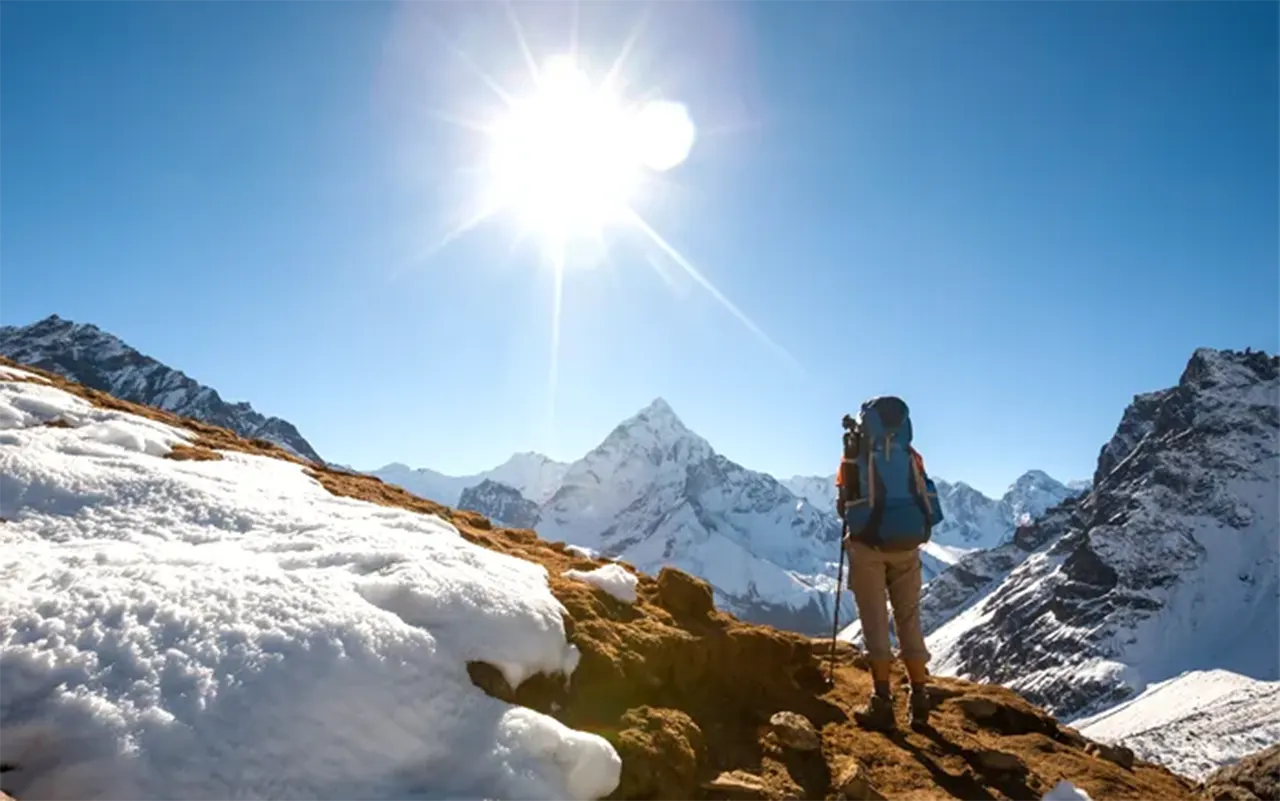
Footwear for the winter route needs to be both insulated and waterproof. Waterproof trekking boots with good ankle support suit most winter trekkers when paired with warm wool socks. Insulated winter trekking boots can make higher elevation hiking more comfortable if you’re especially sensitive to the cold. Gaiters keep snow out of your boots, and microspikes add traction on icy trail sections. Make sure your boots are fully broken in before your trek begins.
Is é mála codlata atá rátáilte go dtí lúide fiche céim Celsius an caighdeán molta le haghaidh oícheanta geimhridh ag Lobuche agus Gorak Shep . Cuireann líneáil mála codlata dhá go ceithre chéim de theas breise leis agus soláthraíonn sé ciseal sláinteachais idir tú féin agus leapachas tithe tae. Soláthraíonn tithe tae pluideanna, ach bíonn a dtiús agus a riocht éagsúil go mór, agus baintear an éiginnteacht as do mhála codlata féin.
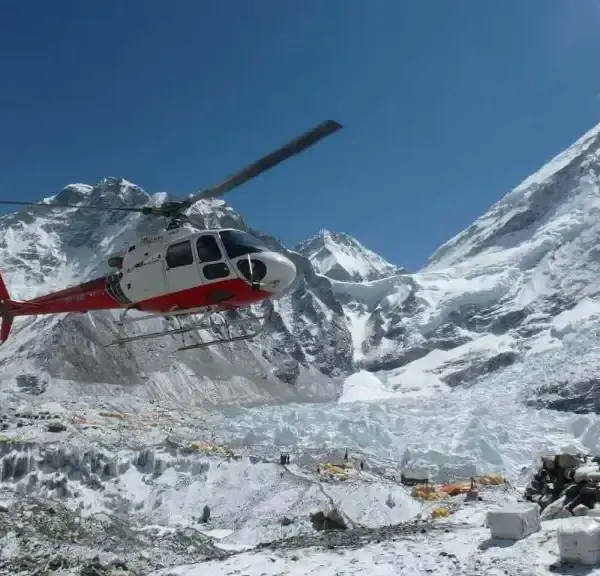
Eitiltí Héileacaptair Gorakshep go Kathmandu
Ceanglaíonn formhór na ndaoine an turas go Campa Bonn Everest le Deireadh Fómhair agus Samhain, nuair a bhíonn na cosáin gnóthach agus na tithe tae lán le…
For electronics, carry a power bank with enough capacity for several days between reliable charging stops. A headlamp with spare batteries is important for pre-dawn starts, and keep the spare batteries warm in an inner pocket rather than in your bag, where they may lose charge overnight. A pulse oximeter is an optional but useful item for monitoring your blood oxygen saturation during the trek. While it should never replace professional medical advice or your guide’s judgment, it can provide additional information as you gain altitude.
Laghdaíonn teochtaí fuara feidhmíocht na ceallraí i bhfad níos tapúla ná mar a bhíonn súil ag formhór na siúlóirí. Coinnigh do ghuthán, ceallraí ceamara, banc cumhachta agus gléasanna leictreonacha eile taobh istigh de do mhála codlata nó i bpóca istigh seaicéid thar oíche chun cabhrú leo a muirear a chaomhnú. Is féidir leis an nós simplí seo difríocht shuntasach a dhéanamh, go háirithe le linn na n-oícheanta is fuaire ag airde níos airde.
Miondealú Costais ar Thuras Geimhridh i gCampa Bonn Everest 2026 go 2027
Winter is the most affordable season for most cost categories on the Everest Base Camp trek. Here is a realistic and detailed breakdown.
Permits are fixed by the government and do not change with season. The Sagarmatha National Park entry permit costs approximately NPR 3,000 per person, which works out to around USD 22. The Khumbu Pasang Lhamu Rural Municipality trekking permit costs about NPR 2,000, or about USD 15. Both are straightforward to obtain, and your trekking agency can handle them as part of a package.
De ghnáth, cosnaíonn eitiltí fillte idir Kathmandu (nó Ramechhap le linn tréimhsí gnóthacha) agus Lukla USD 440 go USD 560 in aghaidh an duine, ag brath ar an aerlíne, an séasúr agus infhaighteacht. De ghnáth, cosnaíonn suíocháin chomhroinnte héileacaptair idir Kathmandu agus Lukla USD 500 go USD 700 in aghaidh an duine, ag brath ar infhaighteacht. Tá cairtfhostaithe héileacaptair príobháideacha ar fáil freisin agus de ghnáth cosnaíonn siad USD 2,500 nó níos mó don aerárthach ar fad.
Guide and porter costs vary with experience and the arrangement you choose. A licensed local guide costs between USD 25 and USD 35 per day. A porter who carries your main bag costs between USD 18 and USD 25 per day. A guide-porter who handles both roles costs between USD 30 and USD 40 per day and is a practical option for trekkers who want to keep group size and cost manageable. Always book through a registered agency and confirm that your guide and porter carry appropriate insurance and personal gear.
Éiríonn cóiríocht i dteach tae beagán níos costasaí de réir mar a théann tú suas san airde, cé go mbíonn rátaí an gheimhridh níos ísle go minic ná le linn buaicshéasúir na siúlóide. De ghnáth cosnaíonn seomraí idir
USD 5 and USD 15 per night. Some teahouses offer a free or discounted room if you eat your meals there. At higher elevations, rooms are generally unheated, so a warm sleeping bag is essential for a comfortable night.
Le linn na seachtainí is fuaire den gheimhreadh, d’fhéadfadh píopaí uisce agus sconnaí ag airde níos airde reo thar oíche. Is annamh a bhíonn cithfholcadáin the os cionn Dingboche agus ní bhíonn siad ar fáil i gcónaí. Is féidir le héadaí fliucha agus trealamh beag sláinteachais phearsanta a bheith i bhfad níos éasca fanacht compordach le linn chuid uachtarach an turais.
Food and drink on the trail cost between USD 20 and USD 35 per day depending on your choices and your elevation. Hot drinks are both a comfort and a necessity in winter, and they cost more as you climb. A cup of tea at Gorak Shep runs USD 3 to USD 5. Charging devices at teahouses above Namche costs USD 2 to USD 5 per charge and adds up over fourteen days.
Ní féidir árachas taistil a chaibidliú don turas seo ag am ar bith den bhliain, agus go háirithe sa gheimhreadh nuair a bhíonn rioscaí aslonnaithe níos airde. De ghnáth, cosnaíonn polasaí a chlúdaíonn siúlóid ard-airde suas le 6,000 méadar agus aslonnú héileacaptair idir USD 80 agus USD 200 ag brath ar do náisiúntacht, d'aois agus do sholáthraí. Socraigh agus ceannaigh é seo sula bhfágann tú an baile.
Total budget estimates vary significantly with travel style. A budget-conscious trekker using a guide-porter arrangement and basic teahouses can complete the fourteen-day trek for between USD 1,200 and USD 1,600 including permits, flights, food, and daily costs. A standard trekker with a separate guide and porter, mid-range accommodation choices, and some equipment rental will spend between USD 1,800 and USD 2,500. A comfort-focused trekker using better-equipped lodges and a private guide arrangement should budget USD 2,500 and above.
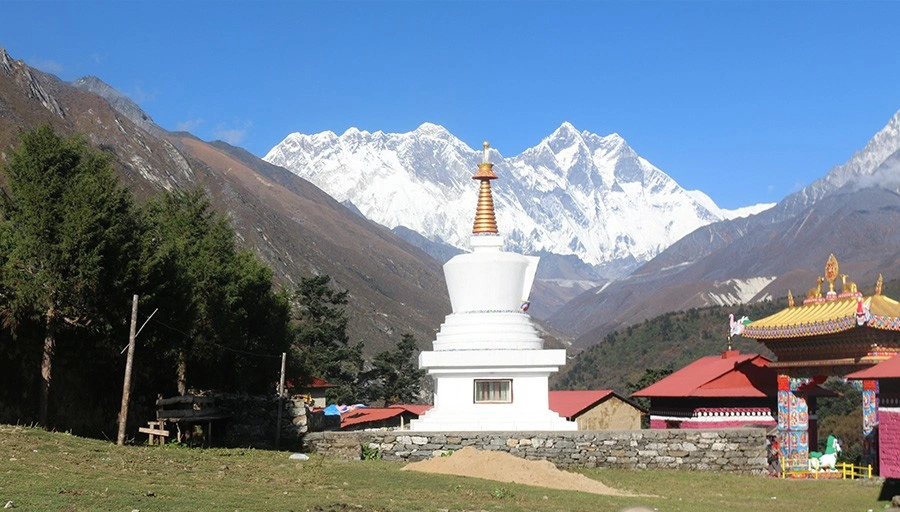
Ullmhúchán Fisiciúil agus Meabhrach
The Everest Base Camp trek in winter asks more of your body than the same route in warmer conditions. Cold increases the energy cost of every hour on the trail, and the combination of altitude and low temperature means accumulated fatigue arrives sooner than it would in autumn.
The most useful physical training for this trek is long-distance hiking on hilly terrain with a loaded daypack. This mirrors the route’s demands more closely than any gym exercise. In the first two months, build to three-hour hikes three to four times per week with a pack of around six to eight kilograms. In the final two months, push your weekend hikes to five to seven hours with a fully loaded pack and as much elevation gain as your local terrain allows. Supplement this with strength training focused on quads, glutes, and core, as these muscle groups take the most load on the long descent days.
Tá an t-ullmhúchán meabhrach chomh tábhachtach céanna le folláine choirp. Bíonn maidineacha fuara, aimsir athraitheach, agus laethanta fada ar an gcosán i gceist le siúlóid geimhridh. Má ghlacann tú leis na dúshláin seo sula dtosaíonn tú, cabhraíonn sé leat fanacht dearfach agus taitneamh a bhaint as an taithí fiú nuair a bhíonn na coinníollacha deacair.
Maidir le cibé an féidir le tosaitheoirí an turas EBC a dhéanamh sa gheimhreadh, éilíonn an freagra cúram. Ní hé an chéad taithí airde ard is oiriúnaí é. Tugann siúlóid roimhe seo ag airde measartha sléibhte Himiléacha, fiú ag 3,000 go 4,000 méadar ar bhealach níos giorra, tagairt úsáideach duit maidir le conas a fhreagraíonn do chorp d’airde agus don fhuacht. É sin ráite, tá tosaitheoirí spreagtha a rinne ullmhúchán fisiciúil tromchúiseach agus a thaistealaíonn le treoraí taithí acu tar éis an bealach geimhridh a chríochnú go rathúil. Is é an rud is tábhachtaí ná gan é a mheas faoina luach.
Geimhreadh vs Earrach vs Fómhar: Comparáid Dhíreach
Déanann an tábla thíos achoimre ar na príomhfhachtóirí thar na trí phríomhshéasúr siúlóide ar bhealach EBC.
| Fachtóir | gheimhridh | Earrach | Fómhair |
| Sluaite | An-íseal | Ard- | An-ard |
| Aimsir | Fuar, Cobhsaí | Dea | Fearr |
| tuairimí | Excellent | Dea | Excellent |
| Costas | Is ísle | Ard- | Airde |
| deacracht | Níos deacra | Measartha | Measartha |
Winter is the right choice for experienced trekkers who prioritize solitude, clear mountain photography, and lower costs over the comfort of warmer conditions. It is not well suited to people who are sensitive to cold, have respiratory conditions, or are attempting high-altitude trekking for the first time without prior experience. Spring and autumn remain the more forgiving and better-supported seasons for those new to Himalayan trekking.
Botúin le Seachaint ar Thuras EBC Geimhridh
Is iad na botúin is féidir a sheachaint is cúis leis an gcuid is mó de na deacrachtaí ar an mbealach geimhridh. Is fiú a bheith ar an eolas faoi na botúin seo sula dtéann tú.
Underestimating the temperature gap between Kathmandu and the upper Khumbu is the mistake most commonly made by first-time winter trekkers. The difference between a pleasant Kathmandu afternoon in December and Gorak Shep at midnight in January is around thirty degrees Celsius. Packing gear that works for autumn conditions and assuming it will be enough in winter creates real problems above Dingboche.
Is contúirtí laethanta oiriúnaithe a scipeáil sa gheimhreadh chun am a shábháil ná in aon séasúr eile. Tá an corp ag caitheamh fuinnimh bhreise cheana féin ar rialáil theirmeach, rud a laghdaíonn na hacmhainní atá ar fáil le haghaidh coigeartú airde. Is iad na laethanta scíthe ag Namche agus Dingboche an tréimhse ina ndéanann do chorp an obair oiriúnaithe. Gearrann deireadh leis an bpróiseas sin agus méadaíonn sé an dóchúlacht go mbeidh fadhbanna a bhaineann le hairde sna codanna uachtaracha.
Ignoring early AMS symptoms because motivation is running high is a pattern that ends many winter treks poorly. A headache at Lobuche that worsens overnight rather than improving signals that your body is not coping with the altitude at that stage. Telling your guide, resting an extra day, or descending to a lower altitude are all reasonable responses. Pushing on in the hope that things will improve at a higher elevation is not a reasonable response and has led to serious outcomes for trekkers on this route.
Ignoring changing weather conditions is another avoidable mistake. Winter weather is generally more settled than during the monsoon or pre-monsoon season, but you can still encounter heavy snowfall or strong winds that can affect trail conditions and travel plans. Staying flexible and following your guide’s advice will help you make safer decisions if the weather changes unexpectedly.
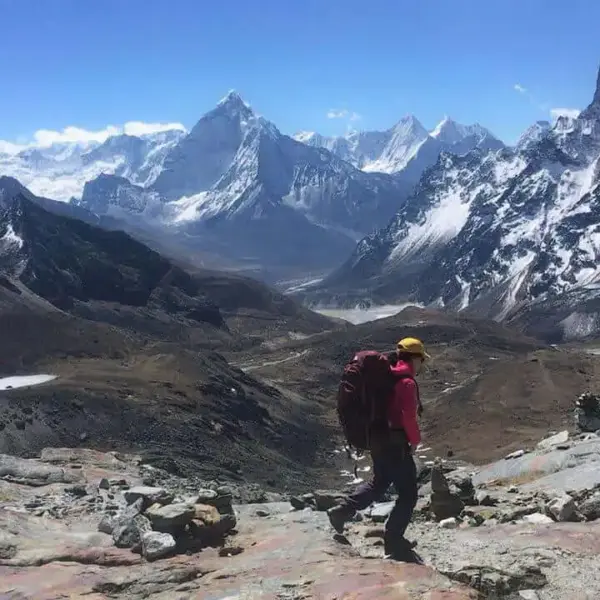
Siúlóid 15 Lá ar Bhealach Cho La Everest
Ceanglaíonn formhór na ndaoine an turas go Campa Bonn Everest le Deireadh Fómhair agus Samhain, nuair a bhíonn na cosáin gnóthach agus na tithe tae lán le…
Is bearna pleanála í eitiltí a chur in áirithe go Lukla gan laethanta maolánacha ag ceachtar ceann den turas a chruthaíonn strus mór nuair a dhúnann aimsir gheimhridh an t-aerfort. Is gnách go mbíonn moill lá nó dhó ag Lukla sa gheimhreadh. Má chuireann tú na laethanta sin isteach i do sceideal ón tús, baintear an imní agus an t-atháirithint costasach a thagann le clár taistil daingean.
Ceisteanna Coitianta
An bhfuil an siúlóid go Campa Bonn Everest sábháilte sa gheimhreadh?
With proper preparation, suitable gear, and a licensed guide, the winter route is safe for trekkers who approach it seriously. The risks are real and specific to the season, but manageable for anyone who prepares thoroughly and follows EBC winter trek safety guidance.
Cé chomh fuar is a bhíonn sé ag Campa Bonn Everest sa gheimhreadh?
Daytime temperatures at Base Camp in winter range from minus five to minus fifteen degrees Celsius. At night in Gorak Shep, temperatures regularly fall to minus twenty degrees Celsius or lower. Wind chill on exposed ridges and during the Kala Patthar climb makes conditions feel considerably colder.
An mbíonn tithe tae oscailte i rith míonna an gheimhridh?
Most teahouses along the main EBC route remain open through December, January, and February. A small number of the higher-elevation lodges may close during the deepest part of winter. Your guide will confirm current availability before you depart each stage.
An bhfuil treoir ag teastáil uaim le haghaidh siúlóid geimhridh EBC?
A licensed guide is strongly recommended for a winter Everest Base Camp trek. An experienced guide provides route knowledge, weather reports, emergency assistance, and local support throughout the trek. Trekking regulations can change, so it’s always a good idea to check the latest requirements before planning your trip.
Cén mhí geimhridh is fearr don turas EBC?
December is usually the most accessible of the three winter months, with slightly less extreme nighttime temperatures than January and February. All three months offer the same trail experience and mountain views, so the choice often comes down to which dates fit your schedule.
An mbíonn tinneas airde níos minice sa gheimhreadh?
The cold in winter places additional physical demands on the body, which can accelerate the onset of early AMS symptoms. Trekkers who stick strictly to the acclimatization schedule and move at a measured pace manage altitude well in winter. Those who move too fast or skip rest days are more vulnerable than they would be in warmer conditions.
An bhfuil sé fiúntach an turas go Campa Bonn Everest sa Gheimhreadh?
For many trekkers, winter is the most rewarding time to visit Everest Base Camp. Empty trails, sharp mountain air, views that stretch to every horizon without haze, and teahouses where the owner remembers your name because there are only four guests. The Everest Base Camp trek in winter gives you the Khumbu without the performance of peak season, and for people who value that kind of quiet and directness in their travel, it is a very compelling offer.
Iarrann sé níos mó ort ná an bealach céanna i mí Dheireadh Fómhair. Ní mór an t-ullmhúchán a bheith níos críochnúla, ní mór an trealamh a bheith rátáilte i gceart don fhuacht, agus ní mór do dhearcadh i leith míchompord a shocrú sula sroicheann tú.
Start your preparation early. Choose an operator with real winter experience in the Khumbu. Pack for the worst conditions you might encounter, not the average ones. Get your insurance in place before you travel. And go with a clear sense of what the cold will feel like, so when it arrives, it doesn’t surprise you. Winter conditions are demanding, but with proper preparation, they can also be incredibly rewarding, leaving you with memories that last long after the trek is over.