





16 дней


Краткая информация

Наземный транспорт в Непале

Размещение в отелях и чайных домиках

Все питание, кроме приема пищи в Катманду.

Экскурсии с гидом и пешие походы на протяжении всей поездки.

Осень, весна

Средняя

Непал

6,189

Катхамнду - Лукла - Намче - EBC - Айленд Пик - Лукла - Катхамнду
16 000 долларов США на человека
-
1 -
1 человекаАМЕРИКАНСКИЙ ДОЛЛАР$ 2545
-
2+ человек
9999
АМЕРИКАНСКИЙ ДОЛЛАР$ 2045
- 24 / 7 Поддержка клиентов
- Опытная и профессиональная команда
- Простое и удобное бронирование
- 99% удовлетворенности клиентов
- Разумные цены, исключительное обслуживание.
- Никаких скрытых платежей и безопасные платежи.
- Индивидуальные и персонализированные маршруты
Круглосуточная поддержка 24/7

Пуру (+977-9851069558)

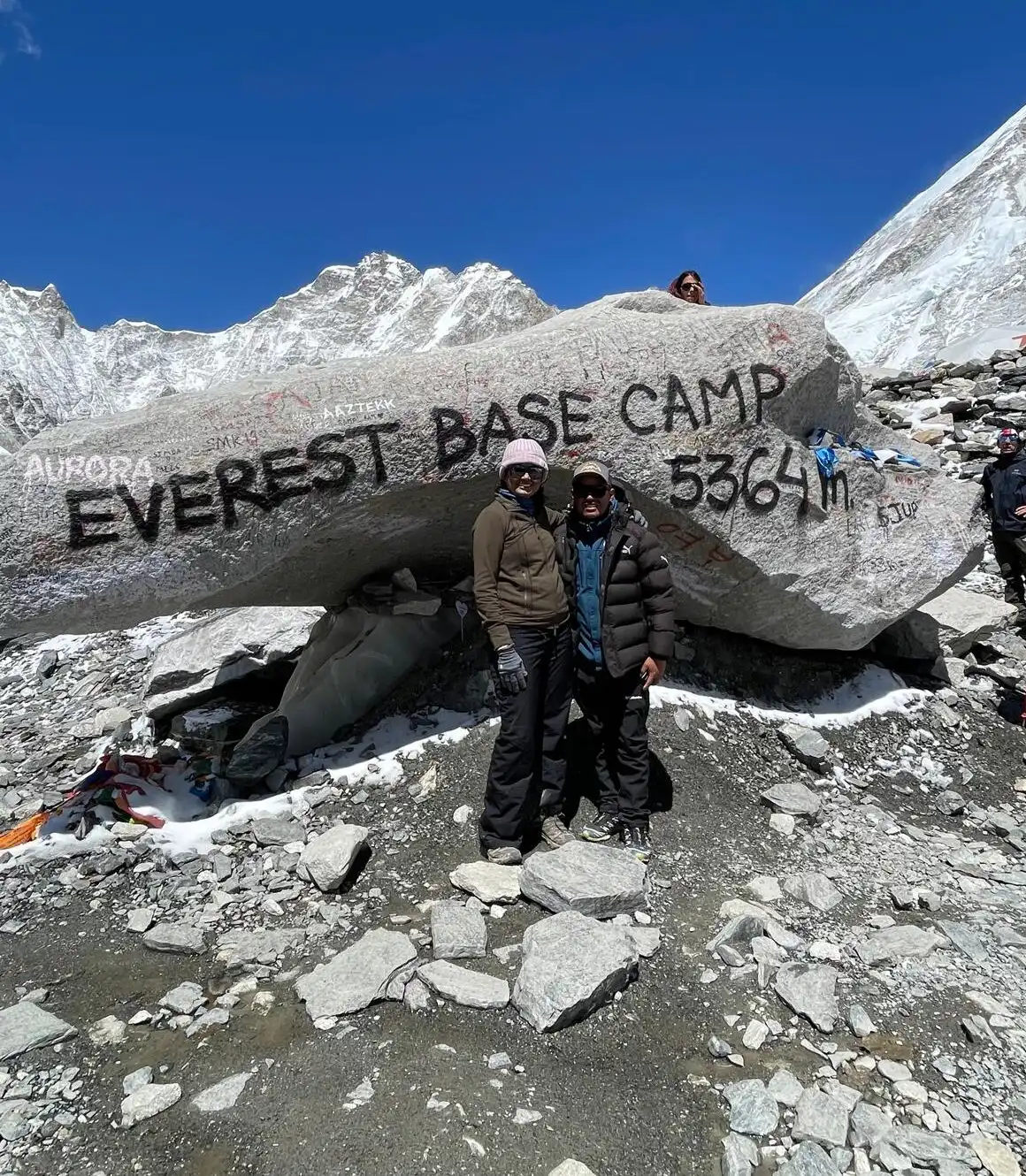


Почему стоит выбрать 16-дневный поход к базовому лагерю Эвереста с восхождением на Айленд-Пик?
- Постойте в базовом лагере Эвереста (5,364 м). Fulfill a lifelong dream as you reach the legendary base camp of Mount Everest, surrounded by the stunning beauty of the Khumbu Glacier and towering Himalayan peaks.
- Пик Конвер-Айленд / Имджа Це (6,189 м). Take your Himalayan adventure to the next level with an thrilling ascent of Island Peak, featuring glacier crossings, fixed ropes, crampons, and exciting snow and ice sections.
- Станьте свидетелем восхода солнца на Кала Паттар (5,545 м). Насладитесь волшебным восходом солнца в Гималаях, когда первые золотые лучи освещают Эверест, Лхоцзе, Нупце, Ама-Даблам и окружающие вершины.
- Explore Namche Bazaar: Откройте для себя красочное сердце Кхумбу, насладитесь теплым гостеприимством шерпов и полюбуйтесь великолепными горными пейзажами во время акклиматизационного пребывания.
- Посетите монастырь Тенгбоче: Explore one of the most beautiful and spiritually significant monasteries in the Everest region, beautifully set against the spectacular background of Ama Dablam.
- Поход по национальному парку Сагарматха: Walk through enchanting rhododendron and pine forests, cross iconic suspension bridges, and follow scenic trails through traditional Sherpa settlements.
- Насладитесь тщательно спланированной акклиматизацией: Постепенный набор высоты и специальные дни акклиматизации в окрестностях Намче, Дингбоче, Чхукунга и Айленд-Пика помогут вам комфортно и безопасно подготовиться к высокогорному приключению.
- Освойте основные навыки альпинизма: Перед восхождением на вершину Айленд-Пик вы получите практические рекомендации по ходьбе в кошках, использованию ледоруба, работе с веревкой, передвижению по леднику и другим необходимым альпинистским навыкам.
- Совершите незабываемый полет в Луклу: Начните свое гималайское путешествие с захватывающего живописного перелета между Катманду и Луклой, легендарными воротами в район Эвереста.
- Познакомьтесь с подлинной культурой шерпов: Познакомьтесь с радушными и гостеприимными жителями Кхумбу, познакомьтесь с их уникальными традициями и образом жизни и насладитесь подлинным гималайским гостеприимством вдоль всего маршрута.
- Appeal Your Eye at Stunning Himalayan Views: Насладитесь незабываемыми панорамами одних из самых величественных гор мира, включая Эверест, Лхоцзе, Нупце, Ама-Даблам, Макалу и Барунтсе.
- Одно невероятное путешествие, два легендарных достижения: Combine the world-famous Everest Base Camp trek with the thrilling challenge of a 6,000-meter Himalayan peak, creating an unforgettable adventure filled with stunning scenery, cultural experiences, personal achievement, and lifelong memories.
16-дневный поход к базовому лагерю Эвереста с восхождением на вершину Айленд-Пик: обзор
Поход к базовому лагерю Эвереста с восхождением на вершину Айленд-Пик. is a thrilling adventure that combines the iconic EBC with a challenging ascent of Island Peak. It’s a perfect blend of trekking and climbing. The journey takes you to the base camp of the world’s highest mountain, Everest, and then to the summit of the popular trekking peak, Айленд Пик.
Путь к Эвересту Расположен в предгорьях Эвереста на высоте 5364 метра. Трек к базовому лагерю также включает в себя поход к смотровой площадке Кала-Патхар на высоте 5545 метров. Островной пик. by контраст, is a comparatively minor peak at 6189 meters. Locals call it Imja Tse Mountain. However, many travelers know it as Island Peak, and it looks like a snow-covered island from Dingboche.
The journey to the EBC Trek with Island Peak Climbing starts with a flight from Kathmandu to Lukla. Then, the trek follows the standard EBC Trek via Phakding, Namche Bazaar, Tengboche, Dingboche, Lobuche, Gorak Shep, and the base of Mount Everest. Hike to Kala Patthar marks the end of the first phase of the journey. The second phase includes a climb to Island Peak via Chhukung. The final phase includes the descent back to Lukla via the same route you took up, and the adventure ends with a flight back to Kathmandu.
Island Peak Climbing is a beginner-friendly yet physically challenging high-altitude mountaineering expedition rated Alpine Grade PD+ (Peu Difficile / Slightly Difficult) or Category 2B. The most challenging day of the expedition is the Island Peak summit day. The ascent starts before dawn and includes glacier crossing, hard snow/ice sections, and fixed-rope climbing before reaching the 6,189 m peak. The summit offers an exceptional view of the Himalayan peaks of Lhotse, Makalu, Baruntse, and other surrounding mountains.
В отличие от Базовый лагерь Эверест, this combined adventure lets you pair high-altitude trekking with technical climbing in the Himalayas. It is especially suitable for physically fit trekking enthusiasts looking to take their trek to the next level and tackle their first or next 6,000-meter peak.
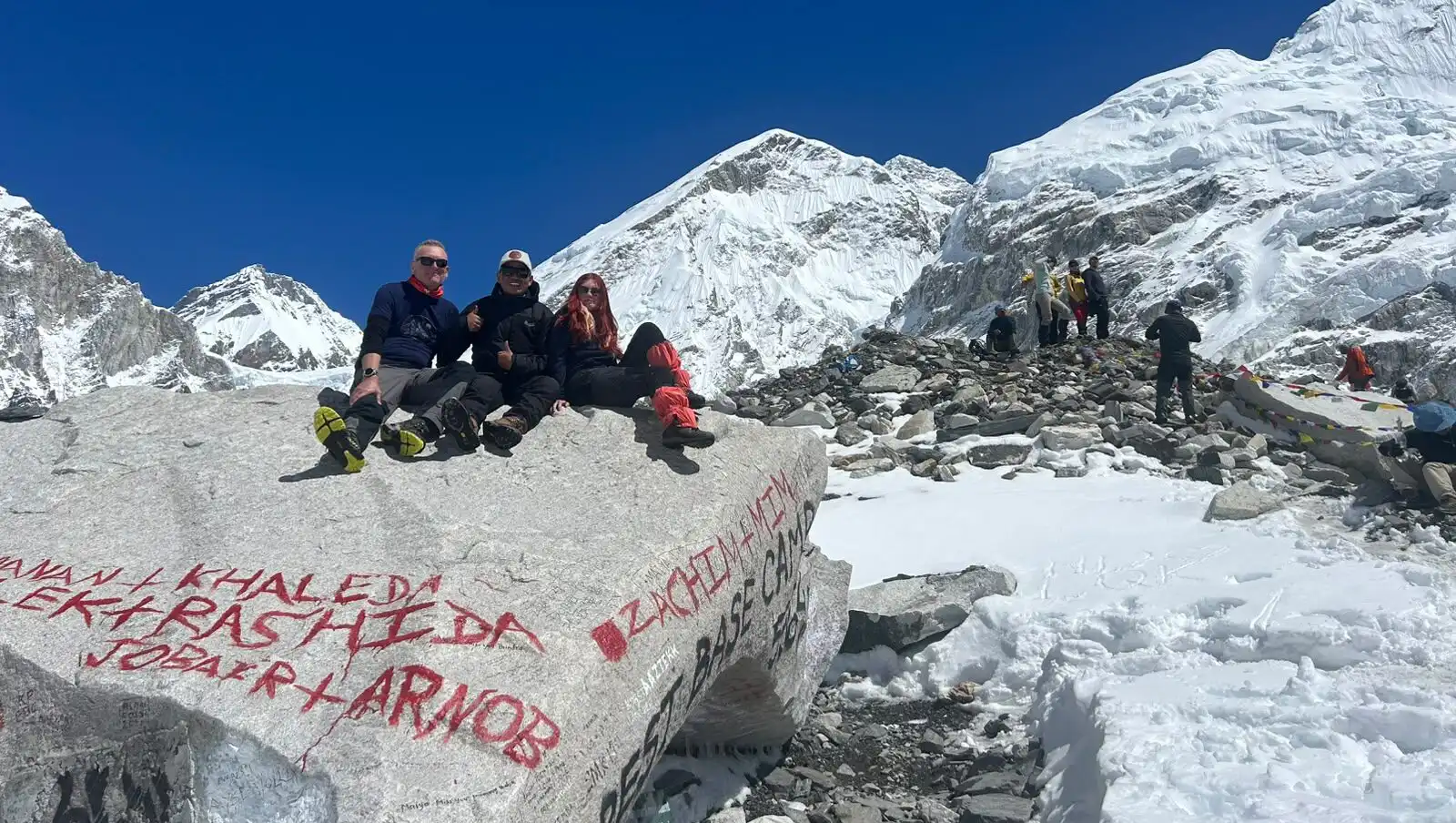
Climbing Island Peak with the EBC Trek is a thrilling adventure that takes you into the world of Himalayan mountaineering while exploring one of the world’s most renowned trekking areas. With a well-planned itinerary, proper acclimatization, professional climbing support, and a weather contingency plan, this adventure suits beginners and experienced trekkers alike.
Где находится Айленд-Пик?
Island Peak, locally known as Imja Tse, is located at the end of the Imja Valley in the Khumbu (Everest) region of Nepal. It is situated in Sagarmatha National Park of Solukhumbu District, approximately 10 km south of Mt. Everest and 40-47 km from Lukla. The hill’s coordinates are 27°55′15″N 86°56′07″E, with an elevation of 6,189 m (20,305 ft). The settlement nearest the peaks is “Chhukung (4,730 m),” a short walk up the valley from Dingboche.
Island Peak isn’t a standalone mountain. It’s the end of a long ridge that runs down from Lhotse Shar. Glaciers surround its base, and the Imja Tsho glacial lake lies to the east. It rises about 2,300 m above the summit and hides most of Everest from view. From the top of Island Peak, you get a wide view of Lhotse, Lhotse Shar, Makalu, Baruntse, and Ama Dablam to the south.
Island Peak Location Quick Facts:
| XNUMX | Информация |
|---|---|
| Местное название | Имджа Це |
| Регион | Khumbu, Solukhumbu District, Koshi Province |
| Защищенная область | Национальный парк Сагарматха |
| Высота | 6,189 m (20,305 ft) is the figure most often used; the Nepal Mountaineering Association lists 6,165 m (20,226 ft) |
| Координаты | Approx. 27°55′N, 86°56′E |
| Ближайшая деревня | Chhukung (4,730 m) |
| Базовый лагерь | Pareshaya Gyab, around 5,087 m |
| Gateway airport | Лукла (2,860 м) |
So, why is it called Island Peak?
Эрик Шиптон‘s reconnaissance team named it in 1951. The peak from Dingboche resembles an island rising from the ice sea. It was renamed Imja Tse in 1983 by Nepal, but “Island Peak” is the name used by everyone on the trail.
Первые восхождения
The British Everest expedition, in 1953, used the southwest summit of Island Peak for a training climb. The team included Charles Evans, Alfred Gregory, Charles Wylie, Tenzing Norgay and seven other Sherpas. Hans-Rudolf von Gunten and Sherpa Lobsang and Gyalsen first reached the main summit on 26 апреля 1956. They were part of the Swiss team that first climbed Lhotse and, secondly, Everest.
16-дневный поход к базовому лагерю Эвереста с восхождением на вершину Айленд-Пик.
День 01: Перелет в Луклу и переход в Пхакдинг.
On the first day of your EBC Trek with Island Peak Climbing, you fly to Tenzing-Hillary Airport in Lukla. Early flights in the morning are the best time of day for the mountain conditions to be clear, as later in the morning, the clouds can increase. To see the Himalaya on the way in, sit on the left side of the plane if possible. Lukla Airport has a short, sloping runway built into the mountainside at an elevation of 2,860 m. The landing is fast and easy, and the pilots do it daily.
In high season (October-November and March-May), Lukla flights depart from Ramechhap (Manthali) rather than Kathmandu. This involves a 4-5 hour drive, which is done before dawn. Once you land in Lukla, you’ll meet the other members of your trekking group, organize your bags, and enjoy a cup of tea while the porters prepare the luggage.
After a short break and meeting up with the group in Lukla, the day’s trek begins. The first day is easy as planned. The trail descends to Lukla, then goes through the towns of Chheplung and Ghat along the Dudh Koshi River. You cross a couple of suspension bridges and side streams, pass the mani walls, prayer wheels, and chortens incised with Buddhist mantras. Stay overnight and have dinner at Phakding on the first day of your adventure.

Завтрак обед ужин

чайхана

8 км / 5.0 миль

2,860 м / 9,383 футов

4hrs
День 02: Поход в Намче-Базар
Today, you will continue our trek as you head from Phakding to Namche Bazaar. Today’s walk follows trails similar to yesterday’s. You will walk along the riverside (Dudh Koshi River) and pass various bridges. Today, you will cross the world’s 123rd-tallest bridge.
Midway through the day’s trek, you will pass through the protected Sagarmatha National Park. This well-known conservation area in Nepal is home to numerous rare species. You will ultimately leave the park and go uphill to Намче Базар. Because of the fantastic views of Mount Everest from this position, it is often called the “gateway to Everest.”
Namche Bazaar welcomes you warmly with its charming Sherpa-Buddhist lifestyle and stunning scenery. Several trendy eateries and bars in the area offer fun options. You can also visit the world’s highest-altitude pub in Namche. According to our itinerary, you have two days to explore this stunning area.
Upon arrival, you will transfer to a nearby lodge and call it a day.
Завтрак обед ужин
чайхана
10 км / 6.2 миль
3,440 м / 11,286 футов
6hrs
День 03: День акклиматизации в Намче Базаре
Базовый лагерь Эвереста и восхождение на Айленд-Пик trip requires you to travel to very high-altitude places. So, the risk of getting sick from the altitude is relatively high. You must take steps to reduce the risk of altitude-related illness during your trip. One of those practices is acclimatization. It means staying at a consistent altitude while traveling to adjust to the region. On day three, you will practice acclimatization in Namche Bazaar.
For the day, you will have the liberty to explore anywhere in Namche. The place offers several attractive sites. Examples include the Irish pub (the world’s tallest pub), the Sherpa museum, and the Sagarmatha National Park museum. The main goal of sightseeing in Namche is to take in the beautiful scenery. You can also observe the Sherpa way of life by talking with locals. Use the day to buy souvenirs for loved ones back home.
Another popular option is to hike to Syangboche and the Everest View Hotel.
On a clear morning, the area offers clear views of Everest, Lhotse, Ama Dablam, and Thamserku. At the hotel, you can sit down with a cup of tea and enjoy the view. This is also a part of the acclimatization.
If you have the energy, head down to Khumjung and Khunde, peaceful villages in the Khumbu Valley. In Khumjung, you can visit the school established by Sir Edmund Hillary and the village monastery. After the day’s activities, you’ll return to Namche for the night.
Завтрак обед ужин
чайхана
3,439 м / 11,283 футов
День 04: Поход в Тенгбоче
After spending two nights in Namche, your body should feel more rested and adjusted to the altitude. The day’s destination is Tengboche Monastery. The day starts with a warm cup of tea and a hearty breakfast. Afterward, you’ll take a short uphill walk before continuing onto a longer, wider track. You’ll gain views of Ама Даблам, Everest, and numerous other nearby peaks. Continuing the trek, the path descends to a jungle that eventually meets the Imja Tse River. You will reach Phunke-Tenga, a tiny village on the way to Tengboche.
Затем тропа продолжается ко второму лесному массиву, откуда открывается вид на Кангтенга-Тармасарку и окружающие вершины. После этого вы выйдете на открытое плато с оживленным буддийским монастырем. Здесь вы увидите множество священников и монахов, занимающихся религиозной деятельностью. Это древний монастырь. Монастырь Тенгбоче. The monastery is located in Tengboche. It will be your overnight stop.
It is an ideal place to capture the diversity of Khumbu’s environment and culture. The views of neighboring peaks are beautiful, as is the Buddhist way of life. The remote alpine jungle is surrounded by pine, fir, oak, rhododendron, birch, and magnolia trees. Thanks to them, Tengboche is a great place to stop during the EBC trek for meals and overnight stays.
Завтрак обед ужин
чайхана
9 км / 5.6 миль
3,867 м / 12,687 футов
5hrs
День 05: Поход в Дингбоче
It’s worth getting up early in Tengboche. When it is clear, Ama Dablam, Everest, and Lhotse reflect the first light behind the monastery. After breakfast, the trail descends slowly through rhododendron, birch, and juniper forest to Deboche. It’s the final walk through a forested area along the route to Everest Base Camp and Island Peak.
After passing Deboche, you’ll cross the Imja Khola on a suspension bridge, then ascend to Pangboche (3,985 m). Pangboche is one of the oldest Sherpa villages in the Khumbu. If you have the time, its monastery is well worth a quick stop. From here, the landscape changes. Trees give way to low shrubs, open slopes, and stone walls, with Ama Dablam in view for much of the day.
For lunch, you’ll stop at Somare. After lunch, the trail ascends along the valley. Cross Khumbu Khola on a small bridge, then climb to the Imja Valley. As you enter the valley, gaze east up the valley. Island Peak is at the far end. This is an ideal time to witness your ultimate goal.
The afternoon will be cool and breezy. So, rest, drink tea, and acclimatize. It is normal to feel tired or get a slight headache tonight in Dingboche, as it sits above 4,400 m.
Завтрак обед ужин
чайхана
10 км / 6.2 миль
4,410 м / 14,469 футов
5hrs
День 06: День акклиматизации в Дингбоче и поход в Нагарджуну
This is your second acclimatization day, and one of the most important days of the entire trip. You’ll reach the altitude of over 5,000 meters for the first time. On this day, your guide can assess how well you are adapting to the higher elevation and how prepared you are for the Island Peak climb. Again, as with Namche, the practice is to ascend high and then descend to sleep.
Today, you’ll hike to Nagarjuna Hill, located above Dingboche village. The trail takes you steadily up the ridge north of Dingboche. No technical sections, but in places it is steep and rocky, and you’ll feel the thin air with each step. Pace yourself and control your breathing as you walk.
The views from the top of the hill are amazing. From the east side, you’ll see Lhotse Wall and Island Peak up the Imja Valley. On a clear day, you can see Makalu (the world’s 5th-highest peak) in the distance. To the south, you’ll see Ama Dablam, and on the western side of the valley are the peaks of Taboche and Cholatse.
Spend some time at the top, enjoy a snack, and then descend to Dingboche for lunch. Use the afternoon to relax. Stay hydrated, get into a hot shower (if available), and ensure that your clothing and equipment are prepared. Overnight and dinner at Dingboche.
Завтрак обед ужин
чайхана
10 км / 6.2 миль
4,410 м / 14,469 футов
5hrs
День 07: Поход в Лобуче
After two nights at Dingboche, it’s time to head up. The day begins with a brief, steady ascent up a ridge behind the village, with prayer flags. Once you’re up and over into the next section of the hike, it descends to a broad, gentle trail.
Ama Dablam remains behind you throughout the morning, and Taboche and Cholatse are also visible. The trek takes you along the open grazing land where you will frequently see yaks and the stone cottages of summer herders. Take a leisurely walk and have fun with it.
The trail descends to Thukla (also known as Dughla, 4,620m), a small cluster of lodges where most groups have lunch. A small bridge crosses the Khumbu Khola just below Thukla. This stream drains the Khumbu Glacier, just up the valley.
The trek up Thukla Pass (around 4,830 m) is a steep, rocky ascent that follows lunch and is the hardest part of the day. At the top, a field of prayer flags covers the stone memorials and chortens. It is to pay tribute to those climbers and Sherpas who died on Everest and in the surrounding mountains.
After the pass, the trail follows the edge of the Khumbu Glacier. After a while of trekking, you’ll get to Lobuche. It isn’t a traditional village. It is a cluster of lodges for trekking and climbing guests in the cold, rocky valley below Lobuche Peak.
Lobuche is located at almost 5,000 m, and it will be a cold night. Stay overnight and have dinner at Lobuche.
Завтрак обед ужин
чайхана
6 км / 3.7 миль
5,000 м / 16,404 футов
3hrs
День 08: Поход в Горак Шеп и поход к базовому лагерю Эвереста
This is the main day on the Everest Base Camp trek. The day begins early, as you have two aims today. The first aim is to reach Gorak Shep and then ascend to base camp in the afternoon. The second is to return to Gorak Shep from EBC.
From Lobuche, the route follows the side of the Khumbu Glacier’s moraine. The first hour is quite easy. Then it’s a bit rough, with some sections climbing and dropping over rocks and loose boulders. Watch your footing and keep a slow, controlled pace. Pumori stands straight ahead of you, and Nuptse stands to the right. After 2.5 to 3 hours, you reach Gorak Shep.
Put away your bags, have lunch, and rest before heading to base camp. It takes about 2–3 hours to walk from Gorak Shep to Everest Base Camp. The trek takes you along the glacier moraine and crosses rocky ridges with excellent views of the glacier below. Base camp itself sits at the foot of the Khumbu Icefall, a jumbled river of ice and seracs where Everest expeditions begin their climb.
What you see at base camp depends on the season. During the spring (April and May), the EBC is packed with colorful expedition tents. In autumn, the base camp is typically quieter, with fewer expedition tents and prayer flags. Here’s a surprising fact for many trekkers: The Nuptse and the western shoulder of Everest hide base camp from view of Everest’s summit.
Spend some time at base camp and then head back on the same trail to Gorak Shep for the night.
Завтрак обед ужин
чайхана
12 км / 7.5 миль
5,364 м / 17,598 футов
7hrs
День 09: Morning visit to Kala Patthar and Trek to Dingboche
It’s a long day today. You’ll depart Gorak Shep around 4.30 – 5 a.m., headlamps on, aiming to reach Kala Patthar at sunrise. At this time of day, temperatures are around minus 10°C and can be even lower, so dress in as many warm layers as possible.
Kala Patthar translates to “black rock,” and it is a dark, rocky hill above Gorak Shep. Initially, the trail is a short, gentle walk, followed by an ascent on a dusty, wind-rocked path that zigzags up the hillside. Most people require 1.5–2 hours for the Kala Patthar hike.
Kala Patthar offers the Everest view you cannot see from the summit of Base Camp.
The sun’s first ray over Mount Everest is the highlight of the combined trip to Island Peak with EBC. Along with Everest, the viewpoint provides sights of other mountains, including
After spending time at Kala Patthar, you return to Gorak Shep for breakfast. Then head back through Lobuche, along the Thukla Pass. From Thukla, the route heads back up the high trail above the Pheriche Valley to Dingboche.
The trek from Kala Patthar to Dingboche is more than a 1,100 m descent. Most people feel a lot better when they trek down. You’ll sleep better tonight.
Завтрак обед ужин
чайхана
18 км / 11.2 миль
5,545 м / 18,192 футов
8hrs
День 10: Trek to Chhukkung
Today is a short and easy day. The trail heads up the Imja Valley to the east, passing stone walls and the yak pastures at Bibre. Most of the walk is across the face of Isafeld, and Island Peak is right ahead, with Lhotse’s great south face behind it.
Chhukung is a small cluster of lodges, the final stop before reaching Island Peak base camp. You’ll get here at lunchtime. Take the afternoon to rest and review your climbing equipment with your guide. If your team provides a training session, train with your crampons, harness, and jumar.
Завтрак обед ужин
чайхана
5 км / 3.1 миль
4,730 м / 15,518 футов
3hrs
День 11: Поход к базовому лагерю Айленд-Пик

You now enter the mountain’s shadow as you pass through the last of the lodges. The trail from Chhukung heads east on the edge of the Imja Glacier moraine through the Imja Valley. In places, the path is rocky with short ups and downs, but nothing technical.
With every step, Island Peak becomes more stunning. You will continue the path ahead via rock slopes to high camp, and the snow headwall below the ridge of the summit. On your left, the south face of Lhotse rises, and the glaciers flowing from Lhotse Shar and Island Peak converge to the base of Lhotse.
Island Peak Base Camp sits in a protected spot between the glacier moraine and mountain, in a sandy area. From here on, you’ll be sleeping in tents, so you can expect a chilly night.
You’ll get to Island Peak Base Camp by lunchtime. Your climbing guide will hold a practice session on the slopes around camp in the afternoon. You will learn the correct way to fit crampons, walk in them, clip in and out of fixed ropes, and use a jumar to climb. If you’ve not done this before, treat the session as a serious exercise. It’s much more difficult to use this equipment, especially for beginners.
Eat dinner early, pack for Summit Day, and go to bed early. Tomorrow, you have to start between midnight and around 2 am.
Завтрак обед ужин
палатка
5 км / 3.1 миль
5,100 м / 16,732 футов
3hrs


День 12: Поднимитесь на вершину Айленд-Пик и вернитесь в Чхукунг.
Today, you will complete the most awaited part of our journey as you summit the Island Peak. You will head very early (around 2 am) to reduce weather-related challenges. The day’s strong winds also make ascending difficult. So, the steady, relatively stable weather this morning makes it a great start.
Your qualified mountain guides will assist you throughout the entire ascent. You must pass through a variety of slick hills and glaciers while climbing. Your guides will set up and ensure you use your equipment correctly, and they will keep you safe.
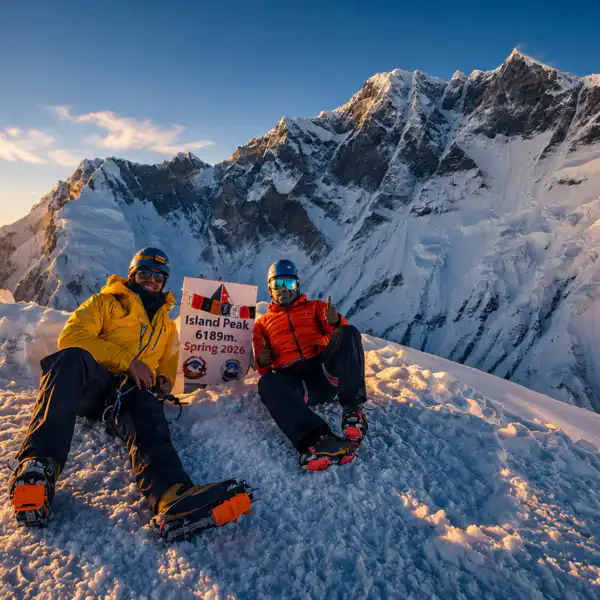
You will first climb to the peak’s High Camp. From there, you will reach the summit after about two to three hours of climbing. Reaching the summit will provide exceptional mountain views and an exhilarating experience. From the summit, you’ll enjoy stunning 360-degree views of surrounding Himalayan peaks, including Lhotse, Makalu, Ama Dablam, Nuptse, and Baruntse
Take a moment to celebrate your victory. Take photos, call a loved one, and appreciate your hard work. After celebrating your achievement, you’ll descend along the same route to Chhukung, where you’ll spend the night at a teahouse.
Завтрак обед ужин
чайхана
12 км / 7.5 миль
6,189 м / 20,305 футов
11hrs
День 13: Обратный путь в Тенгбоче.
You successfully made it to the summit of Island Peak, and now it’s time to return. You will retrace your route down to Dingboche through the Imja Valley and then continue past Somare and Pangboche. For most of the morning, Ama Dablam will be on your left.
These days, most people move faster than they think. With every 100 meters you descend, the air thickens and your energy returns. After days of rock and ice, the greenery is a relief. Below Pangboche, juniper and rhododendron reappear.
Then, the trail descends to the Imja Khola bridge and, after a final one-hour climb through the forest, you reach Tengboche. Tengboche is home to the largest monastery in the Khumbu. Visitors are generally welcome to sit in silence at the back during afternoon prayers, as long as they arrive in time. After a successful climb, it’s a peaceful way to end the day.
Завтрак обед ужин
чайхана
14 км / 8.7 миль
3,867 м / 12,687 футов
7hrs
День 14: Поход в Намче-Базар
After breakfast at Tengboche, you will continue with our descent. The trail follows the familiar route. A few steep sections lead through dense subtropical forests. You will pass by familiar villages, suspension bridges, prayer flags, and chortens. As you gradually climb downhill, you can still see the gorgeous snow-capped mountains in the distance. Finally, you will arrive at Namche Bazaar, where you will spend the night.
Завтрак обед ужин
чайхана
9 км / 5.6 миль
3,440 м / 11,286 футов
5hrs
День 15: Поход в Луклу
Today is the final trek day of your Island Peak Climbing with Everest Base Camp Trek. You will enjoy breakfast while taking in the stunning mountain views at Namche. Then, you will retrace our steps back to Lukla. You will once again trek back to the Dudh Koshi Valley, alongside the banks of the Dudh Koshi River. It is primarily a downhill trek, but it gradually becomes uphill from the Kusum stream. The trail takes us to familiar villages, prayer flags, and chortens, leading us to Lukla. Once you reach Lukla, you can rest for the day or explore the area. You will stay here overnight.
Завтрак обед ужин
чайхана
19 км / 11.8 миль
2,860 м / 9,383 футов
7hrs
День 16: Утренний рейс в Катманду
The morning in the mountains starts early on the last day. Lukla flights leave soon after sunrise, when the weather is at its clearest. After landing in Kathmandu, you will be transferred to your Hotel. During peak periods, flights may land at Ramechhap (Manthali) instead, with a 4-5 hour drive to the city.
The rest of the day is yours. For those who still have energy, Thamel is a great spot for a last night’s meal and to buy souvenirs.
Завтрак обед ужин
Hotel
1,400 м / 4,593 футов
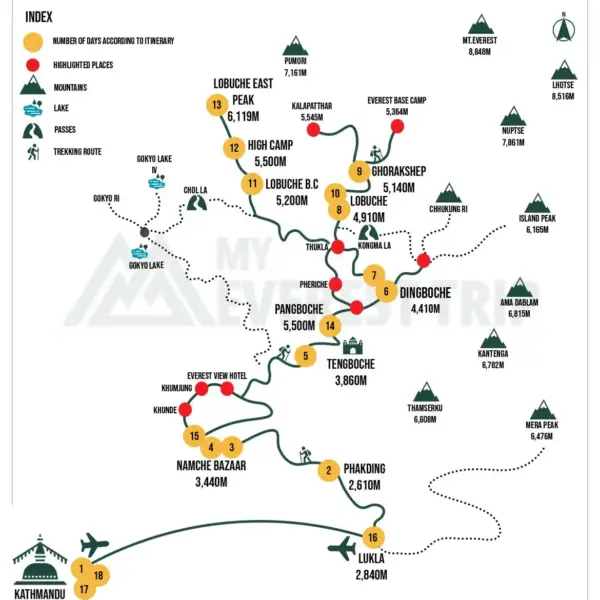
16-дневный поход к базовому лагерю Эвереста с картой восхождения на вершину Айленд-Пик.

Что ожидать?
Что включено
Услуги встречи и проводов в аэропорту
- Встреча прибывающих из-за границы
- Трансфер из отеля в аэропорт внутренних рейсов (начало трека)
- Встреча в аэропорту и трансфер в отель (после треккинга).
- Международная высадка в день вашего отъезда.
Услуги по размещению
- 13 ночей в местных чайных домиках в горах (размещение в двухместном номере).
- Палаточный лагерь на 2-3 ночи
Разрешение на поход
- Разрешение на въезд от местных органов власти (трекинговая карта)
- Разрешение на посещение национального парка Сагарматха (разрешение на посещение Эвереста)
- Разрешение на восхождение на Айленд-Пик
Внутренние рейсы
- авиабилет Катманду — Лукла
- авиабилет из Луклы в Катманду
В случае рейса в Луклу через Рамечхап
- Поездка из Катманду в Рамечхап на общественном транспорте.
- Билет на внутренний рейс из Рамечхапа в Луклу
- Билет на внутренний рейс Лукла — Рамечхап
- Из Рамечхапа в Катманду на попутном джипе.
Питание во время треккинга в Катманду
- 15. Завтрак: блюда местной и континентальной кухни из меню чайного домика.
- 15. Обед: Простой и легкий обед в чайных домиках лагеря.
- 15. Ужин: вегетарианские и невегетарианские блюда на ваш выбор, блюда местной кухни и континентальные блюда из меню местного чайного домика.
Услуги гида/носильщик и их ответственность
- Аптечка первой помощи, которую носит наша команда.
- Гид по трекингу – англоговорящий лицензированный гид с более чем 10-летним опытом работы.
- Гид по скалолазанию на 2-3 дня, англоговорящий лицензированный гид с более чем 5-летним опытом работы.
- Страховка для гида и носильщика (экстренная эвакуация и медицинские расходы в случае несчастного случая)
- Питание для гида/носильщика включено.
- Заработная плата устанавливается в соответствии со стандартной ставкой компании (рекомендованной соответствующей ассоциацией туристической отрасли).
- Местный шерпа поможет с переноской багажа, 2 гостя размещаются на одного носильщика.
- Организация поездки и спасательной операции.
Что исключено
- Питание в Катманду до и после треккинга.
- Ваша туристическая страховка (Rescue).
- Визовый сбор за въезд в Непал.
- Советы для персонала, занимающегося трекингом, и водителей.
- Напитки (горячие, холодные и алкогольные)
- Покупки продуктов, стирка и т.д.
- Личное треккинговое снаряжение
16-дневный поход к базовому лагерю Эвереста с восхождением на вершину Айленд-Пик. Дополнительная информация.
Почему стоит выбрать поход к базовому лагерю Эвереста с компанией Island Peak Climbing?
The Everest Base Camp trek combined with the Восхождение на Айленд-Пик is a two-in-one package. You will trek the famous Khumbu route through Sherpa villages and monasteries, then finish with a true Himalayan ascent above 6,000 m. Here’s why so many trekkers choose this route.
- The trek is your acclimatization. By the time you reach Island Peak, you’ll already have slept in Gorak Shep (5,164 m) and stood on Kala Patthar (5,545 m). You’ll have had days to get used to your body, which will give you a much better chance of summiting the peak than if you were climbing Island Peak alone for a shorter period.
- An achievable initial 6,000 m peak. Island Peak is challenging but not highly technical. Physically strong climbers with no climbing background may try it with a good guide, solid base-camp training, and fixed ropes on the steep headwall. This is one of the most popular first summits in the Himalayas.
- You learn real mountaineering skills. While climbing, you will walk with crampons, fixed ropes, a jumar, and cross crevasse fields on the glacier (sometimes using ladders), then abseil on your descent. These are also the fundamentals that are necessary for larger summits later, such as Lobuche East, Mera Peak, or Ama Dablam.
- Two famous viewpoints, two different perspectives. Along the trek, you can have the best view of the top of Everest from Kala Patthar. From Island Peak, you are surrounded by the large south face of Lhotse, Makalu, Baruntse, and Ama Dablam, which is an area that many EBC trekkers never visit.
- A Sherpa culture along the way. You will cross through Namche Bazaar, the monastery at Tengboche, the old village of Pangboche, and memorials at Thukla Pass. These destinations offer a glimpse into climbers’ culture and the history of Mount Everest.
- Tea house comfort for most of the trip. You only camp in tents at Island Peak base camp. Each night you’ll sleep in lodges and have hot meals, so the journey will be far more comfortable than a whole camping experience.
- Efficient use of your time. One trip of around 16 days covers both Everest Base Camp and a 6,000 m summit. Doing them separately would mean two flights to Lukla and two rounds of acclimatization.
Major Location Highlights of the EBC Trek with Island Peak Climbing
From Pine Forests to Glaciers
This journey is dynamic, with a near-daily change of scenery. Around Phakding and Monjo, you can walk through pine and rhododendron woods along the Dudh Koshi, cross high suspension bridges, and see waterfalls cascading down the valley side. The trees give way to open pastures, stone-fenced fields above Pangboche. It is all Rock, Moraine, and ice, with the Khumbu Glacier below Everest from Lobuche to Gorak Shep.
The second part of the adventure goes up the Imja Valley to Island Peak and takes you into a more secluded area of the Khumbu. Glaciers flow down from Lhotse and Island Peak here, and the nearby Imja Tsho lake is also a highlight.
Wildlife in Sagarmatha National Park
The Island Peak with EBC Trek takes place within Sagarmatha National Park. That’s what makes some animals fairly easy to spot. Namche and Tengboche are popular spots for Himalayan tahr and a wild mountain goat. Nepal’s colorful national bird, Danphe (Himalayan monal), is found in the forests around Tengboche. In the early morning, one can also see musk deer in the woods between Tengboche and Pangboche.
The park also has snow leopards and red pandas, but trekkers rarely see them because they are very shy. If you get to see their tracks, you are in luck.
Культура и монастыри шерпов
The Khumbu region is the home of the Sherpa people, and their Tibetan Buddhist beliefs influence life along the path. You will see prayer wheels, prayer stones (decorated with mantras), and chortens (lamp strings with prayer flags). Tengboche Monastery is the region’s spiritual center, while Pangboche houses one of the oldest monasteries in the Khumbu.
Many of the porters and lodge staff you meet come from the lower hills of the Rai, Tamang, and other villages. Chatting, learning some Nepali or Sherpa, and hearing stories from locals who live and work in the mountains is often the best opportunity at a tea house around the stove in the evening.
A First Taste of Himalayan Climbing
Island Peak Climbing offers a chance to experience real mountaineering without requiring advanced technical skills. At base camp, you will become familiar with crampons, fixed ropes, and a jumar and use them on the glacier and headwall on summit day. No previous climbing experience is necessary, but you must be fit and able to work long, cold days at altitude.
Можно ли совершить одиночный поход к базовому лагерю Эвереста вместе с компанией Island Peak Climbing?
You can do the Everest Base Camp Trek solo, but we recommend hiring a professional guide for Island Peak Climbing.
Маршрут к базовому лагерю Эвереста хорошо размечен и не имеет сложных технических участков. Также нет обязательного правила нанимать гида при треккинге в районе Эвереста. Однако туристам настоятельно рекомендуется нанять гида для обеспечения безопасности и поддержки. Восхождение на Айленд-Пик — это умеренно сложный технический маршрут, требующий от альпинистов пересечения ледников, преодоления трещин и подъема по ледяным стенам для достижения вершины. Они также должны обладать базовыми альпинистскими навыками, включая использование кошек, ледорубов, веревок и страховочных систем. Без профессионального гида и группы поддержки восхождение сопряжено с риском.
Во время восхождения туристы подвергаются высокому риску горной болезни, могут заблудиться или упасть. Установка страховочных веревок, кислорода, палаток и другого снаряжения для обеспечения безопасности также требует присутствия профессионального гида. Из соображений безопасности, а также юридических и технических требований, одиночных туристов или альпинистов должен сопровождать лицензированный гид. Поэтому вы можете нанять лицензированного и опытного гида в надежном туристическом агентстве, таком как My Everest Trip, для вашего похода к базовому лагерю Эвереста с компанией Island Peak Climbing.
Насколько сложно восхождение на Айленд-Пик?
Island Peak Climbing is PD or PD+ (slightly difficult) on the Alpine rating scale. With proper instruction, preparation, and professional climbing support, physically fit trekkers with no previous mountaineering experience can attempt Island Peak. However, the high altitude, glacier crossings, fixed-rope sections, and long summit day make it demanding. What makes it hard is doing it above 6,000 m, in the cold, at the end of a two-week trek.
| фактор | Чего ожидать |
|---|---|
| Класс | PD to PD+ (Alpine scale) |
| Вершина высоты | 6,189 м (20,305 футов) |
| день саммита | About 10 to 14 hours return from base camp |
| Height gain on summit day | Roughly 1,100 m from base camp |
| Steepest section | A snow and ice headwall of about 100 m on fixed ropes |
| Необходим опыт | None required, but strong fitness is a must |
Физические трудности
The approach to Island Peak involves long walking days, steep climbs, and uneven mountain trails. The summit day is particularly demanding because of the early start and the long ascent and descent. Good cardiovascular fitness, uphill walking, and strength training will help you cope with the trek.
Сложность высоты
Altitude-related challenges are among the main reasons climbers struggle to complete the Island Peak climb. At the summit, the oxygen level per breath is about half what it is at sea level. There, even fit climbers move slowly, struggle to breathe, and get tired easily.
But this route helps you cope with altitude challenges. Your body will have time to acclimate before you get to Island Peak, with rest days in Namche and Dingboche and nights at Lobuche and Gorak Shep. Take it easy, drink 3-4 liters of water per day, and tell your guide if you feel a headache, nausea, or dizziness. These precautions can help you manage altitude-related challenges throughout the adventure. Since this is also an Everest Base Camp-included trek, preparing for altitude sickness during EBC may also come in handy.
Техническая сложность
The path from base camp leads up a rocky path and a gully to the crampon point (around 5,700–5,800 m). The trail then crosses a crevassed glacier, also roped. Depending on the season, some of these are crossed using aluminum ladders.
The headwall, a steep snow and ice slope around 100 m high, is the crux. Climb it using a fixed rope with a jumar (ascender). A narrow, exposed ridge runs up to the summit. Returning down, abseil the headwall. A large crevasse at the base of the headwall opens occasionally at the end of the season and sometimes forces teams to turn around.
День восхождения на вершину Айленд-Пик
Island Peak Summit is the day that everyone waits for. It’s long, cold, and exhausting, yet it’s the best day of the adventure.
The Midnight Start
Your guide will bring you a hot cup of tea and a light breakfast, typically porridge, toast, or noodles, when it’s around midnight or 1 a.m. Even if you don’t feel hungry, eat what’s available. You’ll burn a lot of energy before the next proper meal.
You leave camp between 1 and 2 a.m. An early start is for a reason. You should reach the summit by late morning, before the wind starts to blow and you cross the glacier before the soft snow and crevasses become unstable.
Base Camp to the Crampon Point
The first few hours are walking, not climbing. The trail winds up grassy, then rocky slopes with a view to the old High Camp site at about 5,600 m, by headlamp. Above this, the route enters a steep, narrow, deep rock gully. Here you climb, balancing on rock steps. Take it slowly, breathe regularly, and maintain proximity to the guide.
The crampon point is the first rock at the top of the gully, around 5,700-5,800 m, where the rock meets the snow. This is where you can put on your crampons and harness, tie into your guide’s rope, have a snack, and drink some water. The sunrise over Makalu and Baruntse is an unforgettable view.
Crossing the Glacier
Rope up from the crampon point and cross a gently rising glacier to the foot of the headwall. It seems like a steep climb, but at near 6,000 m, it’s very slow. Crevasses cross the glacier here. Some are traversed in the season and conditions on aluminum ladders anchored in place by climbing teams, while others are crossed on snow bridges. Do exactly what your guide does, and have the rope between you snug, but not tight.
Climbing the Headwall
The most difficult part of the climb is the headwall. It is a snow-and-ice slope, about 100 m high, with the steepest sections at about 40 to 50 degrees. A fixed rope runs up the entire headwall.
Clip the jumar onto the rope, slide up, step up with the crampons, and repeat, always keeping the safety line clipped in. Most climbers can only climb a few steps before they have to stop and catch their breath. That’s normal. Look for the rhythm to your movement: slide, step, breathe. Normally, the headwall takes anywhere from one to two hours.
A large crevasse may form late in the season at the foot of the headwall. Late in the season, a large crevasse can open at the base of the headwall, and sometimes ladders are permanently attached across it. Your guide will verify conditions before your commitment.
Вершинный хребет
At the top of the headwall, a narrow ridge leads to the summit. It is exposed and steep on both sides, so stay clipped into the fixed rope and take each step carefully. This final section is about 30 to 45 minutes. It is long, but the top is always visible.
On the Summit
The summit is small and can only accommodate a few climbers at a time. The big south face of Lhotse looms just above you, at a height of 2,300 m. Lhotse Shar, Makalu, Baruntse, Ama Dablam and the Imja Valley surround you. Lhotse blocks Everest from most angles.
Spend around 15-30 minutes at the top. That’s enough time to take photos, eat something, and take it in. It’s cold and windy, so wear gloves and a down jacket, zipped up.
Guides set a turnaround time, typically from 11 a.m. to noon. By then, if not at the peak, the team heads down regardless. It’s not a failure. It is the rule that would keep everyone safe.
Спуск
It takes concentration to go down. You’ll retrace the ridge, then abseil (rappel) down the headwall using a figure-eight or ATC device on the fixed rope. Your guide will review each setup before you start. You will cross back over the glacier at the bottom, remove your crampons at the crampon point, then carefully descend the gully.
In the early afternoon, most climbers reach base camp. Have some hot food and a rest while the crew packs up camp. Then walk back down the valley for two or three hours to Chhukung, where a warm lodge and a proper dinner await.
16-дневный поход к базовому лагерю Эвереста с восхождением на вершину Айленд-Пик (стоимость указана отдельно)
16-day EBC Trek with Island Peak Climbing costs USD 2,045 per person. Compared to the стоимость похода к базовому лагерю Эвереста, peak climbing, extra days, and the added location make EBC with Island Peak Climbing more expensive. But the cost of your climb is primarily dependent on the season, group size, and whether you are part of a group or a private climb.
What the 16 Days EBC Trek Package Price Covers
The cost includes most of the journey’s expenses. That means a domestic flight from Kathmandu (or Ramechhap in high season) to Lukla, tea house accommodation on the trek, and a tented base camp at Island Peak. Food is provided along the way and up the climb. Your permits, a licensed trekking guide, a climbing guide for summit day, and porters are included.
What’s Not Included in 16 Days Itinerary Of Everest Base Camp Trek
Some expenses are not included in the package. So, you should budget for these items separately. These include your international flights, Nepal visa, and travel insurance that covers climbing up to 6,200 m and helicopter evacuation. Insurance is a must, not a choice. You also need personal climbing equipment, including boots, crampons, a harness, and a down jacket.
Prices increase as you get higher on the trail. Teahouses charge extra for hot showers, device charging, Wi-Fi, and snacks. Carry enough Nepali cash, as there are no reliable ATMs above Namche, and few places accept cards in tea houses.
Group, Private and Premium Options of EBC Trek
In terms of cost, a group package is the cheapest option. You will share guides, porters, and logistics on set departure dates with other climbers. It’s a good option for those who don’t mind following others’ pace and like socializing with people from other countries.
A private package is more expensive, but lets you set dates and walking speeds, and the guide focuses solely on you or your group. This is the better choice if you’re traveling with friends or family, or if you need flexibility.
The premium package offers greater comfort. Normally, it includes the best lodges along the trail, a larger guide-to-climber ratio, and additional support or upgrades.
What Can Change the 16 Days EBC Trek with Island Peak Climbing Price?
Season makes the biggest difference in the Island Peak with EBC Trek cost. Spring climbing permits cost about twice as much as autumn ones. Group size is also an important factor. A larger group can share guide and camp costs, bringing the price down per person. Lukla flights will also depart from Ramechhap instead of Kathmandu in busy periods, so there will be a road transfer too. Guide, porter, and lodge expenses will be higher if you take a weather reserve day or extend your trip, and climbers who need to rent most of their equipment should budget a little extra.
Can we reach EBC by helicopter with Island Peak Climbing?
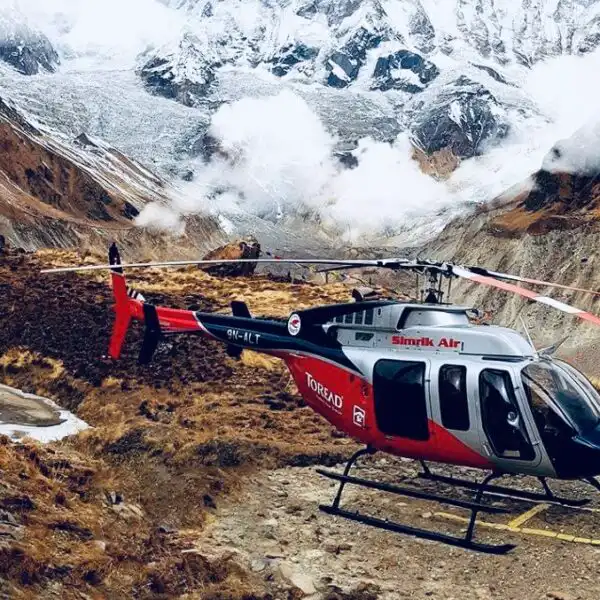
До базового лагеря Эвереста можно добраться на вертолете, но приземлиться там нельзя. Однодневные вертолетные туры в базовый лагерь Эвереста позволяют путешественникам увидеть окрестности Эвереста и базовый лагерь высочайшей горы мира. Это самый быстрый и удобный способ увидеть Эверест и одни из самых высоких вершин мира, не совершая утомительного пешего похода.

Тур начинается с живописного полета на вертолете из Катманду в Луклу, где вы сделаете короткую остановку. Затем вас ждет захватывающий облет базового лагеря Эвереста и Калапатхара, после чего вы приземлитесь в Сьянгбоче. Вертолетный тур предоставляет уникальную возможность увидеть эти величественные горы и потрясающие пейзажи с высоты птичьего полета. Этот роскошный пакет подойдет каждому путешественнику, включая новичков и тех, кто предпочитает менее физически сложные варианты.
Также можно вернуться из базового лагеря Эвереста на вертолете. Опять же, вертолет не приземлится в базовом лагере; он заберет вас из Горакшепа, Периче или Луклы. Вертолетная экскурсия или однодневный вертолетный тур к базовому лагерю Эвереста стоят дороже, чем стандартный треккинг к нему.
Что вы будете есть во время похода к базовому лагерю Эвереста с компанией Island Peak Climbing?
Для поддержания энергии во время трека к базовому лагерю Эвереста с компанией Island Peak Climbing вам потребуется сбалансированное и здоровое питание. Чайные домики и лоджи вдоль маршрута предоставляют питание для трекеров и альпинистов. В основном они предлагают блюда непальской кухни, но в нижних районах вы можете найти блюда международной кухни в меню.
Самым распространенным блюдом, которое вы будете есть во время путешествия, будет дал бхат. Это основное непальское блюдо, богатое углеводами и белками.Блюдо состоит из вареного риса, чечевичного супа, овощей, карри, солений и салата. В меню также есть тибетский хлеб, пшенные блинчики, яйца, роти, карри, момо (пельмени), тентхук, шерпское рагу, тукпа, паста, каша, супы, салаты, лапша и многое другое.
В дорогу также можно взять с собой перекусы, например, энергетические и протеиновые батончики. Многие участники теряют аппетит на большой высоте, что может увеличить риск горной болезни. Энергетические батончики, орехи и печенье помогут восстановить энергию и поддерживать силы.
Altitude Sickness and Altitude Profile during EBC and Island Peak Climbing
Altitude sickness is a common concern for trekkers and climbers combining the Everest Base Camp (EBC) trek and the Island Peak climb. As you ascend above 5,000 meters, reduced oxygen can create challenges.
Симптомы высотной болезни включают головную боль, тошноту, головокружение и одышку. Для ее предотвращения следует подниматься постепенно, пить достаточно воды, придерживаться диеты с высоким содержанием углеводов и, после консультации с врачом, рассмотреть возможность приема таких препаратов, как Диамокс.
Правильная акклиматизация крайне важна, особенно учитывая, что Айленд-Пик находится выше базового лагеря Эвереста и требует наличия базовых навыков альпинизма.
EBC Trek with Island Peak Altitude Profile
| Локация | Высота |
|---|---|
| Лукла | 2,860 м / 9,383 футов |
| Пхакдинг | 2,610 м / 8,563 футов |
| Намче Базар | 3,440 м / 11,286 футов |
| Тенгбоче | 3,867 м / 12,687 футов |
| Дингбоче | 4,410 м / 14,469 футов |
| Лобуче | 4,940 м / 16,207 футов |
| Горак Шеп | 5,164 м / 16,942 футов |
| Путь к Эвересту | 5,364 м / 17,598 футов |
| Кала Паттар | 5,545 м / 18,192 футов |
| Чхукунг | 4,730 м / 15,518 футов |
| Базовый лагерь Айленд Пик | 5,100 м / 16,732 футов |
| Вершина Айленд-Пик | 6,189 м / 20,305 футов |
| Катманду | 1,400 м / 4,593 футов |
Подготовка к походу к базовому лагерю Эвереста с компанией Island Peak Climbing.
The Everest Base Camp Trek with Island Peak Climbing requires both physical and mental preparation. Participants must also have basic mountaineering skills. They need good strength and stamina to trek 5-7 hours each day. The diverse terrains, including rocky paths, glaciers, and crevasses, require a moderate to high level of endurance.
Для физической подготовки к походу и восхождению участникам следует начать тренировки как минимум за 8-12 недель до поездки. Лучшими упражнениями для развития выносливости, необходимой для длительных походов и пребывания на большой высоте, являются кардиотренировки, силовые тренировки и упражнения на гибкость.
Кардиотренировки включают бег, пробежки, езду на велосипеде, плавание и подъем по лестнице. Эти упражнения помогают развить аэробную выносливость, поддерживая умеренный пульс. Силовые тренировки направлены на укрепление мышц нижней и верхней части тела, а также корпуса. К таким упражнениям относятся приседания, выпады, планка, отжимания, подтягивания и т.д. Йога и растяжка улучшают гибкость и подвижность. Лучший способ имитировать условия похода и восхождения — это носить утяжеленный рюкзак и тренироваться соответствующим образом. Изучение возможных трудностей и развитие психологической устойчивости помогают в подготовке к восхождению.
For the EBC Trek with Island Peak, you will also need basic climbing and technical skills. You must be able to tie a harness, tie knots, and use carabiners and ascenders. Similarly, you must train using gear like crampons and an ice axe. Don’t underestimate the trek and climb, as you’ll face long hours of trekking, challenging terrain, and unpredictable weather. So, do not cut corners and train adequately.
Fitness gets you to base camp, but your mindset gets you through the tough moments. Expect cold mornings, basic tea houses, simple food, and broken sleep at higher altitudes for about two weeks. Accepting this before you arrive makes it much easier to handle on the trail.
Patience matters too. Expect flights to Lukla to be delayed, acclimatization days to be slow, and walking to be easy because of the altitude. Trust the schedule. Designed to bring you to the top safely.
The largest mental challenge is summit day. You’ll start at midnight, tired and cold, and the headwall can feel endless. Divide it up into small tasks: Crampon point, glacier, next anchor on the rope. Be mindful of your breath and what you want to do next.
Go in knowing the summit is never guaranteed. You may turn back because of weather, conditions, or your health. A good climber follows his guide, and the mountain is still there in case he tries again.
План действий в чрезвычайных ситуациях на вершине Айленд-Пик.
Island Peak summit success depends on weather, route conditions, altitude, and the climbing team’s condition. Even with proper preparation, the summit attempt may need to be delayed, changed, or canceled if conditions are considered unsafe. That’s when a contingency plan is required.
Наш гид по восхождениям проверит погодные условия и состояние маршрута до и во время попытки восхождения на вершину. Если условия небезопасны для восхождения, безопасность группы будет приоритетом, и мы не будем продолжать движение к вершине. Сильный ветер, снегопад, плохая видимость, сложные условия на маршруте или проблемы, связанные с высотой, могут повлиять на план восхождения.
Мы не можем гарантировать успешное восхождение на вершину, так как горные условия могут быстро меняться. Если попытка восхождения на вершину невозможна, наша команда обсудит варианты, исходя из оставшегося маршрута, погоды и состояния группы. Путешественникам также следует иметь страховку, покрывающую высокогорные походы, восхождение на Айленд-Пик и экстренную эвакуацию.
EBC Trek with Island Peak Climbing Permit
Разрешение Непальской альпинистской ассоциации (NMA)
You must obtain a climbing permit to climb Island Peak. The Непальская ассоциация альпинистов (NMA) sets the Island Peak climbing fee. These fees help conserve the area and can vary by season. You can obtain it from the NMA office in Kathmandu.
- Весна (с марта по май): 250 долларов США с человека.
- Осень (с сентября по ноябрь): 125 долларов США с человека.
- Летний сезон (с июня по август): 70 долларов США с человека.
- Зимний период (с декабря по февраль): 70 долларов США с человека.
Разрешение на въезд в национальный парк Сагарматха
Базовый лагерь Эвереста и вершина Айленд-Пик расположены на территории национального парка Сагарматха. Аналогично, пешеходные маршруты также проходят по этой заповедной зоне. Национальный парк является домом для разнообразных редких и находящихся под угрозой исчезновения видов флоры и фауны. В результате он также включен в список объектов Всемирного наследия ЮНЕСКО. Для трекинга в этом районе вам потребуется разрешение на посещение национального парка Сагарматха. Получить разрешение можно в Катманду или на въезде в национальный парк в Монджо.
- Стоимость участия для граждан стран СААРК: 1500 непальских рупий (приблизительно 15 долларов США) с человека.
- Для граждан стран, не входящих в СААРК: 3000 непальских рупий (приблизительно 30 долларов США) с человека.
Разрешение на въезд в сельский муниципалитет Кхумбу Пасанг Лхаму
All foreigners travelling to the Khumbu region must obtain this local permit, and it replaces the TIMS card. The price of the Khumbu Pasang Lhamu Rural Municipality Entrance Permit is NPR 3,000 for most foreign nationals and NPR 2,000 for SAARC and Chinese nationals. The permit is available in Lukla or Monjo. This fee goes to the local government and helps to maintain trails, infrastructure, and services in the Sherpa villages you will visit.
Идеальное время для похода к базовому лагерю Эвереста с восхождением на вершину Айленд-Пик.
Весна и осень are the perfect times for the Everest Base Camp Trek with Island Peak Climbing. Spring in Nepal typically runs from March to May. Autumn, on the other hand, typically runs from September to November. These months bring very stable weather.
The Everest region’s warm days and cool nights define spring, making it ideal for trekking. The weather is stable, with clear skies offering stunning views of the surrounding mountains and landscapes. Blooming rhododendrons and many other wildflowers fill the trails, adding beauty to the landscape. Few to no weather-related challenges, such as landslides, snowfall, or rain, interfere with your travel plans. The trails are relatively dry, so the chances of accidents and injuries are low.
Autumn is another excellent time to trek to Everest Base Camp and climb Island Peak. The weather is stable, with clear skies and mild temperatures, making it comfortable for hiking and climbing. Rainfall is minimal, so visibility is clear. Autumn offers the best views of the snow-capped mountains and surroundings. You can also immerse yourself in Nepali festivals such as Dashain and Tihar. Autumn is the peak trekking season, so you’ll meet more trekkers than in other seasons.
| Время года | Месяцев | Погода | Состояние трасс и условия для восхождения | годность |
|---|---|---|---|---|
| Зима | С декабря по февраль | Очень холодно, ожидаются минусовые температуры и возможны снегопады на больших высотах. | Снег и лед могут сделать трассы и участки для скалолазания более сложными. | Низкий, чтобы Умеренный |
| Весна | С марта по май | В целом сухо и постепенно теплеет, видимость хорошая. | Стабильные погодные условия предоставляют хорошие возможности как для пеших походов, так и для альпинизма. | Прекрасно |
| Муссон | С июня по август | Частые дожди, облачность и высокая влажность на низких высотах. | Влажные и скользкие тропы, неблагоприятные условия для восхождения на Айленд-Пик. | Низкий |
| Осень | С сентября по ноябрь | Преимущественно сухая и ясная погода, прохладная температура и хорошая видимость в горах. | Стабильные трассы и в целом благоприятные условия для восхождения. | Прекрасно |
Примечание: В последние несколько лет затишье в сезонах дождей длилось до сентября. Пожалуйста, проверьте прогноз погоды, прежде чем планировать поездку.
Почему вам стоит выбрать компанию My Everest Trip для этого похода?
Компания My Everest Trip организует походы, восхождения и экспедиции в Непале уже более десяти лет. Вот несколько веских причин, почему вам стоит выбрать нас для этого похода, а также для других приключений в Непале:
- Вы можете скорректировать свой маршрут по своему усмотрению. Если стандартный маршрут вам не подходит, пожалуйста, сообщите нам подробности, и мы организуем все остальное.
- Our expert, licensed guides have worked in this field for more than three decades. They possess in-depth knowledge about places, culture, and traveler safety. We also have guides who speak Chinese and other European languages.
- Ваша безопасность — наш главный приоритет. Наши туристические пакеты разработаны с учетом вашей безопасности и комфорта. В случае чрезвычайной ситуации наш гид и носильщик обеспечат вашу безопасность и благополучие.
- Мы сотрудничаем с сетями отелей и ресторанов по всей стране. Во время вашего путешествия с нами вы получите доступ к лучшим условиям.
- Компания My Everest Trip предлагает экономичные пакеты для треккинга по непревзойденным ценам. Наши цены разумны и прозрачны, без скрытых платежей.
- We operate under responsible, eco-friendly tourism policies. We pay our guides and porters fair wages. We also do not litter or leave waste on trekking routes. My Everest Trip also avoids any activity that may affect locals or trekking areas.
Альпинистское снаряжение Island Peak
Для треккинга к базовому лагерю Эвереста с восхождением на Айленд-Пик требуется больше снаряжения, чем для обычного похода. Правильно подобранное снаряжение позволит вам безопасно и комфортно преодолевать технически сложные участки восхождения. Наш гид проверит необходимое снаряжение перед восхождением на вершину и даст инструкции по его правильному использованию.
Необходимое альпинистское снаряжение
- Горные ботинки, подходящие для кошек
- Скобы
- Ледоруб
- Альпинистская упряжь
- Альпинистский шлем
- Подъемник или жумар
- Карабины
- Альпинистская стропа
- Гетры
- Налобный фонарь с запасными батарейками
- Теплые альпинистские перчатки
- Защитные очки или подходящие защитные очки.
Личное снаряжение для треккинга
- Пуховик
- Термобелье
- Водонепроницаемая куртка и брюки
- Теплая шапка и перчатки.
- Штаны для треккинга
- Походные столбы
- Спальный мешок
- солнечные очки
- Бутылки для воды
- Солнцезащитный крем и бальзам для губ
- Личная первая помощь и медикаменты
Необходимое снаряжение может варьироваться в зависимости от погодных условий и маршрута. Некоторое альпинистское снаряжение может быть доступно для проката в Катманду или районе Эвереста. Перед отъездом наша команда предоставит окончательные рекомендации по снаряжению, чтобы вы могли подготовить необходимое снаряжение для восхождения.

Отзывы на TripAdvisor



Google Отзывы


Часто задаваемые вопросы о 16-дневном походе к базовому лагерю Эвереста с восхождением на Айленд-Пик.
Насколько безопасен поход к базовому лагерю Эвереста с компанией Island Peak Climbing?
Поход к базовому лагерю Эвереста с компанией Island Peak Climbing в целом безопасен и имеет хорошо проложенный маршрут. Однако, как и в любом походе, участники должны соблюдать правила безопасности и оставаться на обозначенной тропе. Также им необходимо нанять лицензированного опытного гида через зарегистрированное туристическое агентство, чтобы обеспечить свою безопасность на протяжении всего путешествия.
Откуда начинается трек к базовому лагерю Эвереста с компанией Island Peak Climbing?
Лукла — отправная точка трека к базовому лагерю Эвереста с восхождением на Айленд-Пик. Это ворота для треккинга и альпинизма в районе Эвереста. Вы можете прилететь из внутреннего терминала в Катманду или из аэропорта Мантхали в Рамечхапе.
Что произойдет, если мой рейс в Луклу отменят?
Если ваш рейс в Луклу отменен или задержан из-за погодных условий, вас перебронируют на следующий доступный рейс. Перебронирование может быть произведено на тот же день или на следующий. В это время вам необходимо будет находиться либо в Катманду, либо в аэропорту Мантхали.
Что произойдет, если в день восхождения на вершину испортится погода?
Если в день восхождения на вершину испортится погода, ваш гид, в первую очередь, позаботится о вашей безопасности и отложит попытку восхождения. Ваше восхождение может быть отложено или отменено в зависимости от погодных условий. Особенно опасно подниматься на вершину, когда погода ухудшается из-за снегопадов или сильного ветра, ухудшающего видимость.
Требуется ли туристическая страховка для похода к базовому лагерю Эвереста с компанией Island Peak Climbing?
Да, для треккинга к базовому лагерю Эвереста с восхождением на Айленд-Пик необходима туристическая страховка. Она должна покрывать треккинг и альпинистские мероприятия. Страховка также должна покрывать экстренную вертолетную эвакуацию на высоте до 6,500 метров. Кроме того, она должна покрывать медицинские расходы, отмену или перенос поездки, а также потерю или повреждение багажа.
Можно ли пользоваться интернетом во время похода к базовому лагерю Эвереста с компанией Island Peak Climbing?
Да, во время трекинга к базовому лагерю Эвереста с компанией Island Peak Climbing вы можете пользоваться интернетом. В местах размещения вдоль маршрута интернет предоставляется за дополнительную плату. Однако после выхода из Чуккунга интернет недоступен. Из-за удаленности этого места связь отсутствует, и для общения можно использовать только спутниковый телефон.
Доступна ли безопасная питьевая вода во время похода к базовому лагерю Эвереста с компанией Island Peak Climbing?
Да, во время похода к базовому лагерю Эвереста с компанией Island Peak Climbing доступна безопасная питьевая вода. В большинстве чайных домиков за дополнительную плату, примерно от 1 до 3 долларов за литр, предоставляется кипяченая или фильтрованная вода. Для большей безопасности рекомендуется взять с собой таблетки для очистки воды или портативный фильтр для воды на случай чрезвычайных ситуаций. Бутилированная минеральная вода доступна в низинах, но она не является экологически чистой.
Есть ли банкоматы вдоль маршрута восхождения к базовому лагерю Эвереста, который организует компания Island Peak Climbing?
Банкоматы есть в крупных городах, таких как Лукла и Намче-Базар, но они часто работают ненадежно. Поэтому участникам рекомендуется иметь при себе достаточно наличных денег для личных расходов во время поездки. Катманду — лучшее место для снятия наличных перед поездкой. Там много банкоматов, где можно снять наличные с помощью международных кредитных или дебетовых карт.
Какой уровень физической подготовки необходим для восхождения на вершину острова с видом на базовый лагерь Эвереста?
Для этого требуется высокий уровень физической подготовки, включая выносливость, силу и базовые навыки альпинизма.
Сколько времени займет поход к базовому лагерю Эвереста с восхождением на вершину Айленд-Пик?
Поход к базовому лагерю Эвереста и восхождение на вершину Айленд-Пик обычно занимают от 15 до 20 дней. Однако, согласно маршруту, мы превращаем это путешествие в 16-дневное приключение.
Какова высота вершины, на которую мы поднимемся в этом путешествии, — Айленд-Пик?
Островная вершина, также известная как Имджа Це, достигает высоты 6,189 м / 20,305 футов.
Какова самая высокая точка маршрута к базовому лагерю Эвереста, который включает восхождение на Айленд-Пик?
Вершина Айленд-Пик, высотой 6,189 м / 20,305 футов, является самой высокой точкой маршрута. Кала-Патхар, достигающая высоты 5,545 м / 18,192 футов, также является важной высокой точкой маршрута.
Где начинается и заканчивается поход к базовому лагерю Эвереста с восхождением на вершину острова?
Путешествие начнётся с перелёта из Катманду в Луклу, а затем мы пройдём пешком по разным маршрутам до обоих мест. После поездки мы совершим обратный перелёт из Луклы в Катманду.
Нужно ли нанимать персонал для восхождения на вершину острова Портерс?
Да, наем носильщиков необходим для этой поездки. Вы не сможете пройти по отдаленным тропам Кхумбу без лицензированного гида в вашей компании. Правительство ограничивает одиночные путешествия по отдаленным гималайским тропам Непала.
Какое альпинистское снаряжение лучше всего подходит для этой поездки?
Для длительного высокогорного похода вам необходимо взять с собой стандартное снаряжение. Помимо этого, вы можете добавить кошки. Но не стоит беспокоиться. Если вам это понадобится, мы оплатим стоимость альпинистского снаряжения.
16 000 долларов США на человека
- 24 / 7 Поддержка клиентов
- Опытная и профессиональная команда
- Простое и удобное бронирование
- 99% удовлетворенности клиентов
- Разумные цены, исключительное обслуживание.
- Никаких скрытых платежей и безопасные платежи.
- Индивидуальные и персонализированные маршруты
Круглосуточная поддержка 24/7
Пуру (+977-9851069558)
Похожие туры


Последние записи из нашего блога Достопримечательности, советы для путешественников, новости и многое другое.
Восхождение, восхождение на вершину
Восхождение на вершины в Непале – Путеводитель по альпинизму в Непале
Что касается экстремальных видов спорта, то восхождение на вершины в Непале занимает одно из ведущих мест. На это есть несколько причин…
Читайте полный пост
Эверест, Блог, Треккинг в Непале
Как подготовиться к походу в базовый лагерь Эвереста
Треккинг к базовому лагерю Эвереста — одно из самых популярных и коммерциализированных направлений для треккинга в Непале. Путешественники…
Читайте полный пост
Блог
Поход к базовому лагерю Эвереста в ноябре
Поход к базовому лагерю Эвереста, который проходит вокруг предгорий горы Эверест, высочайшей вершины мира…
Читайте полный пост