



Annapurna Base Camp is a popular trekking destination that takes you to the foothills of the eight-thousander. Similar to treks like the Everest Base Camp trek, this trek is a great opportunity to explore the Nepali Himalayas. Such mountain trail trekking is best done at certain times of the year. Spring and autumn are considered the most favorable times for these treks. March is also one of the times when the trip to ABC is quite convenient. Here, we will tell you everything you need to know about the Annapurna Base Camp trek in March.
The Annapurna Base Camp trek is renowned for blessing trekkers with mountain vistas. People also love it due to the trail’s proximity to nature and wildlife. All these aspects of the trek flourish greatly during March. So, doing the Annapurna Base Camp trek in March is highly recommended.
12 Days Annapurna Base Camp Trek
Annapurna Base Camp is a popular trekking destination that takes you to the foothills of the eight-thousander. Similar to treks like the…
March comes just as the gloomy, cold days of winter end. This month marks new beginnings and the start of spring. The climate during this time will be very temperate and suitable for long-duration travel. You need not carry heavy luggage to keep you warm in winter or worry about the scorching summer heat.
Chances of snowfall decrease significantly as the month passes by, and chances of rainfall are minimal. This keeps the trails dry and very comfortable for your treks. The chances of injury from uneven trails, roadblocks, and schedule delays are lower.
March is also the month when local businesses in the Annapurna trails start running again. During the winter months, most businesses close due to limited resources and bad weather. Transportation is difficult, and businesses cannot operate. Most tea houses close during winter but reopen in March. Through this lens, the Annapurna Base Camp trek in March is quite favorable, too.
Stick with us to learn more in detail about what the Annapurna Base Camp trek in March has in store for you!
Highlights of the Annapurna Base Camp trek in March
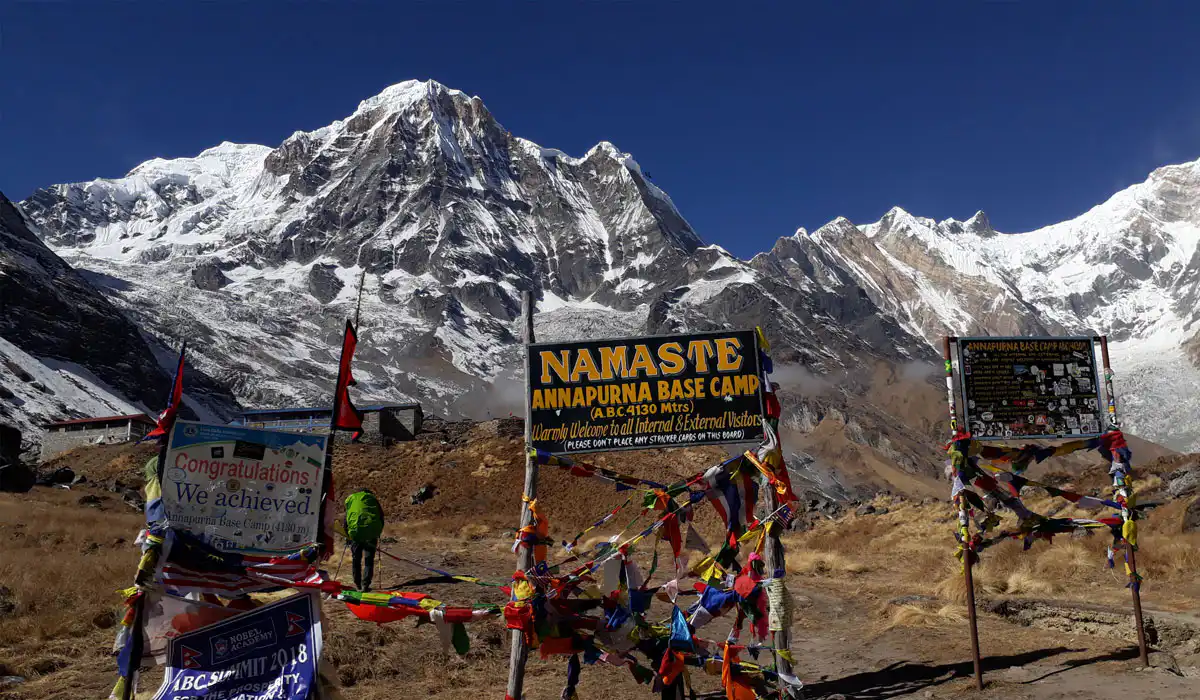
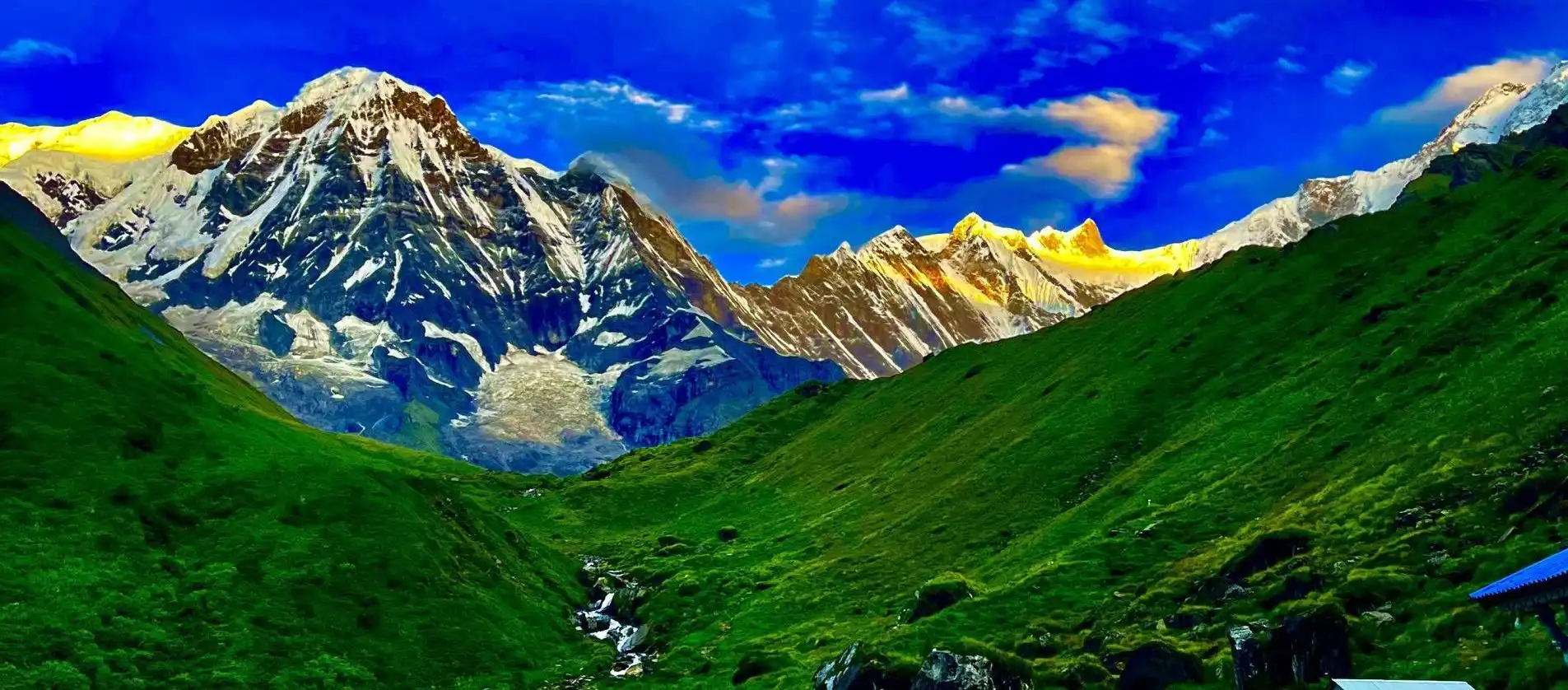
- Unobstructed vistas of mountains in spring, including peaks like Annapurna I, Annapurna South, Dhaulagiri, Machhapuchhre, Himchhuli, Manaslu, etc.
- Experience the rare and endangered wildlife of the Annapurna region actively in spring.
- Get amazing vistas of the clear blue sky from the Poon Hill viewpoint.
- See the trails of the Himalayan foothills covered in pink and red blossoms of rhododendron trees.
- Observe and experience the hot water springs of Jhinu Danda.
- Learn about the culture and traditions of the indigenous Magar and Gurung communities along the Annapurna trails.
- Pass through the trails, filled with the aromas of blooming wildflowers, within the thick, lush green forests.
- Experience the warm hospitality of Nepali locals who will house you.
Permits Needed for Annapurna Base Camp Trek in March

You need two major permits to do the Annapurna Base Camp trek. They are the TIMS card and the ACAP entry permit.
The TIMS, or Trekker’s Information Management System, permit is required when trekking anywhere in Nepal. It is a way of tracking the safety of trekkers. The ACAP, or Annapurna Conservation Area entry permit, is required for the protected area. The Annapurna Conservation Area is designated a protected region to conserve rare wildlife. So the permit is intended to ensure that, despite frequent travel, the region is well cared for.
The cost of these permits varies throughout the year. For your Annapurna base camp trek in March, however, the cost is as follows:
- Trekker’s Information Management System’s permit (TIMS) – USD 17 per person
- Annapurna Conservation Area Entry Permit (ACAP) – USD 25 per person
Why is the Annapurna Base Camp trek suitable in March?

Suitable temperature and weather
March marks the start of spring in Nepal. The temperature in the Annapurna trails during winter is quite low. You ought to cover yourself very well and carry heavy luggage to keep yourself warm. Temperatures take a turn and increase significantly during March. Although it is not as warm as during peak spring, it is still much warmer than the dread of winter. Snowfall is likely in higher-altitude places during early March. But the weather is comparatively stable in most parts during spring.
You get significantly more hours of daylight, 7 hours on average. This makes the region very suitable for trekking; you need not walk or rush to reach places, as it gets dark late. Early mornings and late evenings might make the region very cold. But as long as there is daylight, the region is perfect for travel.
You will notice the temperature slowly increasing from the crack of dawn. The trails might experience temperatures as low as- 0 degrees during early morning and late night. However, the city areas like Kathmandu and Pokhara experience temperatures ranging from 20 to 26 degrees in March. Night-time temperature drops to -10 degrees in city areas, true. The trails have unpredictable temperatures, especially as you travel higher.
An overview of the temperature for the ABC trek in March is shown in this table.
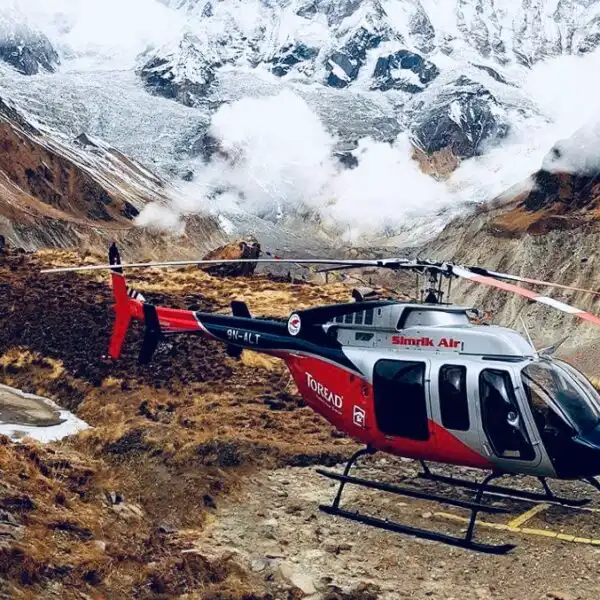
Annapurna Base Camp Trek With Helicopter Return
Annapurna Base Camp is a popular trekking destination that takes you to the foothills of the eight-thousander. Similar to treks like the…
Temperature of ABC trails in March
| PLACE | Average temperature (degrees Celsius) | Maximum temperature (degrees Celsius) | Minimum Temperature (degrees Celsius) |
| Kathmandu | 16 | 26 | 5 |
| Pokhara | 17 | 21 | -2 |
| Ghorepani | 7.5 | 13.6 | 1.5 |
| Chomrong | 7 | 10 | -3 |
| Dobhan | 10 | 15 | -4 |
| Annapurna Base Camp | 4 | 8 | -16 |
Aesthetic beauty
The mountain trails become so much more vibrant in March. During winter, the harsh weather withers the natural atmosphere of the trails. However, after March arrives, the beauty of the trails starts to enhance. The sky will clear of gloomy clouds and be a bright shade of blue. This allows the beautiful mountain ranges to shine along the horizon.
The flowers that ought to bloom during peak spring start showing buds early in March. You might find some blossoms by the end of the month as well. Flowers like rhododendron, jasmine, and magnolia can be seen covering the forest trails. This makes the trail quite beautiful to walk on. Similarly, the streams, rivers, and springs are voluminous and beautiful. The snowmelt after winter ends mixes with water bodies, making them very pleasing.
Active wildlife and vibrant vegetation
The Annapurna Base Camp trek follows a route within the Annapurna Conservation Area. The region is popular for housing many rare endangered species. These wildlife species will start to become active as winter ends. There are multiple chances of sighting them during your trek in March. Red Panda, Himalayan tahr, musk deer, etc, are some of the wildlife species you might be able to spot.
Along with better opportunities for wildlife observation, March also makes the region’s vegetation lusher. You will find terraced farms looking beautifully green and vibrant. The walk through the forested trails will be mesmerizing, and you can find many wildflowers. By the end of the month, you can find beautiful blossoms throughout the forests, which will be incredible to watch.
Availability of resources
The resources in the remote trails of the Annapurna region become quite scarce during the off-season. The harsh winter weather does not allow for a smooth flow of resources. Hence, compelling local businesses to close. Most lodges in high altitudes close during winter. However, as spring approaches, the weather becomes suitable again. The businesses will be up and running, and you will have no issues with amenities during your trek.
Moreover, the amenities will be plentiful, especially at the beginning of the month. The off-season will have just ended, and very few travelers will be around.
Empty trails
Although March marks the beginning of the trekking season, the trails are not crowded. The early days of March still linger with hints of winter, and the trails become more crowded in later months. This time would be very suitable for you if you love trekking along peaceful trails with few people around.
Festival season
Nepal is a diverse country and keeps inviting many celebration times and again. March is one of those times in Nepal. March brings festivals like Holi, Chaite Dashain, and Ghode Jaatra. This makes early March a great time to appreciate Nepal’s festivities.
Dry trails
The trails in March will be rather dry because there won’t be much snowfall or rain. As a result, there is a reduced risk of accidents caused by slippery roads. As a result, this time of year will make trekking quite convenient. Moreover, landslides and slick pathways are brought on by winter and rainfall. Road blockages caused by such issues greatly impede hiking. But if you happen to do the Annapurna Base Camp trek in March, this will probably not trouble you.
Anything to look out for regarding the Annapurna Base Camp trek in March?

Increasing crowds
Although the early days of March bring a relatively peaceful trail, the crowds start to grow as the days pass. By the end of the month, the peak season starts. Trekkers from all around the world will hop on to the Annapurna Base Camp trek. This might cause a disturbance. If you had planned a quaint trip during March, do it earlier. Later in the month, you might find things more chaotic.
Overbooking
The demand for amenities for the trek spikes in spring, and March marks the beginning of that surge. Providing everyone who wishes to do the ABC trek with it is quite difficult. Management of amenities alone will be quite difficult for trekkers. So, we highly recommend that trekkers seek help from guides or trekking agencies.
The earlier days of March do not necessarily bring huge amenities problems. But as the days pass, by the end of the month, this will be a rampant problem for trekkers. During your overnight stays, you might have to share a room with other travelers. There are very limited resources in high-altitude mountain trails. So you have to accommodate yourself.
If rooms are fully booked, you might have to make do by sleeping in the communal dining hall. However, this practice isn’t that bad. You might use this time to get to know many new people and fraternize. It will be like a fun slumber party for trekkers. But if you want a comfortable room for yourself, make sure you book early.
We recommend you make these bookings a week before you begin the trek. It is a safe idea to do this even in the early days of March. Prior booking of flights and lodging is a great practice. Be in contact with your guides and trekking agency.
Unpredictable weather earlier in the month
March is a comparatively very stable time to trek the ABC. However, the weather during the earlier days of the month cannot be fully trusted. There are many more pros to trekking in March than cons. Having said that, you still need to practice caution while trekking the trails. Make sure you stick to the weather forecast and tailor your itinerary accordingly during March. You can always rely on your guides or trekking agency to do that for you.
Higher expense
Due to overbooking of amenities, their costs will also begin to increase. High-altitude trail services are generally expensive. However, higher demand for services increases customer bargaining power and, in turn, makes the trek much more costly. There is a simple way to avoid this problem. You can either travel earlier, when resources are plentiful, or just not give in to the bargaining.
Making prior bookings by trusting reputable trekking agencies would also be a wise choice. Trekking agencies are quite familiar with the local businesses on the trails. They can make prior bookings for you to ensure there is no room for bargaining. In some cases, you might even get better deals and discounts for your trek.
Chances of fraud
There’s a chance that you will fall victim to scams because trekking trails get crowded in the spring. Unregistered businesses may offer you illegitimate packages. Thus, be cautious to verify again before accepting any packages from unidentified organizations or individuals. Make sure a reliable trekking agency accompanies your trip to Nepal and that you have travel insurance. Don’t allow the hustle and bustle of the busiest trekking season to turn you into a fraud victim.
8 Days Short Annapurna Base Camp Trek
Annapurna Base Camp is a popular trekking destination that takes you to the foothills of the eight-thousander. Similar to treks like the…
What things should you note for your Annapurna Base Camp trek in March?
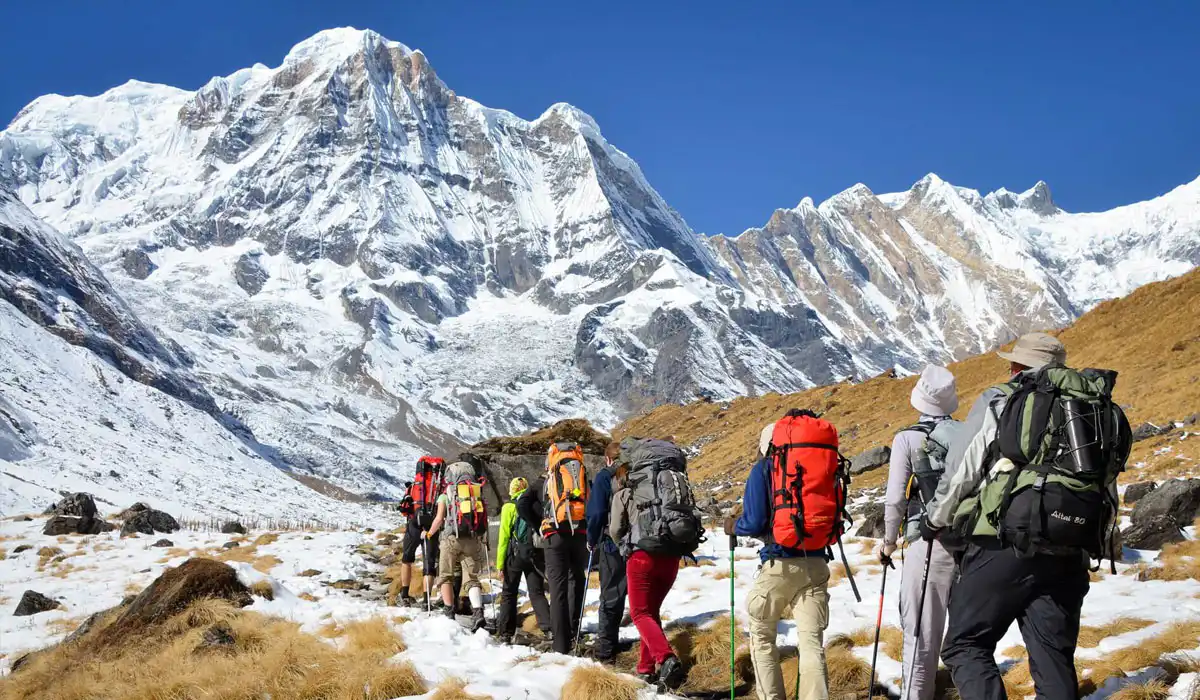
Make early reservations
The best tip for you while doing the Annapurna Base Camp trek in March is to book early. Make early bookings for your flight, transportation, and lodging. This makes your travel much smoother. If making such bookings is difficult for a foreigner, rely on a trekking agency or guides. This practice saves you time and, in some cases, makes the trek less expensive.
Be cautious
As we have warned you, there is a high risk of fraudulent activity during peak season. You might be charged very high or be scammed in other ways. Make sure the company you rely on for travel is reputable. For safety and permits, make sure you have travel insurance in place before you arrive in Nepal.
If you are searching for a helping hand in Nepal, you can also rely on us at My Everest trip. We have special packages for the Annapurna Base Camp trek in March. You will be assured of a safe and comfortable trek with all your amenities taken care of!
Read this next:
- Annapurna Base Camp Trek in May
- Annapurna Base Camp Trek In April
- Annapurna Base Camp Trek Map
- Annapurna Circuit Trek in March
Final Say
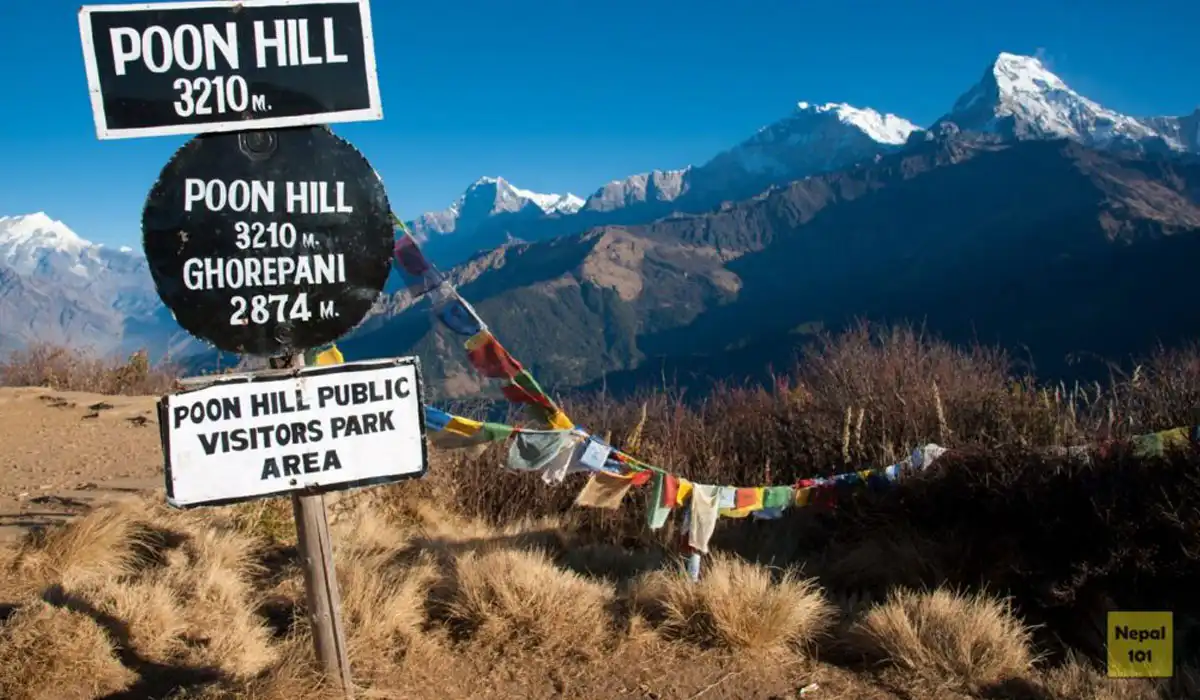
March is an excellent month for an exciting, low-risk excursion over remote hiking trails. Its climate is mild and pleasant, and its weather is predictable. March is also an excellent month to see the nearby mountains unhindered. March is also the best time of year to view the vegetation and wildlife. Therefore, we heartily urge you to take the March Manaslu circuit trip. Keep in mind the advice we’ve given you as you plan your March getaway to ABC.
Put together a capable staff if you want your ABC Trek in March to go off without a hitch. They arrange the necessary permits. You can rely on My Everest Trip to take care of these small details. For your convenience, we have put together a spring package for your March walk to Annapurna Base Camp. You can trek in style and at the ideal moment with our help. Please get in touch with us with any questions or to arrange a reservation.
Read also: