




12 Days


Quick Facts

Ground transportation in Nepal

Hotels & tea-house accommodation

All meals except in Kathmandu

Guided tour & trek throughout the trip

Autumn, Spring

Moderate

Nepal

5,213

Kathmandu - Maccha Khola - samagau - Larke Pass - Dharapani - Kathamndu or Pokhara


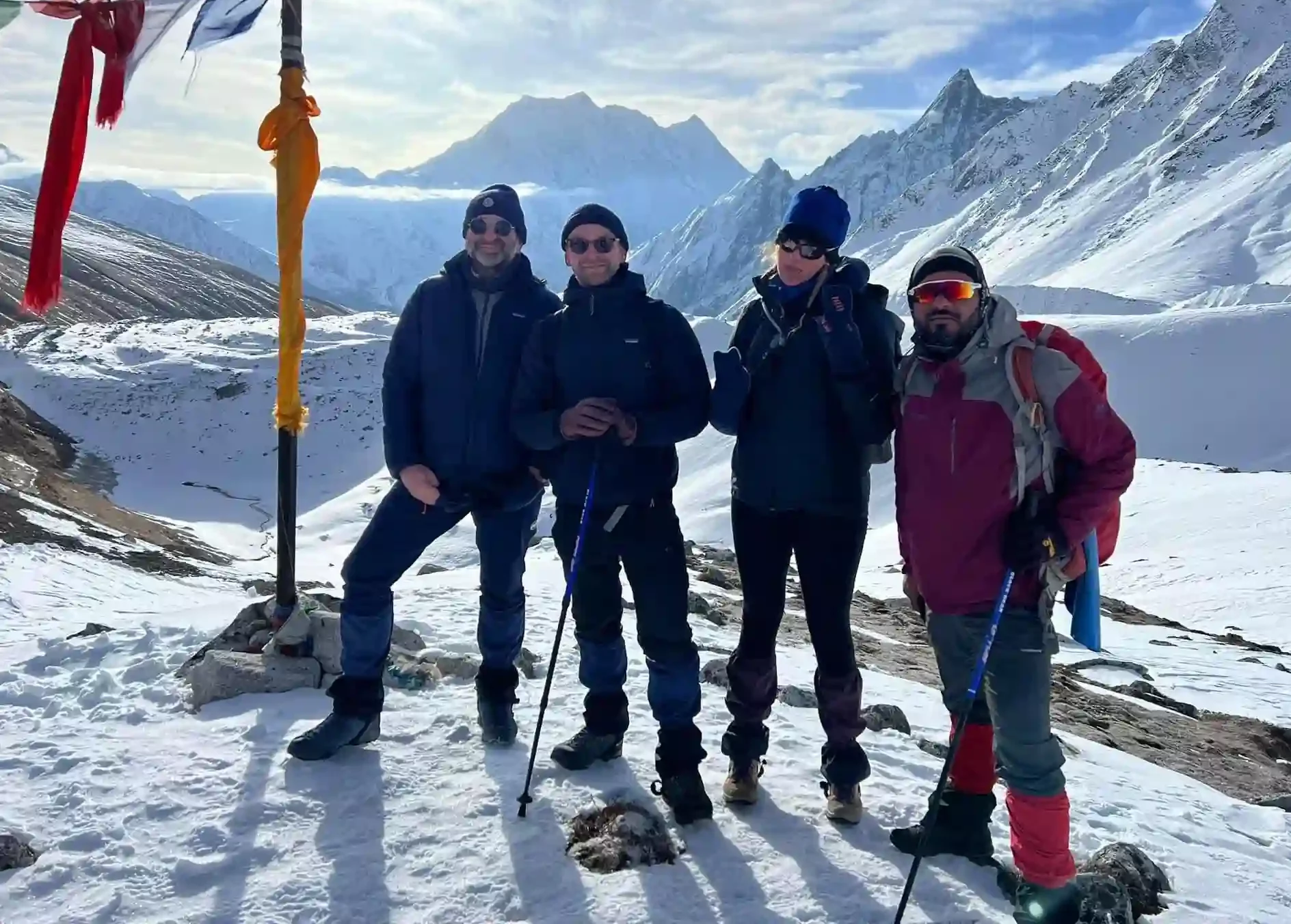
Why 12 Days Manaslu Circuit Trek?
Experience breathtaking Himalayan views, authentic mountain culture, peaceful trails, and unforgettable adventures around majestic Manaslu.
- 12-Day Manaslu Circuit Trek Adventure: Explore one of Nepal’s most spectacular and rewarding Himalayan trekking routes.
- Majestic Mount Manaslu Views: Enjoy breathtaking scenery of Mount Manaslu and surrounding Himalayan peaks.
- Scenic Mountain Landscapes: Walk through lush forests, dramatic valleys, alpine meadows, and rugged mountain terrain.
- Authentic Himalayan Villages: Discover traditional villages and experience the warm hospitality of local communities.
- Rich Tibetan-Buddhist Culture: Explore ancient monasteries, prayer wheels, chortens, and unique Himalayan traditions.
- Larkya La Pass Adventure: Cross the spectacular Larkya La Pass (5,106 m)and enjoy unforgettable panoramic mountain views.
- Manaslu Conservation Area: Experience diverse flora, fauna, and pristine natural beauty along the trail.
- Unforgettable Himalayan Photography: Capture stunning mountain views, cultural moments, and beautiful trekking landscapes.
- Peaceful Off-the-Beaten-Path Journey: Enjoy a quieter and more authentic Himalayan trekking experience away from crowded routes.
- Memories of a Lifetime: Combine adventure, nature, culture, and Himalayan beauty in an unforgettable Manaslu Circuit Trek.
12 Days Manaslu Circuit Trek Overview
12 Days Manaslu Circuit Trek offers an exciting adventure, stunning views of the majestic Himalayan range, and a lively Himalayan atmosphere. Exploring the wonders of the Himalayas, sightseeing in majestic snowy landscapes, immersing yourself in the Himalayan lifestyle, and experiencing local Himalayan culture all contribute to the Manaslu Circuit Trek’s appeal.
Experience the breathtaking 12-day Manaslu Circuit Trek, one of Nepal’s most rewarding and scenic Himalayan adventures. This hidden gem takes you through remote mountain villages, ancient Buddhist monasteries, lush forests, and spectacular alpine landscapes. Crossing the majestic Larkya La Pass (5,106m), trekkers enjoy panoramic views of Manaslu, Himlung, Cheo Himal, and Annapurna peaks. The trek offers a perfect blend of natural beauty, rich culture, and authentic local experiences away from crowded trails. Ideal for adventure seekers, the Manaslu Circuit Trek delivers unforgettable memories, stunning photography opportunities, and a true wilderness journey in the heart of the Nepalese Himalayas.
An Adventure Around Nepal’s Hidden Giant takes you through rugged trails, rushing rivers, cascading waterfalls, diverse terrain, lofty hills, remote villages, and a unique blend of Himalayan flora and fauna. The action-packed 12-day Manaslu Circuit Trek itinerary takes you to the lap of Mt. Manaslu (8,163), the world’s eighth-tallest mountain.
This staggering 12-day trek is filled with riveting moments. Because the beginning and end paths are different, this trek feels incomplete until you catch your ride from Syange to Kathmandu, an exhilarating experience.
Additionally, the Manaslu Circuit Trek Tour is less crowded than other mainstream trekking routes, such as the Everest Base Camp Trek and the Annapurna Circuit Trek. This offers quality time in the Himalayas, featuring mesmerizing views, stunning explorations, and first-class accommodations.
You will immerse yourself in the Himalayan atmosphere and lifestyle while exploring numerous village settlements in depth, as they are less crowded than other mainstream trekking sites.
This further enhances your local cultural immersion, exploration of monuments, and enjoyment of mountain experiences. The untouched beauty of the Himalayas, the pristine Himalayan lifestyle, and the unique Himalayan culture shall leave you stunned.
Manaslu Circuit Trek Difficulty
The 12-Day Manaslu Circuit Trek package offers breathtaking views of Himalayan Vistas and stunning snowy landscapes. It presents a magnificent up-close view of Mt. Manaslu and magical glimpses of Annapurna, Ganesh Himal, Ngadi Chili, Himalchuli, and many more.
Throughout the 12-Day Manaslu Trekking Experience with Local Guides, you’ll enjoy sightseeing of elevated hills, gushing waterfalls, soaring rivers, charming village settlements, and lush valleys.
Moreover, the beauty of this region is enhanced by the sight of two or three naked, picturesque snow-capped mountains on a clear day. The trails take you through dense pine forests, rhododendrons, and diverse landscapes, as well as tranquil alpine lakes and high mountain passes, offering splendid views of the Himalayan range.
Mesmerizing views
The Manaslu Circuit Trek offers an exhilarating, genuinely extraordinary off-the-beaten-path experience. This trek leads to Larkya La, the route’s highest point, at 5,160 meters (16,929 feet) above sea level. It offers an unparalleled trekking experience in Nepal. The breathtaking views from Larkya La will leave you feeling serene and fulfill your desire for the pristine beauty of the mountain range.
It offers a stunning view of the massive Mt. Manaslu and the surrounding mountain landscapes. Moreover, other viewpoints, such as Samdo village, Deng, and Dharamsala, offer the mystical beauty of the Himalayas and insights into local culture and lifestyle.
Cultural Immersion
The captivating views of the high Himalayas in the Manaslu region invite numerous trekkers, visitors, and mountain climbers. This region is the heartland of diverse communities such as the Gurungs, Tamangs, and Tibetans. It blends Hinduism (lower area) and Buddhism (Upper region).
Many festivals, such as Lhosar, Mani Rimdu, and the Tsum Shagya Centennial, are celebrated with great enthusiasm, showcasing respect for one another’s cultures. They share the same space and breathe the same cold Himalayan air.
Different ethnic groups have distinct cultures, customs, and traditions, while all communities support and respect one another’s cultures and traditions.
Along the way to Mt. Manaslu, you’ll encounter numerous villages with ancient monasteries and prayer flags. Sama and Samdo villages are home to numerous monasteries and Tibetan practices that can enrich your spirituality. The fusion of cultural variation and natural beauty in the Manaslu region has attracted people worldwide.
Distinct Flora and Fauna
The Manaslu region is rich in diverse flora and fauna, and the Manaslu Conservation Area is home to a wide range of plant and animal species. This trek offers insights into the region’s myriad plant species, as you’ll trek through dense forests of rhododendrons, pine, and bamboo. It also offers views of various bird species, including the Himalayan Monal (Nepal’s national bird).
The 12-day Manaslu Circuit Trek itinerary also offers glimpses of Himalayan wildlife, including Red Pandas, Himalayan Tahr, Monkeys, Musk Deer, and Snow Leopards. This trek allows you to explore the rich biodiversity of the high Himalayan region.
Rip-roaring Adventure
During your Manaslu Circuit Trek, you’ll navigate rugged trails, challenging terrain, dense forests, and high mountain passes. This trek demands your attention and trekking skills, as you’ll encounter challenging paths along the way.
Cross soaring suspension bridges over rivers, navigate rocky trails as you ascend, and spend 13 days in completely remote areas to pump up your adrenaline and reward yourself with a riveting journey.
The Manaslu Circuit Trek is an exhilarating journey from beginning to end, as the return route differs from the start. You’ll be surrounded by alpine lakes, cascading waterfalls, and massive mountains, and the dynamic weather will make your journey awe-inspiring and thrilling.
Manaslu Circuit Trek Route
The 12-Day Scenic Trek to the Manaslu Region is less traveled than other mainstream trekking sites, such as the Everest Base Camp Trek, Annapurna Circuit, and Langtang Valley Trek. Though the majestic mountains and snowy landscapes await, its remoteness keeps it less traveled than others. This summons enthusiastic trekkers who want to revel in the beauty of the Manaslu region and embark on thrilling adventures.
This trek takes you to the lap of the mountains and, with fewer crowds, offers peaceful, serene experiences amid the high Himalayas. You will also gain insights into the Himalayan lifestyle and immerse yourself in local cultures and customs. This also reduces competition for first-class accommodation and opens up a wide range of exploration sites.
Remote experiences
The 12-day Manaslu Circuit Trek takes you through different villages and settlements to the extreme altitude of Larkya. The high Himalayan Manaslu region lacks standard city amenities, making your trek more adventurous and offering insight into traditional ways of life and a nature-dependent lifestyle.
Staying without a mobile phone or internet for days, surrounded by the Himalayan breeze, is a fantastic experience. The Manaslu region’s remoteness lets you immerse yourself in local practices and take in the mesmerizing views of the surrounding mountain ranges. This enhances the overall trekking experience, as you’ll relish nature’s raw beauty.
Being disconnected for days and trekking to the mountains’ lap through villages, forests, rivers, and waterfalls with just basic supplies and facilities is truly astounding. Moreover, it provides insights into environmental adaptation, diverse cultures, and ancient ways of living.
Himalayan Lifestyle
Living in the Himalayan region, we rely heavily on the natural environment. The Himalayan people’s economic sources include tourism, agriculture, local farming, and animal husbandry. Their crops include potatoes, barley, maize, buckwheat, and more.
Their domestic species include Yak and Sheep. During your trek to the Manaslu region, you will gain insights into this nature-dependent way of life.
Moreover, people in the Himalayan region are warm-hearted and will welcome you with genuine hospitality. The Himalayan lifestyle is truly captivating. It means stepping into areas of nature with stunning landscapes, rich cultures, and traditions.
The Himalayan lifestyle brings peace of mind and fosters a deeper connection with nature. The Manaslu Circuit Trek offers a diverse range of cultures, connecting different places and their unique ways of life, ultimately providing a wonderful experience.
Best Season for Manaslu Circuit Trek
When trekking in the high Himalayan region, it is essential to consider the climate and plan your trek for the appropriate season. Spring (March to May) and Autumn (September to November) are perfect times to plan your trek to Manaslu.
During this period, ideal weather enhances your trek. This season offers clear skies and warm, dry weather. Clear, sunny days offer magical views of bare mountains, stunning sunrises, and sunsets. This helps keep your trek on schedule, without the risk of delays or postponements. The exquisite weather presents outstanding sights and offers a stunning experience.
You will also immerse yourself in Nepali culture and autumn festivals. Autumn encompasses many of Nepal’s leading festivals, such as Dashain, Tihar, and Mani Rimdu.
Planning your trek during this time will deliver a high-quality experience and valuable insights into the rich culture and lifestyle of the Himalayas. Spring and Autumn offer clear mountain vistas, and moderate temperatures reduce the risk of extreme cold, such as hypothermia and frostbite. You can also witness breathtaking dawns and sunlight filtering over the mountainside.
Also, spring and Autumn have low risks of rainfall, snowfall, and windstorms, ultimately contributing to your overall trekking experience in the mountain region. Furthermore, the Manaslu Circuit Trek offers the opportunity to witness and engage in local farming, agriculture, and animal husbandry, as well as the Himalayan way of life.
Manaslu Circuit Trek Route and Trail Conditions
The Manaslu Circuit Trek follows the Budhi Gandaki Valley from the lower hills toward the high Himalayan settlements, then crosses Larkya La Pass and descends into the Marsyangdi Valley. The trail changes considerably as we gain altitude. Lower sections pass through forests, terraced fields, rivers, waterfalls, suspension bridges, and traditional villages. After Namrung, the landscape becomes drier and more open as we approach the upper Manaslu region.
The trail from Soti Khola to Jagat includes rocky paths, stone steps, river crossings, and some sections affected by road construction. After Deng, the route becomes more remote, with steeper climbs and narrower mountain trails. From Samagaun toward Samdo and Dharamsala, vegetation becomes limited, and the terrain is increasingly alpine.
The section beyond Dharamsala is the most demanding part of the route. We will cross rocky and potentially snow-covered terrain before reaching Larkya La Pass. After the pass, the trail descends toward Bimthang through glacial landscapes and then continues toward Dharapani.
Trail conditions can change with rainfall, snowfall, landslides, and road construction. Our guide will monitor the route and adjust the daily plan as needed to keep trekking safe and practical.
Join our 12-Day Manaslu Circuit Group Trek in 2027 or 2028! Fixed departure dates are now open for booking. Reserve your spot today and turn your Himalayan trekking dream into a beautiful reality!
12 Days Manaslu Circuit Trek Itinerary
Day 01: Drive from Kathmandu to Maccha Khola
After you arrive in Kathmandu, we’ll begin our trek the next day. The day before, necessary preparations will be made, and we shall continue our Manaslu Circuit Trek with a drive from the Kathmandu Valley to Maccha Khola. We drive alongside the thundering Trishuli River, relishing the beauty of elevated hills, dense forests, gushing waterfalls, local village settlements, and distant mountainous landscapes.
After a few hours ‘ drive, we’ll reach the Soti Khola of Gorkha District. We’ll continue through dense forests and local settlements with glimpses of the mountain range at a distant location. We pass through Liding, Lapubesi, and Nauli Khola on the way alongside the Budhi Gandaki River before reaching our 1st day’s destination, Maccha Khola, where we will rest our night.

Lunch, Dinner

Teahouse

930 m / 3,051 ft
Day 02: Trekking from Maccha Khola to Jagat
The actual trekking begins today after your early morning breakfast at Maccha Khola. We have a long trek to take before reaching Larkya La, the highest point of our trek. This day involves trekking for about 6-7 hours along the rugged trails and elevating about 500m in altitude. The beginning of the trek fuels your enthusiasm and excitement with magical glimpses of Ganesh Himal (7422m).
On this day, you’ll walk through numerous stopovers and village settlements that will get you stunning views and insights into traditional life. You’ll pass through Khorlabesi, Tatopani, Dobhan, and Lhakpa alongside the Budhi Gandaki River before reaching Jagat, where we’ll spend our night. Jagat is a small village settlement rich in natural beauty and cultural heritage. It offers panoramic views of mountainous landscapes and high, rugged hills.
Breakfast, Lunch, Dinner
Teahouse

22 km / 13.6 miles
1,340 m / 4,396 ft

7hrs
Day 03: Trekking from Jagat to Deng
The trek continues, setting footprints along the trails to Deng through Sirdibas and Salleri. Today, the trek begins through trails of bamboo forests alongside the Budhi Gandaki River. Your heart pumps with excitement and fear as the thrilling journey magnifies, and you’ll have to cross the rushing river through a high-suspension bridge. From there, you’ll pass through terraced farms of wheat and Barley of Philim and Ekle Bhatti. A stone-stacked entrance gate in Ekle Bhatti welcomes travelers and trekkers to the region.
After leaving terraced farms behind, you’ll cross through a few more suspension bridges. Then, the trek passes through Nyak and Nyak Phedi, where you can see gushing waterfalls, lush green vegetation, and picturesque landscapes. After rest and lunch at Nyak Phedi, you’ll trek towards Deng with fresh legs. Deng is a traditional Gurung village and a popular stopover for sightseeing, offering 360-degree landscape views.
You’ll understand the approaching mountain after you reach Deng and catch a majestic view of Shringi Himal (7161m). You can also have some photo sessions on the bank of the roaring river and explore local village settlements and cultures. Most of the households in Deng are made of stone and gravel, and you’ll spend your night at one of the finest teahouses in the city.
Breakfast, Lunch, Dinner
Teahouse
20.5 km / 12.7 miles
1,804 m / 5,919 ft
7hrs
Day 04: Trekking from Deng to Namrung
After breakfast, you’ll continue your trek, passing through trails of lush green vegetation and many Tibetan mani walls. Mani walls are walls composed of stones bearing Buddhist scriptures. They hold religious significance in Buddhism, featuring Buddhist mantras and prayers. Visiting such places will invite good fortune and spiritual blessings into your life.
From here, you’ll be passing through trails of oak and rhododendron forests and relishing the beauty of magnificent waterfalls. You’ll also pass through numerous suspension bridges and numerous places like Rana, Bihi, and Bihi Phedi until finally reaching the famous stopover, Ghap.
Ghap offers magical views of the mountain range and lush green landscapes, and is a famous stopover for trekkers and nature enthusiasts. From here, you can walk along the path while enjoying the beauty of nature.
After 3-4 hours of trekking from Ghap, you’ll finally reach Namrung, which offers a magical view of Shringi Himal, Ganesh Himal, and Mt. Manaslu. Nestled in the lap of the Himalayas, Namrung village offers stunning mountain landscapes, verdant valleys, and gushing waterfalls. Namrung is a traditional Gurung village, where you can gain insight into the Gurung lifestyle and culture. You’ll spend your night at Namrung at one of the finest lodges, preparing for the next day.
Breakfast, Lunch, Dinner
Teahouse
19.4 km / 12 miles
2,630 m / 8,629 ft
7hrs
Day 05: Trekking from Namrung to Lho
After an early morning breakfast, we’ll continue our journey from Namrung. This day involves about 4-5 hours of trekking while ascending to an altitude of about 550m. Originally, we’d go from Namrung to Samagaon, but since we’ll need to maintain our pace while ascending, we’ll spend the night at Lho. The trail also passes through landslide-prone areas, and it demands careful observation.
Along the way, you’ll pass through trails of Juniper bushes and Lihi village. We’ll enjoy the stunning views of the landscape and finally cross the stream of the Lindanda Glacier. From there, we follow the trails to Sho village, which offers excellent views of Simnang Himal. We’ll meet at dusk in Lho village, where we’ll stay overnight. Lho is a traditional Tibetan village inhabited by the Nubri people and offers outstanding views of the surrounding mountains.
Lho village is rich in Tibetan culture and is home to many monasteries. One of the famous monasteries is Ribung Gompa, which serves a religious and spiritual purpose. This site also offers excellent landscapes and aerial views of the region.

Breakfast, Lunch, Dinner
Teahouse
10.5 km / 6.5 miles
3,180 m / 10,433 ft
5hrs
Day 06: Trekking from Lho to Samagaon
The trek begins the next day from Lho to Samagaon. It takes around 4-5 hours to reach Samgaon. You’ll maintain your pace while trekking, and you’ll only be ascending by 350m this day. The trek is easy and enjoyable, as you’ll catch beautiful sights from the mountainous range.
You’ll trek alongside the Budhi Gandaki River and finally reach Shyala village. Shyala village is a small settlement surrounded by towering Himalayan Peaks and rich in natural beauty and agricultural fields. This place offers scenic views of the surrounding mountains, including Mt. Manaslu. From there, we’ll walk along the trails and finally reach Samagaon, where we’ll spend our night.
Breakfast, Lunch, Dinner
Teahouse
8.1 km / 5 miles
3,530 m / 11,581 ft
4hrs
Day 07: Acclimatization at Samagaon
This day marks a rest day of your trekking journey. As we ascend in altitude, acclimatization is crucial for our bodies to adapt to changes in atmospheric pressure and oxygen levels. Though it’s a rest day, you’ll be exploring the local village and nearby settlements on this day.
On this day, you can choose to visit Birendra Taal or Pung Gyen Gompa. Both are located near Samagaon and offer spectacular views of Mt. Manaslu. Whether you visit the lake in the heart of the mountain or a beautiful Buddhist monastery in the lap of the Himalayas, you’ll be rewarded with stunning sights and marvelous experiences.
Breakfast, Lunch, Dinner
Teahouse
8 km / 5 miles
3,530 m / 11,581 ft
4hrs
Day 08: Trekking from Samagaon to Samdo
After proper acclimatization, you’ll begin your trekking journey toward Samdo. Today’s trek will be comparatively easy and pleasant. We’ll walk upstream of the Budhi Gandaki River and finally through Juniper and Birch forests. After 4-5 hours of trekking, having gained more than 300m in altitude, we reach Samdo village. Samdo village is a beautiful village with local culture, traditions, and numerous monasteries, offering stunning mountain views.
Along the way, you’ll encounter numerous Mani walls encrypted in prayers and mantras. Samdo is a Tibetan village inhabited by the Bhotia community. It offers majestic sights of the Himalayas and has modest accommodations in the finest teahouses and lodges.
Breakfast, Lunch, Dinner
Teahouse
10 km / 6.2 miles
3,870 m / 12,697 ft
5hrs
Day 09: Trekking from Samdo to Dharamsala
This day marks a thrilling trekking journey as you’ll cross the Budhi Gandaki River through a wooden bridge and ascend higher than on other days. This shall enhance your trekking experience while adding magical glimpses of mountains to your sight. Today, you’ll pass through Athahra Saya and Larke Rivers while observing many Mani walls.
The trek takes around 4-5 hours to reach Dharamsala, also known as Larkya La Phedi. Larkya La Phedi presents you with outstanding views of Larkya Peak and Naike Peak. Along with that comes the astonishing Larkya Glacier, located on the way to Dharamsala. We’ll be spending our night at Larkya Rest House in Dharamsala. Dharamsala offers you a beautiful close view of Mt. Manaslu.
Breakfast, Lunch, Dinner
Teahouse
8 km / 5 miles
4,460 m / 14,633 ft
4hrs
Day 10: Trekking from Dharamsala to Larkya La to Bimthang Village
We have been trekking for days to reach this day. Today, we’ll resume our trek after our early morning breakfast at Dharamsala. The day also marks challenges as we’ll reach the highest point of this trek, Larkya La, at an altitude of 5,160m. You’ll walk along the moraines of Larkya Glacier and the icy trail while elevating until you reach Larkya La Pass.
From there, you’ll catch the phenomenal views of Mt. Manaslu up very close. Along with that, you’ll behold the panoramic snowy landscapes of the neighboring mountains like Annapurna (7937m), Himlung (7126m), Larkya Peak (6249m), Ratna Chuli (7035m), Cheo Himal, and Kang Guru (6981m). After relishing the majestic beauty of the mountainous range, we further walk along the moraine to the grassy moraine and start to descend towards Bimthang village. After a long day of trekking uphill and downhill, you’ll spend your night at Bimthang village.
Breakfast, Lunch, Dinner
Teahouse
13 km / 8.1 miles
5,160 m / 16,929 ft
8hrs
Day 11: Trekking from Bimthang Village to Dharapani
As the Manaslu Circuit Trek approaches an end, we’ll start descending towards Dharapani. After an early breakfast, we walk along the Rhododendron, oak, and pine forests, leaving behind the Himalayan vistas, Hampuk, and Yak Kharka, and reach Kharche. From there, you’ll pass through Gho, the local village settlement of the Gurung community.
Along the way of descending, you’ll cross Tilije and Thonje and finally reach Dharapani. You’ll spend your night at Dharapani at one of the first-class lodges. Dharapani is a beautiful village offering magnificent views of the Himalayas. If you have ample time, consider the Annapurna Circuit Trek right after the Larkya La Pass.
Breakfast, Lunch, Dinner
Teahouse
18 km / 11.2 miles
3,720 m / 12,205 ft
8hrs
Day 12: Drive through from Dharapani to Kathmandu
This is the last day of the Manaslu Circuit Trek, and it’s time to bid farewell to the beautiful Manaslu region. You’ll catch a private jeep directly back to Kathmandu from Dharapani. Our packages arrange this facility for you, saving you extra time and energy.
The journey was exciting and amusing, and while the Manaslu region may yearn for you, its beauty will remain in your memories, and you shall rejoice in the nostalgic vibe of the once-in-a-lifetime experience of the Manaslu Circuit Trek.
Breakfast
Hotel
1,400 m / 4,593 ft
12 Days Manaslu Circuit Trek Map
What To Expect?
What's Included
Accommodation
- 11 Nights in local tea houses along the trail (twin-sharing basis).
Trekking Permits
- Manaslu Conservation Area Permit (MCAP)
- Annapurna Conservation Area Permit (ACAP)
- Manaslu Special Restricted Area Permit
Transportation
- Kathmandu to Machha Khola by Local bus
- Dharapani to Besisahar by public shared jeep
- Besisahar to Kathmandu or Pokhara by local bus
Meals During Trek
- 11 Breakfasts – Local and continental options from tea house menus.
- 11 Lunches – Simple, energizing meals served at trailside tea houses.
- 11 Dinners – A variety of veg and non-veg meals (local and continental dishes) at local tea houses.
Guides, Porters & Support Team
- Professional Trekking Guide: English-speaking, government-licensed, 10+ years of experience.
- Porter Services: One porter for every two guests (maximum 20 kg per porter)
- First Aid Kit: Carried by the guide at all times.
- Insurance Coverage: Emergency evacuation and medical insurance for guides and porters.
- Meals & Salary for Crew: All meals included, with fair wages as per tourism association standards
Complimentary services from My Everest Trip
- -25 degree Celsius sleeping bag during the trip
- A pulse oximeter to monitor your oxygen saturation and heart rate
- Water purification tablets
- First aid kit box, which includes an oximeter too
- Seasonal fruits for dessert
- Duffle Bag for the Trek
- Manaslu Trek Map
Note: If you prefer a private jeep for your journey, please contact us. We’ll be happy to arrange a comfortable, convenient private jeep to suit your preferences.
What's Excluded
- Nepal Visa Fee
- Travel and medical evacuation insurance
- International flights
- Personal expenses (phone calls, internet, laundry, bar bills, snacks, bottled or boiled water, souvenirs, hot showers)
- Personal trekking gear and equipment
- Private transport to the Manaslu trek starting point and return to Kathmandu or Pokhara.
- Tips for guides and porters.
Fixed Departures for 12 Days Manaslu Circuit Trek

Tripadvisor Reviews








Google Reviews


12 Days Manaslu Circuit Trek Additional Information
Manaslu Circuit Trek Cost
The cost of the Manaslu Circuit Trek depends on several factors, including the duration of your trek, your preferred mode of transportation, the level of comfort you seek, and whether you hire extra porters. The cost ranges from $850 to $1500.
This package includes permits, guides, accommodation, and food, while your expenses and shopping are at your discretion. Accommodation in teahouses is more affordable, but we also offer deluxe packages for those who desire supreme treatment. You may also wish to tip guides and porters.
Manaslu Circuit Trek Permit Cost
The government of Nepal has designated the Manaslu Region, from Jagat to Dharapani, a restricted area for tourism management. You must have a special permit to enter Manaslu.
Special Restricted Area Manaslu Trek Permit (Maaslu RAP)
It is best to obtain a Manaslu trek permit from Jagat until you reach Sama Gaon. After passing through the village of Sama, you need an ACAP entry permit. The cost of the Manaslu RAP varies depending on the duration of your stay between Jagat and Dharapani. In Sama Gaun, you’ll find the final checkpoint for RAP.
From September to November, the permit fee is $100 per person for the first seven days. After that, it is an additional $15 per person per day. From December to August, the cost is $75 per person for the first 7 days, plus $10 per person per day starting on the 8th day.
Manaslu Conservation Area Project (MCAP Permit)
The Manaslu Conservation Area Permit is necessary from Philim, where the Manaslu Conservation Area begins. The pricing remains the same throughout the year, at $30 per person. Additionally, there are no restrictions or pricing changes on the number of days spent inside MCAP.
Annapurna Conservation Area Project (ACAP Permit)
The Manaslu Trek Permit is necessary from Dharapani until you leave the ACAP in Besi Sahar. The price remains consistent at $30 per person throughout the year. There are no restrictions or pricing changes on the days spent inside ACAP.
Transportation & Service Costs Overview:
- Local Transportation: USD 50 – 60 per person
- Private Jeep Hire: USD 450 – 500 Round trip
Meal and accommodation Cost
- Food Expenses: USD 30 – 35 per day
Guide and Porter Hiring Cost :
- Guide Service: USD 30 per day
- Porter Service: USD 25 per day
Manaslu Circuit Trek Cost Breakdown
The cost of a Manaslu Circuit Trek depends on the services included in the package, group size, transportation, accommodation, permits, and any additional arrangements. Our standard package is priced at US$1,250 per person, with a discounted rate listed for groups of 6 to 10 trekkers.
| Cost component | Package status |
| Trekking guide | Included |
| Ground transportation | Included according to the itinerary |
| Teahouse accommodation | Included |
| Meals during the trek | Included |
| Trekking permits | Arranged |
| Guide salary and insurance | Included |
| Guide equipment and local transportation | Included |
| Group first aid supplies | Included |
| Government taxes and service charges | Included |
| Travel insurance | Not included |
| Personal drinks | Not included |
| Personal shopping and laundry | Not included |
| Tips for trekking staff and driver | Not included |
| Personal trekking equipment | Not included |
| Porter service | Available at the stated package arrangement |
The price can change if you request a private jeep, helicopter transportation, additional nights, extra trekking days, or a customized itinerary. Personal expenses such as drinks, snacks, laundry, charging, tips, and shopping should also be considered when planning your trekking budget.
Manaslu Circuit Trek Difficulty and Fitness Requirements
The Manaslu Circuit Trek is considered a moderate to challenging trek because of its long walking days, changing terrain, increasing altitude, and high pass crossing. The difficulty is not based on technical climbing, but trekkers need good endurance to handle several consecutive days of walking.
The lower part of the trail involves frequent ascents and descents, uneven paths, stone steps, and suspension bridges. As we approach Samagaun, the altitude becomes a more important factor. The crossing from Dharamsala to Bimthang via Larkya La is generally the hardest day because it combines a long ascent with a high altitude pass and a lengthy descent.
A good level of fitness will make the trek more comfortable. Regular walking, uphill hiking, stair climbing, cycling, and suitable strength exercises before the trip can help prepare your body for the trail.
You do not need previous mountaineering experience, but you should be comfortable walking for several hours a day. Your pace will be adjusted according to the group, trail conditions, and altitude.
Difficulty Level of the Epic 12 Days Manaslu Circuit Trek Itinerary
Although the Manaslu Circuit 12-Day Trek is a safe and secure trekking journey, there are minor challenges along the way. This is a 12-day trek to the base of Mt. Manaslu, and along the way, there are Himalayan challenges such as altitude sickness and extreme cold.
The trekking route is thrilling and takes you to an altitude of 5,160m. Ascending in altitude results in changes in atmospheric pressure and oxygen level, which require proper acclimatization along your trekking journey.
If your body can’t adapt to such changes in atmospheric pressure and oxygen level, it may suffer from Altitude sickness. Altitude sickness is also known as Acute Mountain Sickness (AMS). It causes severe headaches, nausea, dizziness, and loss of appetite. Acute Mountain Sickness (AMS) ranges from mild to extreme, and its types include high-altitude cerebral edema (HACE) and high-altitude pulmonary edema (HAPE).
While you won’t be affected by HACE and HAPE during your Manaslu circuit trek in Nepal, taking the necessary measures is still essential. Staying hydrated and maintaining a steady pace while ascending to higher altitudes is crucial. Furthermore, you can also take Diamox (medicine for altitude sickness) if you suffer from altitude sickness.
Weather conditions
The weather in the high Himalayan region is unpredictable and subject to fluctuations. Before embarking on the week-long trek, it is essential to be aware of the region’s weather conditions. The Manaslu Circuit Trek takes you to extreme altitudes with climatic challenges. Fluctuating weather may bring rainfall, snowfall, and windstorms, further presenting challenges such as slippery trails and snowy tracks.
Changing weather brings you a sunny day one moment and snowstorms the next. Changing weather also reduces visibility throughout your trekking journey, bringing foggy conditions that obscure the clear views of mountain ranges. Additionally, climatic conditions pose risks of landslides and floods along your route, and it is crucial to remain attentive during your trek.
Moreover, it delays your trek, resulting in a less enjoyable experience in the mountains. Therefore, it is essential to consider the Himalayan region’s climatic conditions and plan your trek for a suitable time. Planning your trek during an appropriate season won’t expose you to weather fluctuations and the challenges that come with them.
Challenging Manaslu Trek Route
The Manaslu Circuit Trek 12-day itinerary takes you through challenging terrain, steep ridges, and rocky trails. Along the way, you’ll encounter numerous minor obstacles, as trekking to the Himalayan region demands strong determination and physical strength. You’ll be hiking through forests and rugged trails while ascending to altitudes, which may cause extreme fatigue and minor injuries if not carefully monitored.
Steep ascents and descents may also present challenges, and careful footing is required. You’ll cross the river through many suspension bridges, which demand precise observation and cautious footing. Therefore, it is essential to bring adjustable trekking poles and boots. These will significantly enhance your trekking experience, providing a comfortable and secure journey.
Limited services
The high Himalayan region lacks standard city facilities. The lifestyle of the Manaslu region is heavily dependent on nature and lacks the outstanding facilities found at other mainstream trekking sites. While you’ll be presented with basic, suitable accommodation, there are also challenges in competing for and securing the best facilities.
Services like electricity and internet connection may also be limited, so carrying a power bank and extra batteries is crucial. While minor injuries and illnesses can be managed without issue, there are no medical centers or healthcare services in the upper Manaslu region. Therefore, it is essential to bring your first aid items with you in case you need them.
Physical difficulty
The high Himalayan region’s trails pose challenges. Rocky trails and steep ridges can make trekking difficult during your journey. This journey demands mental resilience, physical endurance, and strong determination to succeed, as it takes you both uphill and downhill. The trek demands the body’s flexibility, and a lack of it can lead to back, leg, and joint pain, as well as extreme fatigue.
Furthermore, the extremely remote Manaslu region lacks access to healthcare and a wide range of facilities, including services. Therefore, practicing lightweight exercises 3-4 weeks before the Manaslu Circuit Trek is essential. This allows you to develop the precise strength and endurance you need for your trek.
Exercises like push-ups, squats, pull-ups, crunches, single-leg deadlifts, and planks help you develop strength, while activities like running, walking, jogging, and swimming help you build endurance. Additionally, be sure to practice yoga and stretching to help alleviate your symptoms. These exercises will enhance your trekking experience and provide a safe, enjoyable journey.
What is the Best Time for the Manaslu Circuit Trek?
| Month | General weather | Trekking conditions |
| March | Cool with improving conditions | Good, especially later in the month |
| April | Mild lower areas and clearer mountain conditions | Very good |
| May | Warmer days with generally favorable conditions | Very good |
| June | Rain begins to increase | Less favorable |
| July | Frequent monsoon rain | Generally unsuitable |
| August | Wet and unstable conditions | Generally unsuitable |
| September | Rain gradually decreases | Improving conditions |
| October | Dry, stable and generally clear | Excellent |
| November | Cool and mostly dry | Excellent |
| December | Cold, especially at higher elevations | Possible with winter gear |
| January | Very cold with possible snow | Challenging |
| February | Cold but conditions gradually improve | Possible toward the end |
October and November are usually preferred for stable autumn conditions, while April and May are popular during spring. Winter requires proper cold weather equipment and flexibility around high pass conditions. During the monsoon, rainfall can affect both the trail and road sections, particularly in the lower valleys.
Influence of the 12-day Manaslu Circuit Trek on your life
Sense of Achievement
Manaslu Circuit Trek fuels your enthusiasm with an exciting trekking journey and offers a marvelous experience. Trekking to the lap of the mountains and the Larkya La Pass demands physical strength, mental resilience, and navigation skills.
You’ll have to navigate rugged terrain, challenging trails, and numerous forthcoming challenges in the high Himalayan region. After completing the Manaslu Circuit Trek, you’ll be rewarded with outstanding achievement.
Discovering diverse cultures, religious insights, and historic monasteries, participating in local customs, catching a glimpse of pristine mountain ranges, and scaling rugged high mountains can help you appreciate the wonders of nature while also offering insight for self-reflection and a great sense of accomplishment. You shall be infused with pride after exploring a hidden treasure by conquering numerous forthcoming challenges.
Personal Growth
The Manaslu Circuit Trek takes you through challenging trails, traditional villages, rugged terrains, suspension bridges, and high altitudes. It exposes you to the marvels of nature while forcing you to step outside your comfort zone. You can finish this voyage with your tenacity and determination, ultimately advancing your personal development.
It fuels your enthusiasm and rewards you with a personal reflection as challenging as the route. Manaslu Trek is less crowded and offers a peaceful time with nature. It enhances your connection with nature as you breathe in the crisp Himalayan breeze. Furthermore, you shall delve into Buddhist practices, visit numerous Mani walls, and explore spirituality.
Physical Fitness
The trek takes you through a series of trails, passing through forests, climbing uphill, and descending. This demands strong physical health and boosts your physical strength after completing the trek. It trains your muscles, building your strength and endurance. As this trek covers approximately 177 km over 12 days, it will reward you with personal growth and improved physical fitness upon completion.
Larkya La Pass Crossing Information
Larkya La Pass is the highest point of the Manaslu Circuit Trek and the main high altitude crossing on the route. The pass connects the Budhi Gandaki Valley with the Marsyangdi Valley and is reached after spending the previous night around Dharamsala.
We will start early on the pass crossing day because the route involves a long ascent followed by a substantial descent to Bimthang. The path is a slow ascent through a rocky alpine terrain, and when it is colder snow may be found around the pass.
At this altitude, weather conditions may vary very rapidly. The crossing may be more challenging due to strong winds, snowfall, cloud, and low temperatures. This is why our guide will examine the conditions and the health of the group before proceeding to the pass.
Once we reach Larkya La we will start a downward movement towards Bimthang. The downhill part is less demanding in terms of altitude, but it may be tiresome due to the duration of the day. The right shoes, warm-up clothes, trekking poles, a slow pace are especially helpful with this part.
Some helpful tips for the Manaslu Circuit Trek
- Be mentally prepared for the trek and practice some lightweight exercises
- Stay hydrated all the time, and also carry oral rehydration solution (ORS)
- Take your time and pack the necessary clothes and gear for your trek
- Carry along a pair of adjustable trekking poles and gaiters
- Get enough rest
- Walk in groups, and don’t head anywhere alone
- Intake a balanced diet
- Bring cash to the Manaslu region, as there are no ATMs available.
- Hire experienced guides and porters.
- Be mindful of altitude sickness, maintain a steady pace, acclimatize twice, and carry along Diamox.
- Bring along waterproof jackets and wind sweaters
- Plan your trek during a suitable time, i.e., Spring and Autumn
- If you have ample time, join the Tsum Valley Trek and the Annapurna Circuit Trek
- Seek a professional trekking company
- Respect local culture and tradition, and explore numerous monasteries
Transportation
There are various transportation options available for the 12-Day Unforgettable Manaslu Circuit Trek. You can use local or private transportation. Local transportation is more affordable and offers a variety of options, including buses and microbuses. You also have the option to choose a public-sharing jeep. Reaching the destination may be inconvenient and time-consuming via local transportation.
Private transportation is more convenient and luxurious. You can also stop wherever you like to take in the scenery. A private jeep is an excellent choice for 5-7 people.
Accommodation
If you’re looking for the best hotels and lodging options in Kathmandu, you’ll get them according to your preferences and budget. During your trek in the Manaslu region, you’ll have the opportunity to stay overnight at a cozy tea house. These charming accommodations offer rooms with two beds, providing a comfortable and convenient place to rest.
Most of the time, you’ll use shared restrooms that might be situated away from your room. Regarding your Manaslu Circuit journey, we’ll do our best to find the most welcoming teahouse for you. There’s a cozy common area where people can gather for meals and relaxation, making it the perfect spot to enjoy the warmth of the fire in the evening.
Food
When you embark on the Manaslu Circuit, you’ll find various food options for breakfast, lunch, and dinner.
- Tibetan bread
- Porridge
- Paratha
- Soup
- Breakfast set
- Pancake
- Egg
Lunch and Dinner
- Curry and rice
- Pasta
- Thukpa and Thenduk
- Spring rolls
- Spaghetti
- Pizza
- Macaroni
- Potato dish
- Snack
- Papad
Other food items
- Desert
- Hot drink
- Salad
- Soft drink
- Hard drink
Travel Insurance and Emergency Evacuation
Travel insurance is an important part of preparing for the Manaslu Circuit Trek because the route reaches high altitude and includes remote sections where medical facilities are limited. Trekking up to the peak point of your itinerary should be specifically covered in your insurance policy.
Prior to the start of the trek, ensure that emergency medical treatment and high altitude trekking are included in your policy. In case you want helicopter evacuation cover, ensure that the policy explicitly covers helicopter evacuation and does not set a minimum altitude that is lower than the height of your trek.
During the trek, our guide will check the status of the group and assist in making emergency preparations in case of a severe situation. But evacuation varies based on weather, medical examination, the availability of helicopters, and local circumstances.
The travel insurance must not be mixed with the rescue facilities provided in the trekking package. Personal travel insurance is specifically an exclusion in your current package, and therefore trekkers are expected to get the appropriate insurance prior to coming to Nepal.
12 Days Manaslu Circuit Trek FAQs
Do I need permits for the Manaslu Circuit Trek?
The short Manaslu trek itinerary takes you through several essential areas, and you need to obtain the required permits before heading out on the Manaslu Circuit Trek.
“Note: The Tsum Valley permit is only required if you’re going to Tsum Valley.”
How difficult is the Manaslu Circuit Trek?
The Manaslu Circuit trek is moderately difficult. It covers roughly 177 km in total and is a 12-day trek. You may find this trek challenging with its steep ascents and descents, but with time, you’ll get used to it, and it turns out to be thrilling and entertaining as you catch glimpses of majestic mountains.
While this trek demands strong physical strength and mental resilience, it is necessary to perform lightweight exercises 3-4 weeks before your trek.
What is accomodation like in the Manaslu Circuit Trek?
Though the Manaslu region lacks standard facilities, it doesn’t shy away from providing you with delicious food and warm nights. The accommodations in Manaslu’s high Himalayan region are mainly Teahouses, Lodges, and some guest houses. The teahouses offer single rooms with associated bathrooms at lower altitudes.
However, the facilities get fewer as you ascend. Camping is also available during the Manaslu Circuit Trek; however, you must hike with workers who have camping gear and cooks who can prepare meals for you while camping.
Does Manaslu Circuit Trek have access to Electricity and Wifi?
The Manaslu region has comfortable, well-equipped teahouses with electricity, but you’ll have to pay a small charge. All teahouses have electricity where you can recharge your electronic gadgets. Though you’ll be provided with electricity, bringing power banks and extra batteries for backup is recommended.
How high is Manaslu?
Mt. Manaslu, the 8th-tallest mountain in the world, stands tall, reaching a height of 8,163m as it wanders towards heaven. The Manaslu Circuit trek takes you through a series of ascents and descents until you reach the highest point of the trek, Larkya La Pass, at an altitude of 5,160m.
What documents should I carry for the Manaslu Circuit Trek?
You’ll need to be careful to bring these items along with you for the Manaslu Circuit Trek
- Passport size photos
- Travel Insurance
- Valid Visa of Nepal
- Manaslu regions permit
Is there a refund policy if I cancel my trek?
Yes, you do get a refund if you cancel your booking. You may visit the terms and conditions of our page or contact us directly.
Do I need Oxygen Cylinders during the Manaslu Circuit Trek?
You’ll be ascending to the highest point of the Manaslu Circuit trek, Larkya La Pass, which is at an altitude of 5,160m. This trek can be done without oxygen cylinders. Also, the trek is carried out by maintaining a steady pace and acclimatizing sufficiently to avoid suffering from changes in atmospheric pressure and decreased oxygen levels.
Moreover, you’ll be trekking with an experienced guide and porters, who will make your trek smooth.
However, you can bring an oximeter to measure your oxygen saturation at such altitudes.
Can I Manaslu Trek Solo?
No, you are not allowed to trek solo to Manaslu. According to the rules, you’ll need two people per group, along with an experienced guide and porters. Moreover, you’ll have to go through registered Nepali trekking agents, as they are the only ones who can obtain permits for the Manaslu Circuit Trek.
US$ 985 per person
- 24/7 Customer Support
- Experienced and Professional Team
- Hassle-Free and Easy Booking
- 99% Customer Satisfaction
- Fair Prices, Exceptional Service
- No Hidden Costs and Secure Payments
- Tailored and Personalized Itineraries

24 X 7 Live Support

Puru (+977-9851069558)
Related Trips


Recent From Our Blog Places of attractions, travel tips, news and more.

Blog, Manaslu, Trekking in Nepal
12 Days Manaslu Circuit Trek Guide
Where is Mount Manaslu? which is the Best Season For a Trek? how much does…
Read the full post
Manaslu
Where Is Mount Manaslu Located?
Where Is Mount Manaslu Located? Manaslu lies in the Gorkha district of Nepal. It is…
Read the full post
Manaslu
Manaslu Circuit Trek Map
Please have a look at our Manaslu Circuit Trek Map to learn about the region’s…
Read the full post