





11 Days


Quick Facts

Ground transportation in Nepal

Hotels & tea-house accommodation

All meals except in Kathmandu

Guided tour & trek throughout the trip

Autumn, Spring

Moderate

Nepal

5,644 m

Kathmandu - Lukla - Namche - Gokyo - EBC - Lukla - Kathmandu


Why Gokyo Chola Pass EBC Trek With Helicopter Return – 11 Days?
- Scenic mountain flight to Lukla, the entrance to the Khumbu region.
- Visit Namche Bazaar, the cultural center of the Everest region.
- Trek through the quieter Gokyo Valley through Dole and Machhermo
- Go to the beautiful Gokyo Lakes and ascend Gokyo Ri to see panoramic views.
- Traverse the difficult Cho La Pass, which links Gokyo and the Everest Base Camp trail.
- Arrive at Everest Base Camp and see the Khumbu Glacier.
- Sunrise hike to Kala Patthar, the best viewpoint of Mount Everest.
- Flight back to Kathmandu with beautiful aerial scenery of the Himalayas.
Gokyo Chola Pass EBC Trek With Helicopter Return – 11 Days Overview
The Gokyo Chola Pass EBC trek with helicopter return is a complete and exciting Himalayan adventure. It combines the beauty of Gokyo Lakes, the challenge of Cho La Pass, and the iconic Everest Base Camp journey. Trekkers enjoy stunning mountain views, peaceful trails, and rich Sherpa culture along the way.
The Gokyo Chola Pass EBC trek with helicopter return gives trekkers a complete Everest experience, including the most beautiful and rewarding parts of the journey. This 11-day route starts with a thrilling mountain flight to Lukla (2,860 m / 9,383 ft), a small yet renowned airport in the Everest region.
From there, the Gokyo Chola Pass EBC trek follows the Dudh Koshi River and passes through small villages to Namche Bazaar (3,440 m / 11,286 ft), with a helicopter return path. You cross suspension bridges, pass mani walls and chortens, and slowly gain altitude as you get your first glimpses of the Himalayan mountains.
From Namche, the Gokyo Chola Pass itinerary becomes even quieter and more distinctive, as the path no longer follows the popular Everest Base Camp route. Unlike the crowded path, this walk leads to the Gokyo Valley. You pass small settlements such as Dole (4,000 m / 13,123 ft) and Machhermo (4,450 m / 14,600 ft), where the landscape is more open and rugged.
As you go, the landscape becomes mountainous, with fewer trees and more expansive mountain scenery. This Gokyo Chola Pass EBC trek with helicopter return offers a less crowded, more peaceful trekking experience.
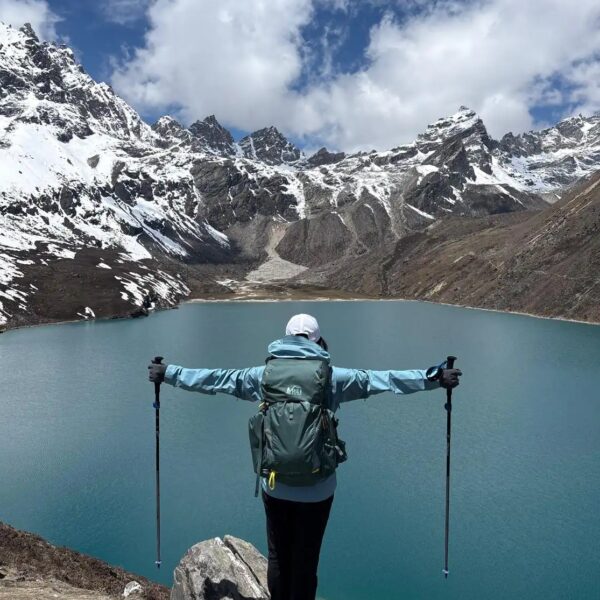
One of the most important moments of the Gokyo Chola Pass EBC trek with helicopter return is reaching the Gokyo lakes. These beautiful turquoise lakes sit at high altitude, offering a peaceful, picturesque setting. Glaciers and snow-covered mountains dominate the views, making it one of the trek’s most unforgettable parts.
You also ascend Gokyo Ri (5,357 m / 17,575 ft), famous for its panoramic views of Everest and the surrounding mountains. From this summit, the Himalayas will appear from a new perspective compared to the classic Everest Base Camp route. It is one of the highlights of the Gokyo Chola Pass trek on the EBC itinerary.
The next stage of the Gokyo Chola Pass EBC trek with helicopter return adventure is the crossing of Cho La Pass, one of the most difficult stages. This high pass links Gokyo Valley to the Everest Base Camp trail. After crossing, you head to Lobuche (4,980 m / 16,339 ft) and then on to Gorakshep. And here you hike to Everest Base Camp (5,360 m / 17,585 ft), where you can take in the glacial scenery.
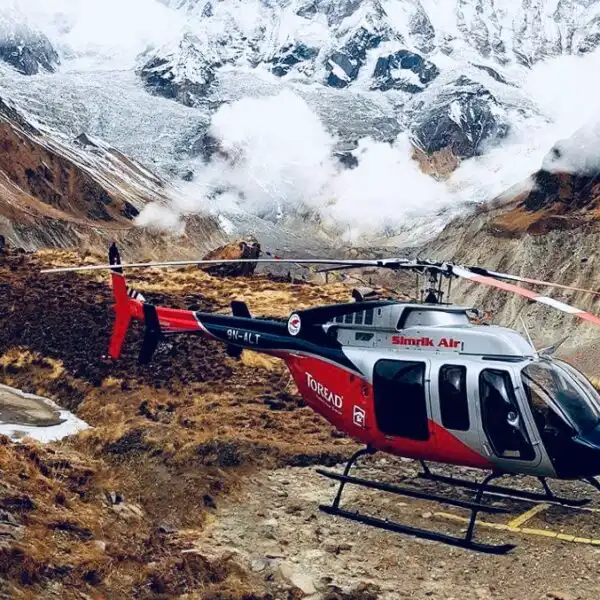
The last attraction of the Gokyo Chola Pass EBC trek with helicopter return is the early-morning ascent to Kala Patthar (5,644 m / 18,517 ft). This viewpoint offers one of the best close-up views of Mount Everest and the surrounding peaks. The trip concludes with a helicopter flight back to Kathmandu after viewing the sunrise. This flight offers excellent aerial views of the Himalayas and lets you return at a comfortable pace without retracing your trek.
My Everest Trip (MET) organizes every detail of this journey, offering reliable service and one of the best trekking experiences in the Everest region.
Why Choose the Gokyo Chola Pass EBC Trek with Helicopter Return?
The Gokyo Chola Pass EBC trek with helicopter return is unique because it combines some of the most iconic experiences in the Everest region into a single, short trip. Instead of the usual route, this trek takes you to the Gokyo Lakes, which are beautiful, bright turquoise, and serene. These lakes are scenic and hold cultural and religious significance for Hindus and Buddhists alike. The trek then becomes an adventure as you cross Cho La Pass, a high, rough path that delivers a true alpine experience.
The Gokyo Chola Pass EBC trek also offers cultural richness, with a helicopter return option. In Sagarmatha National Park, you’ll pass through Sherpa villages, where local culture, hospitality, and everyday life add meaning to the trip. To get to know the region beyond the mountains, stay in teahouses and mingle with locals.
The helicopter return is another reason this trek stands out. You don’t have to walk the same distance back down; instead, you take a scenic flight out of the mountains to Kathmandu. It not only saves time but also offers breathtaking aerial shots of the Himalayas at Gokyo Chola Pass as part of the EBC trek itinerary.
The Gokyo Chola Pass EBC trek with helicopter return is a thrilling trip, blending adventure, culture, and comfort into one memorable experience.
Gokyo Chola Pass EBC Trek With Helicopter Return – 11 Days Itinerary
| Day | Route | Distance | Altitude | Walking Time |
| Day 1 | Lukla to Phakding | 8 km | 2,860 m | 6 hours + flight |
| Day 2 | Phakding to Namche Bazaar | 11 km | 3,440 m | 6 hours |
| Day 3 | Acclimatization in Namche | 3–6 km | 3,440 m | 2–4 hours |
| Day 4 | Namche to Dole | 11 km | 4,000 m | 5–6 hours |
| Day 5 | Dole to Machhermo | 7 km | 4,450 m | 4 hours |
| Day 6 | Machhermo to Gokyo | 10–14 km | 5,000 m | 6–7 hours |
| Day 7 | Gokyo Ri to Dragnag | 7–9 km | 5,357 m | 5–6 hours |
| Day 8 | Cho La Pass to Dzonghla | 9–10 km | 4,830 m | 6 hours |
| Day 9 | Dzonghla to Lobuche | 7–8 km | 4,980 m | 5 hours |
| Day 10 | Lobuche to Gorakshep and Everest Base Camp | Not stated | 5,360 m | Not stated |
| Day 11 | Kala Patthar and helicopter return | 3–4 km | 5,644 m | 2 hours + helicopter flight |
Gokyo Chola Pass EBC Trek With Helicopter Return – 11 Days Itinerary
Day 01: Fly to Lukla and trek to Phakding
The Gokyo Chola Pass EBC trek with helicopter return starts with a morning flight from Kathmandu to Lukla, one of the world’s most thrilling mountain airports. The flight lasts about 45 minutes and offers stunning views of the Himalayas.
Upon arriving in Lukla (2,860 m / 9,383 ft), you’ll meet your trekking crew, pack your gear, and begin your walk. The path descends gradually through small villages such as Chheplung and along the Dudh Koshi River. You pass through wooded trails and catch your first glimpse of the Khumbu region.
The walk to Phakding is not demanding and is a good way to get used to the altitude. In the evening, you rest in a teahouse, enjoy a warm meal, and listen to the soft murmur of the river.

Breakfast, Lunch, and Dinner

Teahouse

8 km

2,860 m / 9,383 ft

6 hours (and flight)
Day 02: Trek to Namche Bazaar (3,440 m / 11,286 ft)
Now you continue into the Khumbu area and climb higher. The path follows the Dudh Koshi River and has several suspension-bridge crossings, the best known of which is the Hillary Bridge. You go through small villages and arrive at Monjo, where your trekking permits are checked. Beyond this, the path enters Sagarmatha National Park and steadily gains height.
On a clear day, you can catch your first glimpse of Everest as you climb. The final push to Namche Bazaar (3,440 m / 11,286 ft) is difficult but satisfying.
Namche is a Sherpa town with shops, bakeries, and a great trekking atmosphere. It is a key acclimatization point before continuing higher into the range.
Breakfast, Lunch, and Dinner
Teahouse
11 km
3,440 m / 11,286 ft
6 hours
Day 03: Acclimatization day in Namche
Today is devoted to acclimatization at Gokyo Chola Pass on the EBC trek itinerary, which is important because you are now above 3,000 meters. You spend the day acclimatizing to the altitude. The short ascent to a higher point and back to Namche follows the climb-high, sleep-low principle, which helps your body adjust safely. You may visit local monasteries or simply sightsee around town.
Namche Bazaar has bakeries, cafes, and local shops where you can rest and prepare for the days ahead. It is also a good place to test your equipment and make sure it’s ready to take you higher. This day will make you stronger and safer in the difficult sections of the Gokyo Chola Pass EBC trek, with a helicopter return ahead.
Breakfast, Lunch, and Dinner
Teahouse
3–6 km
3,440 m / 11,286 ft
2–4 hours
Day 04: Trek to Dole (4,000 m / 13,123 ft)
You leave Namche and take a more peaceful path to the Gokyo Valley. The path passes through Khyangjuma, drops to Phortse Thanga, then ascends steadily to Dole (4,000 m / 13,123 ft).
As you pass by, you encounter chortens, mani walls, and prayer flags, all evidence of the area’s rich Buddhist culture. The path is less congested than the main Everest Base Camp path.
The higher you rise, the lighter the air becomes, and the landscape is more expansive and dramatic. You’ll walk in alpine areas with fewer trees and broader mountain horizons.
Dole is a quiet village where you can spend the night in a teahouse and enjoy a relaxing time without the rush of trekking.
Breakfast, Lunch, and Dinner
Teahouse
11 km
4,000 m / 13,123 ft
5–6 hours
Day 05: Trek to Machhermo (4,450 m / 14,600 ft)
You continue to trek on a lesser-known path to Machhermo (4,450 m / 14,600 ft). The trail slowly rises, and you start experiencing the effects of the altitude more keenly. You walk slowly and concentrate on breathing and hydration. The road passes through places such as Kele and follows the river as the valley broadens into a higher-altitude landscape.
The vegetation is sparse, and the environment appears rougher and more distant. You hear the river as you head to Machhermo. This small village sits in a dramatic mountain landscape, giving you a strong sense of being deep in the Himalayas. You rest, eat well, and get ready for the beautiful Gokyo Lake region ahead.
Breakfast, Lunch, and Dinner
Teahouse
7 km
4,450 m / 14,600 ft
4 hours
Day 06: Trek to Gokyo and explore the lakes (5,000 m / 16,404 ft)
Today you arrive in the well-known Gokyo Valley and visit its beautiful high-altitude lakes. The route from Machhermo to Gokyo takes you through beautiful alpine scenery.
As you circle the lake, your altitude ranges from 4,700 m to 5,000 m (16,404 ft). One of the trek’s highlights is the turquoise lakes, which have a peaceful, spiritual atmosphere.
Depending on conditions, you can go all the way to the viewpoint or to the lakes farther away. The landscape includes glaciers, mountains, and expansive skies. This day is usually one of the most memorable of the journey. You spend the night at Gokyo Lake and enjoy the peaceful environment.
Breakfast, Lunch, and Dinner
Teahouse
10–14 km
5,000 m / 16,404 ft
6–7 hours
Day 07: Hike Gokyo Ri (5,357 m / 17,575 ft) and trek to Dragnag (4,600 m / 15,092 ft)
You start early to climb Gokyo Ri (5,357 m / 17,575 ft), one of the best viewpoints in the Everest region. The sunrise from the summit offers a panoramic view of Everest and the surrounding mountains. After taking in the scenery, you head back down and continue trekking to Dragnag (4,600 m / 15,092 ft). The path runs through rocky, glacial terrain.
Dragnag is a small village that serves as a stop before crossing the Cho La Pass. It is a significant rest day before the most difficult part of the Gokyo Chola Pass EBC trek with helicopter return. You sleep, eat well, and pack your stuff to face the difficult crossing of the high pass the following day.
Breakfast, Lunch, and Dinner
Teahouse
7–9 km
5,357 m / 17,575 ft
5–6 hours
Day 08: Cross Cho La Pass and trek to Dzonghla (4,830 m / 15,846 ft)
It is one of the most difficult and best days of the trek. Start early and head toward Cho La Pass. The path is rugged and can be icy, especially in colder seasons. Cross the pass cautiously and slowly. Once at the top, you descend to Dzonghla (4,830 m / 15,846 ft). The climb is also tough, though the sense of accomplishment is strong.
This crossing links the Gokyo region and the Everest Base Camp trail. The scenery is more rugged and alpine, marking a shift to another part of the journey. You spend the night in Dzonghla and rest after the long, hard day.
Breakfast, Lunch, and Dinner
Teahouse
9–10 km
4,830 m / 15,846 ft
6 hours
Day 09: Trek to Lobuche (4,980 m / 16,339 ft)
Today, continue over Dzonghla to Lobuche (4,980 m / 16,339 ft) on the Gokyo Chola Pass day of the EBC trek itinerary. The path is near Chola Tsho and heads towards Dughla. There, you ascend Thokla Pass (4,830 m / 15,846 ft), where memorials honor climbers who died in the mountains. This place reminds you of the strength and reverence that the Himalayas require. The trail then leads to Lobuche through rocky, glacial terrain.
The closer you are to Everest Base Camp, the more dramatic the surroundings are. You walk slowly to adjust to the elevation and be ready for the next day. Lobuche is a small but important stop before reaching Everest Base Camp.
Breakfast, Lunch, and Dinner
Teahouse
7–8 km
4,980 m / 16,339 ft
5 hours
Day 10: Trek to Gorakshep and Everest Base Camp (5,360 m / 17,585 ft)
Today is the highlight of the Gokyo Chola Pass EBC trek with helicopter return: you arrive at Everest Base Camp (5,360 m / 17,585 ft). You set off by walking from Lobuche to Gorakshep, the last village before base camp. From there, you continue to the Khumbu Glacier and then to Everest Base Camp. The road is long and difficult, with rocky terrain and elevation changes.
When you arrive at base camp, you take a moment to relax, take pictures, and take in the glacier views. You spend a few hours there, then head back to Gorakshep for the night. This day is the main highlight of your trek and gives you a strong sense of achievement.
Breakfast, Lunch, and Dinner
Teahouse
Day 11: Climb Kala Patthar (5,644 m / 18,517 ft) and helicopter return
You wake up early to hike to Kala Patthar (5,644 m / 18,517 ft), the best place for close views of Everest. The ascent is short but steep and difficult because of the elevation. At the summit, you get a clear 360-degree view of Everest, neighboring peaks, and the Khumbu Glacier. After enjoying the sunrise, you head down to the landing point.
Next, you take a helicopter ride back to Kathmandu, with incredible views of the Himalayas. The flight normally lasts about 45 minutes to 1 hour. It is an adventure and a comfort day, and the Gokyo Chola Pass EBC trek with helicopter return will make your journey memorable not only in the city but also in the mountains.
Breakfast, Lunch, and Dinner
3–4 km
5,644 m / 18,517 ft
2 hours (and heli flight)
What To Expect?
What's Included
- Three meals per day (Breakfast, Lunch, Dinner), each with a hot beverage during the trek.
- Accommodation in the Teahouse (trekking lodge) during the trek.
- All the necessary permits, such as Sagarmatha National Park and Khumbu municipality charges.
- Flight to Lukla (seasonal routing) including airport transfers.
- Back to Kathmandu by helicopter flight from the Everest region.
- Certified English-speaking guide (including salary, meals, accommodation, insurance)
- Porter support (one porter per two trekkers)
- Emergency helicopter evacuation arrangement (your insurance).
- Oxygen saturation check using an oximeter during the trek.
- Guide assistant to bigger groups (usually 6 or more trekkers)
What's Excluded
- International flights and airport taxes.
- International airport pickup and drop-off.
- Nepal tourist visa charges.
- Personal traveling and medical insurance.
- Personal expenses not mentioned in the itinerary.
- Hiring/rental charges of equipment (sleeping bag, down jacket, trekking poles)
- Microspikes and gaiters (they can be rented out in case of necessity)
- Snacks, desserts, sweets, and other beverages.
- Additional baggage fee of Lukla flight (approximately 15 kg)
- Charging, hot showers, and other lodge extras.
- Guides, porters, and drivers’ tips.

Tripadvisor Reviews








Google Reviews


Gokyo Chola Pass EBC Trek With Helicopter Return – 11 Days Additional Information
Trek difficulty, challenges & trail conditions
The Gokyo Chola Pass EBC trek with helicopter return is a challenging adventure that requires good fitness and mental concentration. You trek to high places like Lobuche (4,980 m / 16,339 ft), Everest Base Camp (5,360 m / 17,585 ft), and Kala Patthar (5,644 m / 18,517 ft). The path is shifted frequently. The forest paths and suspension bridges are in the lower parts, while the higher areas are rocky, cold, and more open.
Crossing Cho La Pass may be difficult because of uneven ground and snow or ice, depending on the season. The weather can change, too.
My Everest Trip (MET) plans the itinerary, ensures proper acclimatization, and maintains a consistent walking pace to help trekkers stay safe and comfortable throughout the trip.
| Factor | What to Expect |
| Overall difficulty | Challenging |
| Daily walking | Around 4–8 hours based on your itinerary |
| Highest points | Gokyo Ri, Cho La Pass, Everest Base Camp and Kala Patthar |
| Most difficult section | Cho La Pass |
| Trail conditions | Rocky, uneven, and potentially icy at higher elevations |
| Main challenge | Altitude and changing mountain conditions |
Best time to visit and seasonal weather guide
The Gokyo Chola Pass EBC trek with helicopter return is best done in spring (March to May) and autumn (September to November). The weather is mild in spring, the sky is mostly clear, and the landscape is colorful. The trails are generally drier, so it is easy to walk during the Gokyo Chola Pass section of the EBC trek itinerary. Autumn also has good weather and mountain scenery, and tends to be less crowded during certain seasons.
Helicopter flights are also more dependable during these seasons, and this is crucial for a smooth return. In winter, heavy snow can occur, while the monsoon season brings rain and poor visibility.
My Everest Trip (MET) is well planned; however, these two seasons are the best bets for a clear view of Gokyo Ri and Kala Patthar.
| Season | Months | General Conditions | Trek Consideration |
| Spring | March–May | Mild weather and generally clear mountain views | Good time for trekking |
| Monsoon | June–August | Rain, clouds, and possible visibility issues | Less favorable |
| Autumn | September–November | Generally clear and stable weather | Good time for trekking |
| Winter | December–February | Cold with possible heavy snow | More demanding conditions |
Gokyo Chola Pass EBC Trek Distance and Walking Hours
The Gokyo Chola Pass EBC Trek with Helicopter Return includes several long walking days, though walking time varies by route and altitude. Shorter days at Machhermo and around the higher villages help you manage the increasing elevation, while the days around Gokyo Ri, Cho La Pass, and Everest Base Camp require more effort.
The total distance varies each day. Some sections involve around 7 km of walking, while the longer days can reach 10 to 14 km. The Cho La Pass crossing is particularly demanding because of the uneven terrain and possible snow or ice. Your walking pace also depends on the weather, trail conditions, and how well you adjust to the altitude.
| Day | Route | Approx. Distance | Walking Time |
| Day 1 | Lukla to Phakding | 8 km | 6 hours and flight |
| Day 2 | Phakding to Namche Bazaar | 11 km | 6 hours |
| Day 3 | Namche acclimatization | 3 to 6 km | 2 to 4 hours |
| Day 4 | Namche to Dole | 11 km | 5 to 6 hours |
| Day 5 | Dole to Machhermo | 7 km | 4 hours |
| Day 6 | Machhermo to Gokyo and lakes | 10 to 14 km | 6 to 7 hours |
| Day 7 | Gokyo Ri and Dragnag | 7 to 9 km | 5 to 6 hours |
| Day 8 | Cho La Pass to Dzonghla | 9 to 10 km | 6 hours |
| Day 9 | Dzonghla to Lobuche | 7 to 8 km | 5 hours |
| Day 11 | Kala Patthar and helicopter return | 3 to 4 km | 2 hours and helicopter flight |
Day 10 involves the trek from Lobuche to Gorakshep and the Everest Base Camp excursion, but your current package does not provide a distance or walking-hour figure for that day. It is better to leave that figure out until you confirm the exact distance rather than adding an estimate.
Food and Drinks on the Gokyo Chola Pass EBC Trek With Helicopter Return
On the Gokyo Chola Pass EBC trek with helicopter return, meals are provided to keep your energy steady. You get three meals daily: breakfast, lunch, and dinner, accompanied by tea or coffee at each. Fresh fruit is also served after dinner, which helps with recovery. Teahouse menus include basic, familiar foods such as dal bhat, noodles, soups, eggs, and potatoes.
Bakery products are also available in such places as Namche. My Everest Trip (MET) guides will ensure you eat easily digestible food at higher altitudes. The last day is on a breakfast basis, as the helicopter transfer back is fast after the Kala Patthar hike.
Gokyo Chola Pass EBC Trek Altitude
Altitude is a key part of this trek because the route gradually rises from the lower Khumbu villages to elevations above 5,000 meters. You spend an acclimatization day in Namche before continuing to Dole, Machhermo, and Gokyo.
The route then reaches Gokyo Ri and Cho La Pass before joining the Everest Base Camp trail. You reach Everest Base Camp and Kala Patthar near the end of the trek, when the altitude is highest.
| Location | Elevation |
| Lukla | 2,860 m / 9,383 ft |
| Namche Bazaar | 3,440 m / 11,286 ft |
| Dole | 4,000 m / 13,123 ft |
| Machhermo | 4,450 m / 14,600 ft |
| Gokyo | Around 5,000 m / 16,404 ft |
| Gokyo Ri | 5,357 m / 17,575 ft |
| Dzonghla | 4,830 m / 15,846 ft |
| Lobuche | 4,980 m / 16,339 ft |
| Everest Base Camp | 5,360 m / 17,585 ft |
| Kala Patthar | 5,644 m / 18,517 ft* |
The Kala Patthar elevation is currently stated as 5,644 m throughout your package. Please fact-check this figure before publication and use it consistently across the page.
Because altitude affects everyone differently, the itinerary includes an acclimatization day in Namche. The guide also checks oxygen saturation during the trek and maintains a steady walking pace to help trekkers adjust as they move higher.
Helicopter Return From the Everest Region
The helicopter return is the final part of the trek and saves you from walking back through the same route after reaching the Everest Base Camp area. On the final morning, you wake early for the Kala Patthar hike, then descend to the helicopter landing point.
Your current itinerary states that the helicopter flight takes approximately 45 minutes to 1 hour and returns you to Kathmandu. The flight also gives you a different view of the Khumbu mountains after several days of walking through the region.
Helicopter operations in the Everest region can depend on weather and flying conditions. For this reason, the trekking team should confirm the exact landing and pickup arrangements based on the day’s conditions.
Your package includes helicopter return, while emergency helicopter evacuation is treated separately and is subject to your travel insurance coverage.
Transportation and accommodation during the trek
The Gokyo Chola Pass EBC trek with helicopter return combines flights and trekking, making for a complete experience. The trip starts with a flight to Lukla (2,860 m / 9,383 ft), the trek’s starting point. The airline may change the flight route depending on the season.
During the trek, you stay in teahouses, basic mountain lodges with simple rooms and shared dining rooms.
These lodges provide a warm bed after tedious hours of trekking. Namche Bazaar offers the most convenient amenities before you move to higher, more remote locations. At the end of the trek, you fly back to Kathmandu by helicopter, saving time and offering stunning aerial views of the Himalayas.
Altitude, acclimatization, and risk of altitude sickness
Elevation is a significant factor in the Gokyo Chola Pass EBC trek with a helicopter return. You quickly reach high elevations and later go above 5,000 m at Everest Base Camp (5,360 m / 17,585 ft) and Kala Patthar (5,644 m / 18,517 ft). Above these altitudes, the risk of altitude sickness is high. Common symptoms include headaches, fatigue, and shortness of breath.
To allow time to acclimatize, my Everest Trip (MET) will include an acclimatization day in Namche to help your body adapt. The trek is done at a slow pace with adequate rest, water, and food. Regular medical checks, such as monitoring oxygen levels, can help keep you safe during the trip.
Gokyo Cho La Pass EBC Trek with Helicopter Return Fitness Requirements and Preparation Tips
Good physical fitness and preparation are required to finish the Gokyo Chola Pass EBC trek with a helicopter return without any inconvenience. Be prepared to walk 5-8 hours per day, even on rugged, hilly trails.
You can build endurance by hiking, climbing stairs, running, or biking. Leg and core strength training improves balance and reduces pressure during descents.
Trekking boots and backpacks are also recommended before the Gokyo Chola Pass on the EBC trek itinerary. Pack smartly in warm clothes, gloves, and sun protection. Carry personal medication and first aid. Having water and walking at a steady pace will make the trek more enjoyable, particularly in high, cold places.
Kathmandu to Lukla Flight and Ramechhap Transfer
The trek begins with a flight to Lukla, which takes about 45 minutes under normal conditions. Your package includes the flight to Lukla with airport transfers, with the routing described as seasonal.
Flight arrangements to Lukla may change depending on the season and airline operations. For this reason, confirm the exact departure airport before your trek. If the flight schedule requires a different route, your trekking team will arrange the necessary transfers.
The Lukla flight is an important part of the itinerary because the trek begins immediately after landing. Weather can affect flights in the Everest region, so it helps to keep some flexibility in your overall travel plans, especially if you have an international flight immediately after the trek.
Your package includes the Lukla flight and the required airport transfer arrangements. Any additional baggage charges are listed separately under the exclusions.
Permits, entry fees & Nepal visa information
The Gokyo Chola Pass EBC trek with helicopter return requires permits, as the trail passes through restricted and local areas. The main ones are the Sagarmatha National Park entrance fee and the Khumbu municipality fee. These permits are included in the trekking package, so the process is straightforward.
Along the Gokyo Chola Pass section of the EBC trek itinerary, you will present permits at checkpoints such as Monjo; therefore, keep them in a safe, accessible place. My Everest Trip (MET) will obtain all the permits on your behalf.
For Nepal, most travelers can obtain a tourist visa on arrival. Check the latest visa regulations before traveling.
| Requirement | Details |
| Sagarmatha National Park | Included in the package |
| Khumbu municipality fee | Included in the package |
| Nepal tourist visa | Generally available on arrival for eligible travelers |
| Permit arrangement | My Everest Trip handles the trekking permits |
Health, safety & emergency support during the trek
The Gokyo Chola Pass EBC trek with helicopter return requires careful attention to safety due to its high altitude and remote conditions. At altitudes above 3,000 m (9,843 ft), altitude sickness may be severe, so early warning is important.
The Himalayan Rescue Association has aid posts in such locations as Pheriche to assist trekkers. It also has a medical clinic at the base of Everest (5,350 m / 17,552 ft) during peak seasons.
The My Everest Trip (MET) prioritizes your safety, and the guides attend to your well-being and check your health daily. They also have equipment such as oximeters to monitor oxygen levels and slow the pace where necessary.
Helicopter evacuation in case of emergency can be arranged, and in most cases, travel insurance will cover it. The Gokyo Chola Pass with EBC trek itinerary is made safe with planning and monitoring.
Gokyo Chola Pass EBC Trek With Helicopter Return Travel Insurance and Coverage
The Gokyo Chola Pass EBC trek with helicopter return is one of the areas where travel insurance is necessary because of the altitude and remote terrain. Trekking will be done above 5,000 m (16,404 ft), where medical emergencies may occur.
A good insurance policy should cover high-altitude trekking, emergency helicopter evacuation, and hospital treatment in Nepal. You may need helicopter evacuation in case of severe illness or injury, and it can be expensive without insurance.
If the policy provides coverage, the insurance company typically processes most evacuation payments. Keep a digital and a printed copy of your insurance information at all times.
Also, it is wise to prepare the emergency contact process with your insurer before the Gokyo Chola Pass EBC trek with helicopter return. Good insurance provides relief and enables a fast response when necessary.
Mobile network, internet & charging facilities
Mobile network and internet connection are available on the Gokyo Chola Pass EBC trek with helicopter return, but not consistently. In less developed regions and more densely populated areas, local SIM cards from providers such as Nepal Telecom (NTC) or Ncell can provide 4 G service. As you climb, however, the signal weakens and becomes less reliable because of the terrain and weather.
Most teahouses offer Wi-Fi and charging services, particularly in places like Namche, though these are usually charged for.
The Gokyo Chola Pass with EBC trek itinerary does not include devices and hot showers. It is good to have a power bank and switch off the battery by setting airplane mode. In an emergency, guides can help make calls if networks are available.
Language, culture & local etiquette on the trail
The Gokyo Chola Pass EBC trek with helicopter return routes goes through the Sherpa villages, where culture and traditions play a significant role in everyday life. You will find Buddhist decorations such as mani walls, chortens, and prayer flags along the trail. Walk counterclockwise around these buildings.
Always seek permission before photographing other individuals or religious sites. Greet hosts in teahouses and keep common areas tidy.
The languages spoken in the area are Nepali, Sherpa languages, and simple English, particularly in popular trekking areas such as Namche. You can learn basic greetings and make your Gokyo Chola Pass EBC trek an even better experience with a helicopter return. Observing local traditions will help you build relationships with local people and add meaning to your trip.
Accommodation During the Trek
Accommodation during the trek is provided in teahouses and trekking lodges. These are simple mountain lodges designed for trekkers, with basic rooms and shared dining areas. The facilities become more basic as you move into the higher and more remote sections of the route.
Namche Bazaar generally has more facilities than the smaller villages farther along the trail. At higher elevations, the main purpose of the teahouse is to provide a warm place to sleep, eat, and rest after the day’s walk.
Your package includes teahouse accommodation throughout the trekking section. Meals are also included during the trek, while additional services such as charging and hot showers are charged separately.
Accommodation may vary based on availability, season, and the village where you stay. Our team will arrange the necessary accommodation as part of the trekking package.
Gokyo Chola Pass EBC Trek Booking and Departure Information
The Gokyo Chola Pass EBC Trek With Helicopter Return is an 11-day package with a starting price of US$2,980. Your page also offers group discounts, so the final price may vary based on group size.
You can book the package through the Book Now option on the trip page. Before confirming the trek, please provide your preferred travel dates, group size, and any specific requirements so we can check arrangements based on available services.
The package includes the Lukla flight, trekking accommodation, meals during the trek, guide and porter support, permits, and the helicopter return from the Everest region. Personal expenses, international flights, Nepal visa fees, travel insurance, and equipment rental are not included.
If you are traveling as a private group or have specific requirements, discuss them with My Everest Trip before booking so we can confirm the itinerary and arrangements based on your plans.
Your extra expenses on the trek
Although the package includes the major expenses, you should still consider a few personal expenses when planning the Gokyo Chola Pass EBC trek with helicopter return.
Hot showers, charging electrical gadgets, snacks, desserts, and other beverages such as soft drinks or alcohol are common additional charges. Guides and porters also expect tips at the end of the trek.
The normal baggage weight on flights to Lukla is about 15 kg, and extra weight can cost more. You can also rent gear such as jackets, sleeping bags, or trekking poles as needed.
Bring plenty of cash to cover these costs, as ATMs are scarce. Add small extras like more delicious snacks and a bakery in Namche to enhance your Gokyo Chola Pass EBC trek with a helicopter return.
Gokyo Chola Pass EBC Trek With Helicopter Return Drone Rules and Photography Tips
The Gokyo Chola Pass EBC trek with helicopter return is an awesome journey to photograph suspension bridges, mountain villages, glaciers, and lakes. To capture the best photos, shoot early in the morning or late in the afternoon, when the light is softer. Warm up additional batteries, since cold can kill them quickly.
Wipe your lens with a clean cloth to remove dust. If you plan to use a drone, you must follow Nepal’s rules. The drones must be registered and have special flight permission from the authorities before use. One is not supposed to fly without valid permits. Because of the rules and access restrictions to sensitive areas, many trekkers are unwilling to carry drones unless they have the necessary authorizations.
Tips for first-time trekkers in Nepal
If this is your first trek in Nepal, proper preparation will help you enjoy the Gokyo Chola Pass EBC trek with helicopter return as a great adventure. Walk slowly and gradually, allowing your body time to acclimatize to the altitude.
Keep hydrated, and acclimatization is important, particularly at Namche. Bring a few important things, like warm clothes, a headlamp, and basic first aid.
A lighter backpack makes it easier to walk, especially on difficult days like Cho La Pass. Expect simple facilities at higher altitudes.
Follow your guide, who strongly influences your pace and safety. First-time trekkers can enjoy this Gokyo Chola Pass EBC trek with a helicopter return adventure with the right attitude and training.
Gokyo Chola Pass EBC Trek Packing List
Packing for the Gokyo Chola Pass EBC Trek with Helicopter Return requires more attention than packing for a lower altitude trek. The route reaches Gokyo Ri, Cho La Pass, Everest Base Camp, and Kala Patthar, where temperatures and trail conditions can be demanding.
Carry warm layers you can add or remove as temperatures change. Good trekking boots are particularly important for the Cho La section, where the trail can be uneven and may have snow or ice depending on the season.
Clothing and trekking gear
- Trekking boots with good grip
- Warm base layers
- Fleece or insulating layer
- Down jacket
- Waterproof jacket
- Warm gloves
- Warm hat
- Sun hat
- Trekking trousers
- Warm socks
- Sunglasses
- Sunscreen
- Headlamp
Useful equipment
- Trekking poles
- Sleeping bag
- Daypack
- Water bottle
- Power bank
- Personal first aid supplies
- Personal medicines
- Basic toiletries
Microspikes and gaiters may be useful on the Cho La section when conditions require them. Your package states that they can be rented when necessary. Sleeping bags, down jackets, and trekking poles are also available for rental rather than being included in the package.
Gokyo Chola Pass EBC Trek With Helicopter Return – 11 Days FAQs
Why is the Gokyo Chola Pass EBC trek with helicopter return different compared to the classic EBC trek?
It involves Gokyo Lakes, crossing Cho La Pass, Everest Base Camp (5,360 m / 17,585 ft), and a helicopter back, thus it is more diverse and adventurous.
What is the number of days of the Gokyo Chola Pass EBC trek with helicopter return?
This trip normally lasts 11 days with the helicopter flight back to Kathmandu.
Will I make it to the Everest Base Camp during this trek?
You will hike to Everest Base Camp (5360 m / 17585 ft) and back to Gorakshep on the same day.
Am I supposed to ascend Kala Patthar in the trek?
Yes, you climb Kala Patthar (5,644 m / 18,517 ft) and watch the sun rising and the entire Everest.
Is Gokyo Ri included in this itinerary?
Yes, you hike Gokyo Ri (5,357 m / 17,575 ft) to get breathtaking mountain scenery, and then on to Dragnag.
What is the time of the helicopter's return?
On Day 11, the helicopter flight will be scheduled after the Kala Patthar hike, depending on the weather conditions.
What is the duration of the Kathmandu to Lukla flight?
Under normal weather, the flight normally takes around 45 minutes.
Does it include meals in the trek?
Yes, teahouses offer three meals a day with a hot beverage on the trek.
Would I get fruit on the trek?
Yes, after dinner, fresh fruits are normally served as a way of aiding in recovery.
Should I have microspikes on Cho La Pass?
Yes, microspikes may be necessary because there can be snow and ice on the pass.
Is it possible to hire trekking equipment in Nepal?
Yes, it is possible to rent items such as jackets, sleeping bags, and trekking poles in Nepal.
What is the carry-on weight of the Lukla flight?
The typical baggage weight is approximately 15 kg, and the excess weight is subject to extra charges.
Am I going to require money on the trek?
Yes, most teahouses use cash, particularly for additional facilities such as charging and showers.
Is it possible to charge my phone on the trail?
Yes, however, this is normally charged at an added rate, particularly when at high altitudes.
Is it possible to do the Gokyo Chola Pass EBC trek with helicopter return for beginners?
With proper training, pacing, and acclimatization, even first-time trekkers can complete it.
US$ 2,980 per person
- 24/7 Customer Support
- Experienced and Professional Team
- Hassle-Free and Easy Booking
- 99% Customer Satisfaction
- Fair Prices, Exceptional Service
- No Hidden Costs and Secure Payments
- Tailored and Personalized Itineraries
24 X 7 Live Support

Puru (+977-9851069558)
Related Trips


Recent From Our Blog Places of attractions, travel tips, news and more.
Everest, Blog, Trekking in Nepal
A Complete Everest Trekking Guide
A Complete Everest trekking guide covers many treks globally, but none is more well-known than the one…
Read the full post
Blog
Everest Base Camp Trek In November
The Everest Base Camp trek, which circumnavigates the foothills of Mount Everest, the world’s highest…
Read the full post
Trekking in Nepal
Gokyo Trek: Best View Point in Everest Region
Gokyo Trek Everest Himalayas in northern Nepal house an astounding array of natural and cultural…
Read the full post