





9 Days


Quick Facts

Flight

Teahouse, Lodge

Breakfast, lunch and dinner

Sightseeing, Helicopter flight

Autumn, Spring

Moderate

Nepal

5,545 m


Why Everest Base Camp Trek Return by Helicopter?
Dream Big, Trek to Everest Base Camp, and Fly Back with Breathtaking Himalayan Views: An Unforgettable Adventure Where Every Step Brings You Closer to the Sky.
- Reach Everest Base Camp (5,364 m / 17,598 ft) and experience the famous destination at the foot of Mount Everest
- If the weather permits, hike to Kala Patthar (5545 m / 18192 ft) to enjoy panoramic views of Everest and other Himalayan peaks
- Enjoy a scenic mountain flight from Kathmandu or Ramechhap to Lukla
- Explore Namche Bazaar, the main Sherpa trading town in the Everest region
- At the Tengboche Monastery, discover the Buddhist culture and traditions of the Khumbu region
- Visit typical Sherpa villages and learn about the culture of the mountains
- Cross suspension bridges over the Dudh Koshi River while trekking through forested valleys
- Take acclimatization days at Namche Bazaar and Dingboche to get accustomed to higher altitudes
- Admire views of Ama Dablam, Lhotse, Nuptse and other Himalayan mountains along the trail
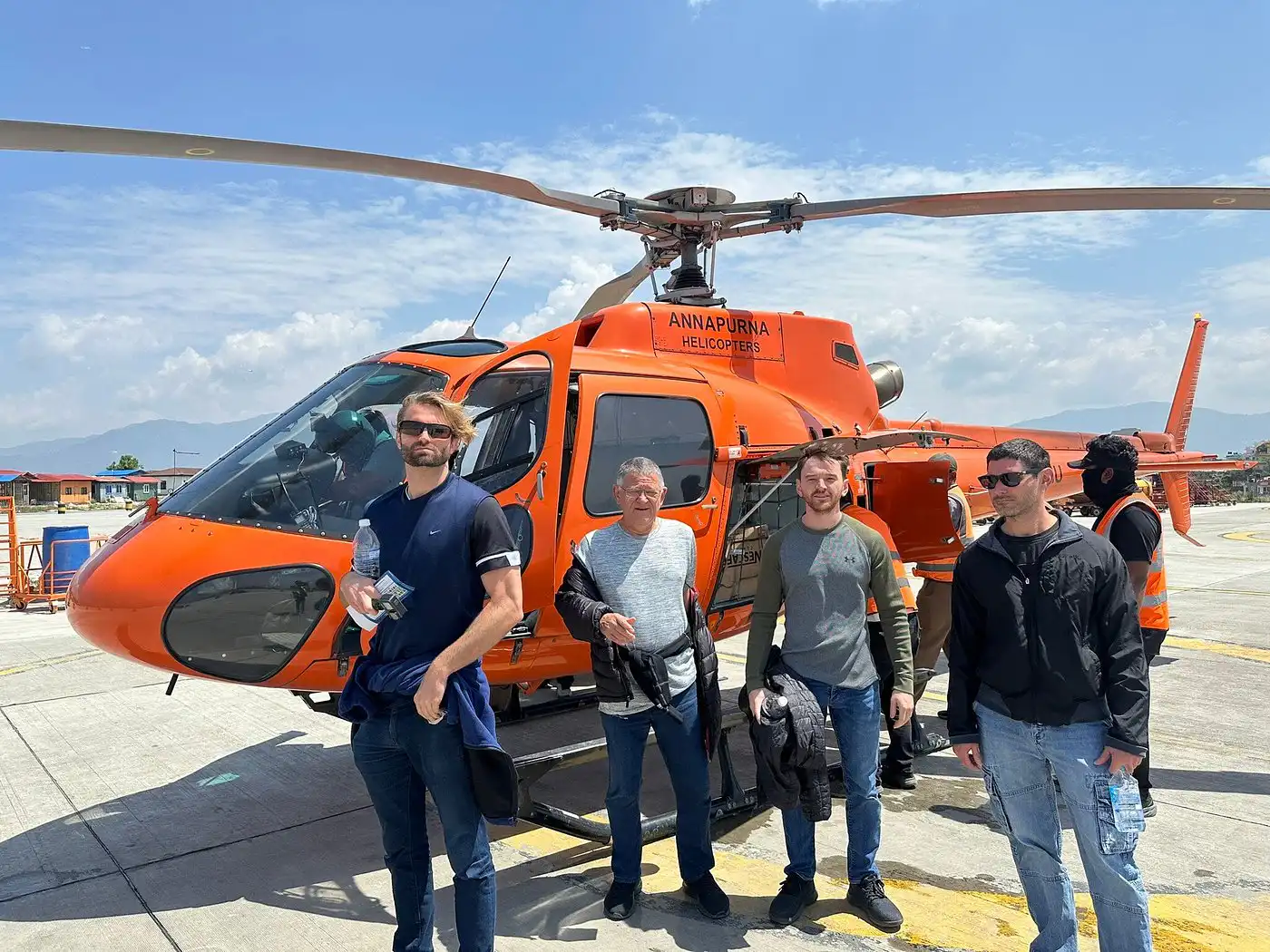
- Return toward Kathmandu by helicopter after the trek, saving several days of walking back to Lukla, subject to weather and operational conditions
Everest Base Camp Trek Return by Helicopter Overview
The Everest Base Camp Trek Return by Helicopter is a nine-day adventure for travelers who want to reach the foot of Mount Everest and fly back to Kathmandu instead of trekking back to Lukla. This trek includes visits to traditional Sherpa villages, hikes on some of the most popular trails in the Everest region, and mountain scenery.
The adventure starts from Lukla Airport and then continues through Phakding and Namche Bazaar. The trail goes through forest, over suspension bridges, and up to higher villages like Dingboche and Lobuche as you proceed. The path winds through forest, crosses suspension bridges, and climbs to higher villages like Dingboche and Lobuche. Along the way, you can learn about local Sherpa culture and enjoy views of mountains such as Ama Dablam, Lhotse, Nuptse, and Everest, depending on weather conditions.
The trek has acclimatization days in Namche Bazaar and Dingboche, where your body can acclimatize to the gradual increase in altitude. These days are also for optional hikes around the area. The path opens up and becomes rockier as it ascends, and lower oxygen levels may make it more challenging.
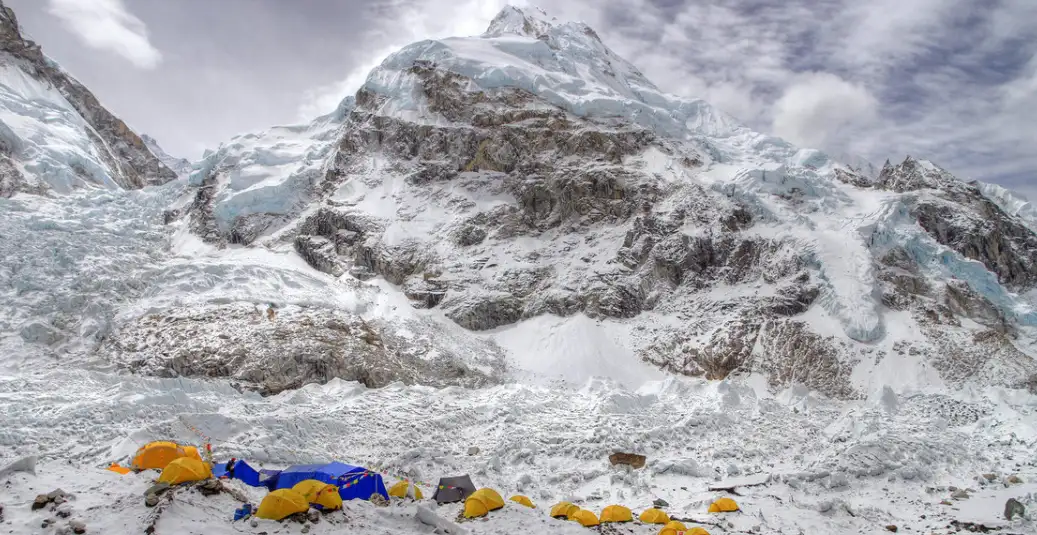
The trek to Everest Base Camp (5,364 m / 17,598 ft) is a major highlight, letting you enjoy the rugged environment of the Khumbu Glacier. You will also hike to Kala Patthar (5,545 m / 18,192 ft.), one of the most popular viewpoints for the Khumbu Glacier and Mount Everest summits. The trail conditions and high elevations at both locations require a steady pace.
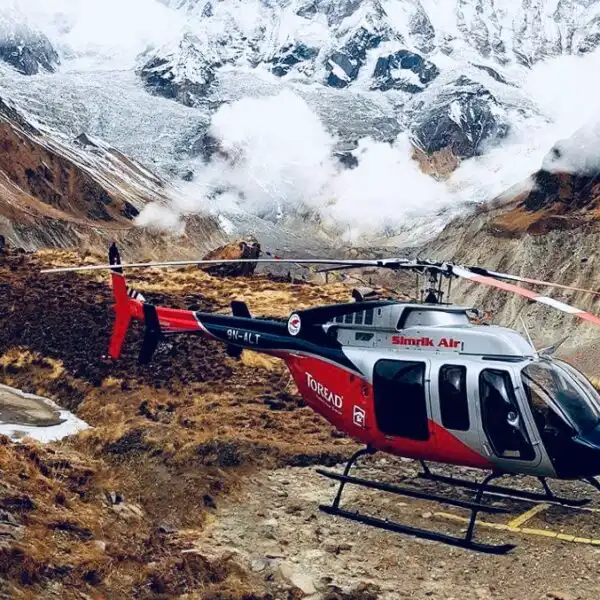
The morning trek to Kala Patthar will be followed by a trek back to Gorak Shep, where you will receive a briefing for the helicopter ride to Kathmandu. This return option saves a few days of walking; however, it depends on weather, visibility, aircraft performance, and operational conditions.
The Everest Base Camp trek with helicopter return is ideal for physically fit trekkers willing to walk long hours at high altitude. My Everest Trip offers options to arrange trekking logistics, accommodation, permits, guide support, and a planned helicopter return based on your confirmed package.
Why This Trip Is Special?
The Everest Base Camp Trek Return by Helicopter combines trekking in the Everest region with a convenient helicopter return trip. In just 9 days, you can see traditional Sherpa villages, walk across suspension bridges, visit Tengboche Monastery, and trek through the Khumbu region’s rugged terrain.
The highlight is visiting Everest Base Camp (5,364 m / 17,598 ft) and trekking to Kala Patthar (5,545 m / 18,192 ft) (weather conditions permitting) to see Mount Everest and other Himalayan peaks. The acclimatization days in Namche Bazaar and Dingboche also help you adjust to the altitude while exploring the area.
The Everest Base Camp Trek with Helicopter return saves a few days of walking back to Lukla compared with a normal return. It is a viable choice for those who don’t plan to spend days on end in Gurung villages or on the trek but still want to experience the essence of the Everest Base Camp trek in just a few days.
Everest Base Camp Trek Return by Helicopter Itinerary
Day 01: Fly from Kathmandu/Ramechhap to Lukla, Then Trek to Phakding
Your journey begins with a flight from Kathmandu or Ramechhap to Lukla, depending on the flight schedule. The flight to Kathmandu takes about 35-40 minutes and offers views of the Himalayan Mountains. After landing in Lukla (2860 m / 9383 ft), you will meet your trekking group and get ready to trek through the Khumbu region.
The trail dips down through the Chaurikharka region, passing through small Sherpa villages, stone walls, prayer flags, and mani walls. You will also follow the Dudh Koshi River and cross suspension bridges with views of the surrounding hills and forests. Some sections of the trail are steep, but this isn’t as challenging as what you’ll see in the next few days.
In about a 3-4 hour walk, you reach Phakding (2610 m / 8563 ft). Upon reaching the village, you can stay in a teahouse, have a meal, and sleep before heading to Namche Bazaar the next day.

Breakfast, lunch and dinner

Teahouse

8 km

2,860 m / 9,383 ft

Flight to Lukla and trek to Phakding
Day 02: Trek from Phakding to Namche Bazaar
After breakfast at your lodge in Phakding (2,610 m / 8,563 ft), you will begin the trek toward Namche Bazaar (3,440 m / 11,286 ft). The trail follows the Dudh Koshi River through pine forests and small settlements such as Toktok, Benkar, and Monjo. You will cross several suspension bridges and pass through traditional Sherpa villages.
Upon entering the park near Monjo, you will head into Sagarmatha National Park, where you’ll get your permits stamped before setting off on the trekking route. The path then heads down the river valley to Jorsale, where you can stop for lunch at a local restaurant before tackling the easier part of the day.
The trail steadily rises from the Hillary Suspension Bridge towards Namche Bazaar. The hilly part is a long climb and is best walked at an easy pace, as each extra step up the hill increases the effort required to keep up. On clear days, you will see your first views of Mount Everest, Thamserku, and other surrounding mountains.
Once you arrive at Namche Bazaar, you can stay at your lodge and explore the village’s shops, bakeries, cafés, and restaurants if time and energy permit.
Breakfast, lunch and dinner
Lodge
10–11 km
3,440 m / 11,286 ft
Trekking, river crossings and entry into Sagarmatha National Park
Day 03: Acclimatization Day at Namche Bazaar
The day is dedicated to settling in at Namche Bazaar (3,440m / 11286ft). This is a chance to spend an extra day acclimatizing to the higher altitude before heading to even higher elevations in the Everest region. Instead of staying in the house all day, take a quick walk to a higher vantage point, then return to Namche to rest.
We recommend trekking to Everest View Hotel (3880m / 12730ft), which offers views of Mount Everest, Ama Dablam, and other Himalayan peaks on a clear day. If you are fit, the weather is suitable, and you and your group are moving at an appropriate speed, you can head to the Sherpa villages of Khumjung and Khunde. Your guide can help you decide which path to take for the day.
The walk isn’t all flat; there are some ups and downs, so it’s best to walk slowly and take breaks. Water intake should also be sufficient, and signs and symptoms of altitude sickness should be monitored.
Then head back to Namche Bazaar, where you can shop at local stores, have tea at a café, or visit the Sherpa Museum or the Sagarmatha National Park visitor center (as time permits). You will spend another night at your lodge in Namche.
Breakfast, lunch and dinner
Lodge
3–5 km
3,880 m / 12,730 ft
Acclimatization hike and exploration of Namche Bazaar
Day 04: Trek from Namche Bazaar to Tengboche
After breakfast in Namche Bazaar (3,440 m / 11,286 ft), you will continue toward Tengboche (3,860 m / 12,664 ft). The path starts with a gentle incline and winds along the hillside, offering glimpses of the surrounding mountains. On clear days, you can see peaks like Ama Dablam and Thamserku along the way.
Your next stop is Kyangjuma, where you will cross to Phunki Tenga, a small community along the Dudh Koshi River. Forested paths and a suspension bridge lead through the area. This is a good place to stop for lunch and take a short rest before starting the ascent to Tengboche.
One of the day’s more challenging sections is the climb up from Phunki Tenga. The path winds through pine and rhododendron woods; some uphill sections are steep and require steady walking. Rest as needed, especially at higher elevations.
At Tengboche, one can visit the famous Tengboche Monastery, an important Buddhist monastery in the Khumbu region. If the monastery is open, you may be able to enjoy the quiet surroundings and learn about the monastery’s contribution to religious life in the area. You will then be signed in to your lodge, where you will dine and stay the night.
Breakfast, lunch and dinner
Lodge
10–11 km
3,860 m / 12,664 ft
Trekking through forests and visiting Tengboche Monastery
Day 05: Trek from Tengboche to Dingboche
After breakfast in Tengboche (3,860 m / 12,664 ft), you will begin your trek toward Dingboche (4,410 m / 14,469 ft). The path then curves downward through a forest to the small village of Deboche, where teahouses line the trail. Then you will follow paths lined with prayer flags, mani stones, and other traditional features of the Khumbu region’s Buddhist culture.
Beyond Deboche, the trail skirts Pangboche and heads towards the Imja Valley. The trail includes a suspension bridge, stone steps, and up-and-down sections. Along the way, Ama Dablam remains a prominent feature of the landscape. On clear days, you can catch glimpses of Lhotse, Nuptse, and Mount Everest in the distance.
Smaller towns such as Shomare and Orsho lie along the route, offering places to pause and grab a bite at one of the restaurants. As elevation increases, the vegetation thins into more open areas with fewer trees and more open mountain fields. The longer uphill sections are easier if you walk at a steady pace.
In the afternoon, you will arrive at Dingboche, a Sherpa village, surrounded by mountain slopes and stone-walled fields. After you check into your lodge, you can sleep, have dinner, and plan your acclimatization day.
Breakfast, lunch and dinner
Lodge
11 km
4,410 m / 14,469 ft
Trekking through Deboche, Pangboche and the Imja Valley
Day 06: Acclimatization Day at Dingboche, with an Optional Nagarjun Hill Hike
Today’s an acclimatization day in Dingboche (4,410 m / 14,469 ft). The higher you go, the more important it is for your body to acclimatize. The rest of the day is available, or it is possible to go for an optional hike to Nagarjun Hill (Nangkartshang Peak) above the village.
The path is steep and rocky, rising steadily. Under favorable conditions and with good fitness, you can walk to the higher viewpoint at about 5,100 m (16,732 ft). The trail is quite steep, so take your time to walk slowly, stop frequently, and heed your guide’s advice. You can also turn back early if you feel tired or have symptoms of altitude sickness at the highest viewpoint.
Depending on the weather and visibility, you can see Ama Dablam, Makalu, Cho Oyu, and the surrounding valleys from the higher spots. The exposed trail is cold and windy, so bring warm layers and sturdy footwear.
The hike will then lead you down to Dingboche and back to your lodge. The rest of the day is for lunch, relaxation, and getting ready for the hike to Lobuche. You will spend the next night in Dingboche.
Breakfast, lunch and dinner
Lodge
4–6 km
5,100 m / 16,732 ft
Acclimatization and optional hike to Nagarjun Hill
Day 07: Trek from Dingboche to Lobuche
After breakfast in Dingboche (4,410 m / 14,469 ft), you will begin walking toward Lobuche (4,940 m / 16,207 ft). The path slowly rises into the higher sections of the Khumbu Valley, crossing open country and pastures where yaks graze. The area is more exposed than the lower part of the hike, with fewer trees and broader views of the surrounding peaks.
From here, you will proceed to Dughla (Thukla), where you can have tea or lunch, then continue the steeper ascent to Thukla Pass (about 4830 m / 15846 ft). This section is uphill along a rocky, zigzag trail and may be physically challenging due to the altitude. Go at your guide’s speed and take your time.
There are memorials to climbers and Sherpas who have lost their lives on Everest and other mountains in the Himalayas at the top of the climb. The memorial stones and prayer flags reflect the place’s solemnity and offer a chance to reflect on the dangers of high-altitude mountaineering.
Outside the memorial area, the path is less steep and follows the rough terrain of the Khumbu Glacier’s lateral moraine. The rocky terrain will take you to the village of Lobuche, where you can stay in a lodge, have dinner, and rest before the difficult walk to Everest Base Camp.
Breakfast, lunch and dinner
Lodge
11 km
4,940 m / 16,207 ft
Trekking, crossing the Thukla Pass area and visiting climbers' memorials
Day 08: Trek from Lobuche to Gorak Shep, continue to Everest Base Camp and Return to Gorak Shep
After breakfast in Lobuche (4,940 m / 16,207 ft), you will begin the trek toward Gorak Shep (5,164 m / 16,942 ft). The path rises through rocky, open country before crossing the moraine alongside the Khumbu Glacier. This section has uneven paths, loose stones, and short ascents and descents, so it requires care and caution, as well as a steady pace.
After about 2-3 hours of walking, depending on the weather and your pace, you will arrive at Gorak Shep. You can stop at your lodge for a short rest and lunch before continuing toward Everest Base Camp (5,364 m / 17,598 ft).
The route to the base camp passes through rocky, rugged glacial terrain and narrow paths. Along the way, you can glimpse the surrounding mountains, such as Nuptse and Pumori, depending on the weather. The high altitude can make even short climbs tiring, so follow your guide’s instructions and take breaks when necessary.
After reaching Everest Base Camp, you will have time to look around and take photographs, subject to conditions and access. Then you will head back to Gorak Shep for dinner and an overnight stay. This is one of the longest and toughest days of the walk, covering about 14-15 km.
Breakfast, lunch and dinner
Lodge
14–15 km
5,364 m / 17,598 ft
Trekking to Everest Base Camp and returning to Gorak Shep
Day 09: Early Morning Hike to Kala Patthar, Return to Gorak Shep and Helicopter Flight to Kathmandu
You will start early, around 4:00 AM, for the hike from Gorak Shep (5,164 m / 16,942 ft) to Kala Patthar (5,545 m / 18,192 ft). We will leave early so you can reach the viewpoint around sunrise, if conditions and visibility allow. Kala Patthar offers a close-up view of Mt. Everest and the surrounding peaks.
The path is steep and crosses rocky terrain and soft scree. The climb is strenuous due to the height and cold start, so be prepared. Walk at a leisurely pace, stopping for breaks as needed and following your guide’s suggestions. From the viewpoint, you can see Mount Everest, Lhotse, and Nuptse, weather permitting.
After pitching your tent at Kala Patthar, you’ll descend to Gorak Shep and have breakfast at your lodge. Then you’ll be ready to take the helicopter back to Kathmandu; the flight route and stopovers will depend on air conditions and arrangements.
On the flight, you can see the Himalayan scenery, the glaciers, valleys, and mountain villages. Everest Base Camp trek ends with the return trek from EBC. Please note that flight times and departure times may differ depending on weather and operating conditions.
Breakfast at Gorak Shep; lunch and dinner depend on arrival time and arrangements in Kathmandu
7 km
5,545 m / 18,192 ft
Sunrise hike to Kala Patthar, descent to Gorak Shep and helicopter flight toward Kathmandu
What To Expect?
What's Included
- Airport transfers between the airport and your hotel in Kathmandu, on arrival and departure
- An experienced, English-speaking trekking guide throughout the trek
- The guide’s meals, accommodation, transportation, salary and insurance
- Standard meals (breakfast, lunch and dinner) during the trek, with one cup of tea or coffee during breakfast
- Seasonal fresh fruits during the trek
- Teahouse and lodge accommodation throughout the trekking route
- Storage of extra luggage at your hotel or the agency’s office in Kathmandu during the trek
- Flight tickets between Kathmandu or Ramechhap and Lukla for trekkers and the guide, subject to availability and airline policies
- Shared ground transportation between Kathmandu and Ramechhap when flights operate from Ramechhap
- Helicopter return from Gorak Shep to Kathmandu after the trek, according to the confirmed itinerary and operational conditions
- All necessary trekking permits and government taxes are included in the package.
- Ground transportation required by the confirmed itinerary
- Arrangement for an emergency helicopter evacuation, if necessary.
- Trekking equipment, including a sleeping bag, walking poles, a down jacket and duffel bags for porter use. All equipment provided is to be returned after the trip
- Simple medical equipment and a first aid kit containing a pulse oximeter
What's Excluded
- Personal travel and medical insurance, including coverage for high-altitude trekking and emergency helicopter evacuation
- Porter services, if required. One porter can generally carry approximately 18–20 kg, subject to the agency’s porter policy
- Additional tea, coffee, juices soups and other drinks beyond those included in the package
- Nepal entry visa fees
- Personal expenses, including alcoholic beverages, smoking, tips and donations
- Personal trekking clothing and equipment not provided by the agency
- Hotel accommodation in Kathmandu, unless specifically included in the confirmed package
- Optional activities and sightseeing in Kathmandu
- Any additional expenses arising from flight delays, itinerary changes or extended stays, unless specifically covered by the package

Tripadvisor Reviews








Google Reviews


Everest Base Camp Trek Return by Helicopter Additional Information
Everest Base Camp Trek Difficulty and Fitness Requirements
The Everest Base Camp trek return by helicopter is a demanding, high-altitude trek that requires physical fitness, stamina, and good preparation. Mountaineering experience is not required, but you should expect to walk several hours per day on uneven pathways, stone steps, suspension bridges, and steep inclines.
| Difficulty factor | What to expect |
| Overall difficulty | Challenging; suitable for fit trekkers prepared for high altitude |
| Daily walking | Approximately 3–8 hours depending on the day |
| Longest walking day | Approximately 7–8 hours on the Everest Base Camp day |
| Highest point | Kala Patthar (5,545 m / 18,192 ft) |
| Trail conditions | Rocky paths, stone steps, loose gravel, steep climbs and descents |
| Technical skills | No climbing skills or technical mountaineering equipment normally required |
| Main challenges | Reduced oxygen, cold weather, fatigue and changing trail conditions |
| Recommended preparation | Regular hiking, stair climbing, uphill walking and endurance training |
To prepare for the Everest Base Camp trek, begin training weeks or months before the trip. Although your guide will help you get through the day, fitness can’t prevent altitude-related hazards.
Best Time for the Everest Base Camp Trek
The best time to trek in the Everest region is spring and autumn. Weather conditions can vary, but during these times, the trail is often favorable and offers good mountain visibility. Winter is characterized by colder weather and potential snowfall, and the summer monsoon season can bring rain, cloud, and flight disruptions.
The monthly conditions below are intended to provide planning guidance, not a forecast. The temperatures refer to the average day and night temperatures in higher trekking villages and may be significantly lower at exposed viewpoints.
| Month | Weather conditions | Approx. daytime temperature | Approx. nighttime temperature | Trekking suitability |
| January | Very cold, possible snow and icy trails | -10 to 0°C | -20 to -10°C | For experienced cold-weather trekkers |
| February | Cold and generally dry, with possible snowfall | -8 to 2°C | -18 to -8°C | Possible with suitable equipment |
| March | Gradually warmer, early spring conditions | -5 to 5°C | -15 to -5°C | Good, especially later in the month |
| April | Mild daytime conditions and improving visibility | 0 to 8°C | -10 to 0°C | Excellent |
| May | Warmer, with increasing cloud and pre-monsoon showers | 2 to 10°C | -8 to 2°C | Good, especially early in the month |
| June | Monsoon conditions begin; rain and cloud increase | 3 to 10°C | -5 to 3°C | Less predictable |
| July | Wet, cloudy conditions and possible flight disruption | 3 to 10°C | -5 to 3°C | Less suitable for reliable views |
| August | Continued monsoon influence and frequent cloud | 3 to 10°C | -5 to 3°C | Less predictable |
| September | Monsoon gradually retreats; conditions improve later | 0 to 8°C | -8 to 0°C | Good later in the month |
| October | Generally dry, clear and cool | -3 to 7°C | -12 to -3°C | Excellent |
| November | Dry weather but increasingly cold nights | -7 to 4°C | -15 to -5°C | Very good |
| December | Cold, with possible snow and icy sections | -10 to 0°C | -20 to -10°C | Possible with winter preparation |
These are general readings and are not guaranteed temperatures. Temperatures at Kala Patthar and Everest Base Camp may be colder than those in the lower villages. April, May, October, and November are popular choices, but the best departure date also depends on flight availability and the operator’s schedule.
Altitude Profile and Acclimatization
The trail rises slowly and then enters the Everest Base Camp region. Acclimatization days at Namche Bazaar and Dingboche help you adjust to the altitude before climbing higher. These breaks are important, as both fit trekkers and beginners can get altitude sickness.
This is an Everest Base Camp trek with helicopter return, where the short hikes are not complete rest days; instead, they should be adapted to each person’s fitness and symptoms on acclimatization days.
| Day | Location or activity | Elevation | Acclimatization purpose |
| 1 | Lukla arrival, then Phakding | Lukla: (2,860 m / 9,383 ft); Phakding: (2,610 m / 8,563 ft) | Begin trekking at a manageable pace |
| 2 | Namche Bazaar | (3,440 m / 11,286 ft) | First substantial increase in sleeping altitude |
| 3 | Namche acclimatization hike | Everest View Hotel: approximately (3,880 m / 12,730 ft) | Walk higher and return to sleep in Namche |
| 4 | Tengboche | (3,860 m / 12,664 ft) | Continue gradually through the valley |
| 5 | Dingboche | (4,410 m / 14,469 ft) | Prepare for the higher sections |
| 6 | Optional Nagarjun Hill hike | Up to approximately (5,100 m / 16,732 ft) | Optional higher-altitude exposure; turn back if needed |
| 7 | Lobuche | (4,940 m / 16,207 ft) | Continue slowly toward the glacier region |
| 8 | Everest Base Camp and Gorak Shep | Base Camp: (5,364 m / 17,598 ft); Gorak Shep: (5,164 m / 16,942 ft) | Long, demanding day at high altitude |
| 9 | Kala Patthar and helicopter return | Kala Patthar: (5,545 m / 18,192 ft) | Reach the highest point before returning by helicopter |
Your peak elevation on the hike doesn’t necessarily coincide with your peak elevation where you stay overnight. Remember, while acclimatizing may decrease the risk, it does not ensure protection from altitude illness.
Altitude Sickness Prevention and Emergency Response
When your body fails to adapt to lower oxygen levels, it may develop altitude sickness. Symptoms can include headache, nausea, dizziness, unusual tiredness, or decreased appetite. On this hike, take symptoms seriously, and ascend to Lobuche and Gorak Shep above the main villages.
Here are some precautions to take to lower risk:
- Walk slowly: Keep a steady pace and avoid unnecessary exertion.
- Follow acclimatization days: Do not skip planned acclimatization activities to save time.
- Drink regularly and eat enough: Maintain normal hydration and energy intake.
- Do not climb if you become ill: Communicate with your guide if you experience a headache, nausea, dizziness, or unusual weakness.
- Identify warning signs: If they appear confused or unsteady on their feet, start to feel breathless at rest, or if symptoms worsen, act now.
- Descend when necessary: Severe or worsening altitude illness requires prompt descent and medical assistance. Never assume that a helicopter is on hand.
Talk with a healthcare professional before traveling about your individual risk and whether you should take the preventive medication. Make medical decisions based on the trekker’s condition and professional advice. My Everest Trip may help arrange for guide support and emergency services.
Daily Walking Distance, Duration and Elevation Gain
The following table lists the nine-day schedule, with the acclimatization hikes and the last helicopter return. Distances and walking times are approximate, as trail conditions, weather, pace, and optional side trips may alter distances. The elevation gain shown is the approximate net change between the starting and ending locations, not the total amount of climbing during the day.
| Day | Route or activity | Approx. distance | Walking duration | Approx. net elevation change | Highest point |
| 1 | Lukla to Phakding | 8 km | 3–4 hours | 250 m descent | Lukla: (2,860 m / 9,383 ft) |
| 2 | Phakding to Namche Bazaar | 10–11 km | 5–6 hours | 830 m ascent | Namche: (3,440 m / 11,286 ft) |
| 3 | Namche acclimatization hike | 3–5 km | 2–4 hours | Route-dependent | Everest View Hotel: approximately (3,880 m / 12,730 ft) |
| 4 | Namche Bazaar to Tengboche | 10–11 km | 5–6 hours | 420 m ascent | Tengboche: (3,860 m / 12,664 ft) |
| 5 | Tengboche to Dingboche | Approximately 11 km | 5–6 hours | 550 m ascent | Dingboche: (4,410 m / 14,469 ft) |
| 6 | Optional Nagarjun Hill hike | 4–6 km | Approximately 3–5 hours | Route-dependent | Nagarjun Hill: approximately (5,100 m / 16,732 ft) |
| 7 | Dingboche to Lobuche | Approximately 11 km | 5–6 hours | 530 m ascent | Lobuche: (4,940 m / 16,207 ft) |
| 8 | Lobuche to Gorak Shep, Base Camp and back | 14–15 km | 7–8 hours | Approximately 424 m net ascent to Base Camp from Lobuche | Base Camp: (5,364 m / 17,598 ft) |
| 9 | Gorak Shep to Kala Patthar and return, then helicopter | Approximately 7 km trekking | 2–3 hours hiking, plus flight | Uphill hike followed by descent | Kala Patthar: (5,545 m / 18,192 ft) |
For Day 3 and Day 6 distances, the starting point and the point from which the view is taken are significant. Depending on operational arrangements, the flight time and route on Day 9 may be different. The walking time program is quite tough, and participants are cautioned not to assume the listed hours are the exact arrival time.
Accommodation and Meals During the Trek
Teahouses or mountain lodges are the typical places to stay during the Everest Base Camp Trek Return by Helicopter. Most offer simple rooms with beds, mattresses, blankets, and shared bathrooms. Private baths or attached facilities are available in some lodges and are less available at higher elevations. Room heating is typically limited, and the warmest rooms are often the dining rooms.
Typical food items are dal bhat, noodles, rice soups, potatoes, eggs, porridge, bread, and other simple foods. The lodge generally offers a selection of vegetarian options, although this may be reduced in the higher villages. Breakfast is usually available at the lodge, lunch at a restaurant down the trail, and dinner at the overnight lodge.
My Everest Trip can arrange your package’s accommodation and meals. If you have special dietary needs, let the agency know before you leave and discuss this with them.
Permits and Entry Fees
Entry requirements for protected areas and the local municipality apply to trekking in the Everest region. This may be subject to the applicable requirements depending on the route and relevant regulations. My Everest Trip will arrange the necessary permits for this package, and permit arrangements should be included in your package inclusions. If covered by the booking, you don’t need to book them separately.
| Permit or document | Purpose | Where it applies | Arrangement for this trek |
| Sagarmatha National Park entry permit | Authorizes entry into the protected national park | The trekking route through Sagarmatha National Park | Arranged by My Everest Trip as part of the package |
| Khumbu Pasang Lhamu Rural Municipality permit | Supports local entry and trekking administration | Applicable areas of the Khumbu region | Arranged by My Everest Trip as part of the package |
| Passport details and identification | Used for booking, permit processing, and travel verification | Trekking and flight arrangements | Trekkers must provide accurate details |
| Flight booking documents | Confirm scheduled domestic flights and passenger details | Kathmandu or Ramechhap to Lukla | Coordinated according to the package arrangements |
Bring your passport or acceptable documentation as recommended by the agency. Permit rules may be subject to change; the operator is responsible for checking the requirements before departure. Inclusions in the package should be clearly defined and specify the specific fees and administrative services included.
Lukla Flights and Helicopter Return Arrangements
The journey starts from Kathmandu or Ramechhap Airport to Lukla, then continues with a trek into the Khumbu region. Details depend on the operating schedule, seasonal arrangements, and departure airport. The short mountain flight depends on weather conditions and may vary in departure times and availability. The last helicopter flight back is scheduled after the trek to Kala Patthar, depending on availability and weather conditions.
| Flight stage | Route or arrangement | Approximate duration | Important details |
| Outbound flight | Kathmandu to Lukla | Approximately 35–40 minutes when operating directly | Direct service depends on the flight schedule |
| Alternative departure arrangement | Kathmandu to Ramechhap by road, then flight to Lukla | Road transfer takes several hours; flight approximately 20–30 minutes | Required when flights operate from Ramechhap |
| Trekking section | Lukla through Phakding, Namche, Tengboche, Dingboche and Lobuche | Seven trekking days, plus two acclimatization days | Walking times vary with conditions |
| Helicopter return | Gorak Shep area toward Kathmandu, with routing as operationally arranged | Approximately 1.5 hours as planned in the itinerary | May involve refuelling, passenger transfers or other operational stops |
| Baggage | Domestic flight and helicopter luggage allowance | Depends on operator and aircraft | Confirm weight limits before departure |
| Schedule changes | Weather or aviation-related delays | No fixed duration | Flexible onward travel plans are recommended |
Don’t assume the helicopter can always fly straight to Kathmandu. The route and passenger arrangements may be influenced by aircraft performance, passenger weight, weather, visibility, and aviation needs. Check the final itinerary and bag size with the agency before travel.
Helicopter Return: Flight Conditions and Contingency Planning
This itinerary is essential because helicopter transport back to Lukla saves a few days of hiking that would otherwise be needed to walk back home. But mountain flights rely on conditions at the departure point, in the flight path, and at the destination. Delays or changes may occur due to fog, wind, snowfall, poor visibility, and aviation restrictions.
The following information should be taken into account before leaving:
- Helicopter delays: The helicopter may wait until weather conditions are favorable, or the flight may be rescheduled
- Aircraft performance: High altitude and cold air affect aircraft performance
- Seating and load arrangement is subject to change due to passenger and/or bag weight
- Refueling or transfers: An intermediate stop or passenger transfer may be required
- Additional costs: Ask the agency how accommodation, meals, alternative transport and extra flight costs are handled if a delay occurs
- Flexible onward travel: Avoid scheduling an international departure too close to the planned helicopter return
- Safety decisions: The pilot and operator must follow applicable aviation requirements, even if this changes the itinerary
My Everest Trip should detail the contingency measures and what further costs (if any) the traveler must cover.
Packing List and Essential Trekking Equipment
Packing correctly is essential, as weather, wind, and trail conditions vary greatly from one elevation to the next. The goal is to provide protection without making the daypack too heavy or cumbersome to carry. For this journey, pack comfortable shoes, warm clothing, sun protection, and gear for an early morning trek to Kala Patthar.
Essential items include:
- Moisture-wicking base layers, fleece or insulated mid-layers, a warm down jacket, waterproof jacket and trousers, trekking trousers, gloves, a warm hat and spare socks
- Broken-in trekking boots with good grip, plus comfortable camp shoes
- Daypack: A comfortable pack with space for water, snacks, extra clothing and personal items
- A suitable sleeping bag if the agency does not provide one or if lodge blankets are insufficient
- Sunglasses, sunscreen, lip balm and a sun hat
- Toiletries, prescribed medicines, a basic first-aid kit, a headlamp, charging cables and a power bank
- Water bottles or a hydration system and a suitable water-treatment method
Please confirm the luggage allowance for Lukla and helicopter return. In your day bag, carry the necessary medicines, paperwork and important valuables.
Travel Insurance and Emergency Evacuation
Travel insurance is especially vital for treks in the high-altitude Everest region, where road access and medical care are limited. Make sure the policy covers trekking up to the highest point you plan to reach, including Kala Patthar. Regular travel insurance might not cover high-altitude trekking or a helicopter evacuation.
Make sure you have the following in your policy before you leave:
- Coverage up to at least the highest elevation on your itinerary
- Explicit coverage for medically necessary evacuation from remote mountain areas
- Hospital treatment and emergency medical expenses in Nepal
- Protection for eligible costs arising from covered disruptions
- Arrangements for medically necessary transport home, where included
- Check pre-existing conditions, required approvals, excess payments and claim procedures
Keep policy information and emergency contact numbers in an easily accessible location. Report any symptoms of illness to the guide immediately. The evacuation is not guaranteed to be immediate, depending on weather, aircraft, and conditions on landing. Before heading out on the journey, verify insurance.
Food, Drinking Water and Hydration at High Altitude
Meals en route on the trek tend to be basic, satisfying, and designed to provide energy for long days of walking. Examples of this include dal bhat, vegetable dishes, rice, noodle soups, potatoes, eggs, porridge, pancakes, and bread. In higher villages, food must be carried via mountain trails, which can reduce menu variety.
Drink water throughout the day, not only when thirsty. Take your own water bottles and inquire about the availability of drinking water at your guide’s or lodge’s site. Treat, filter, or boil water from streams. Water treatment tablets may be useful, but use them according to the package instructions. A filter may help, but follow the instructions on the package.
In cold weather, warm drinks and soup can help keep you warm, but won’t replace water. Don’t drink too much alcohol, especially at higher altitudes, and never use caffeine or energy drinks to make up for sleep deprivation. Please notify My Everest Trip if you have any dietary requirements or allergies before the trip so alternatives can be considered.
Mobile Network, Internet and Charging Facilities
Some villages on the Everest route have mobile connectivity, but coverage is unreliable and shouldn’t be relied on throughout the trek. Communication channels may be more extensive at larger settlements like Namche Bazaar than at more remote locations. Weather, terrain, network provider, and your lodge’s location will all affect signal strength.
Some teahouses offer Wi-Fi, and they charge for internet, but the speed is slow and unstable. Don’t expect internet access for video calls or other vital online tasks. Get maps, booking details, emergency numbers and other information before you leave Kathmandu.
Many lodges offer charging facilities and electricity, but charging fees vary. Bring a power bank and appropriate charging cables and keep electronics warm in cold weather, as battery performance may diminish in cold temperatures.
Share your plans and check-in time with family before you leave if you need to communicate with them. Your guide can provide information on any communications you may need during the trip.
Cash, Electricity and Payment Facilities
Throughout the Everest region, some smaller teahouses, local shops, and service providers may not accept debit or credit cards or electronic payments. Cash is thus useful. ATM access and cash availability are not guaranteed in smaller settlements, only in Namche Bazaar. It is advisable to exchange or withdraw sufficient Nepalese Rupees in Kathmandu before the trek.
Bring cash for snacks, beverages, hot showers, charging stations, WiFi, personal items, tips, and anything else not covered in your package. Discuss with your agency which expenses they cover so you can budget realistically.
Many lodges have electricity, but power supply, charging facilities, and extra charges vary by site. Using a power bank is a great solution when charging opportunities are limited. Carry cash and valuables, such as important papers, in a secure, waterproof pouch, and don’t carry more valuables than needed.
In the Everest Base Camp Trek Cost with Helicopter return, check if permits, accommodation, meals, domestic flight, helicopter, guide support, and baggage charges are covered. This will help to separate package costs from personal spending.
Responsible Trekking and Local Sherpa Culture
The Sherpa people are found in the Everest region, where they have a rich cultural and religious heritage. En route, you may encounter monasteries, prayer flags, mani walls, and Buddhist monuments. Respect them, follow your guide’s instructions, and remember these are villages, not just a drive along a sightseeing trail. The Nepal Tourism Board emphasizes the region’s Sherpa culture and Buddhist religious life.
The responsible way to trek is to:
- Respect local customs: Walk around mani walls and chortens in the customary direction, generally clockwise
- Ask before taking photographs: Seek permission before photographing people, religious ceremonies, or private spaces
- Follow monastery rules: Remove shoes where requested and keep noise to a minimum
- Reduce waste: Carry reusable bottles and take personal rubbish to appropriate disposal points
- Support local businesses: Use local teahouses and shops where practical
- Respect wildlife and livestock: Give yaks and other pack animals enough space on narrow trails
- Follow your guide’s advice: Observe local safety instructions and protected-area regulations
Small, thoughtful actions help maintain the natural environment and cultural identity of the Khumbu area for locals and future visitors.
Other Treks in the Everest Region
For those seeking a different view of the mountains, a longer route or a more challenging trek, there are several alternatives to the Everest region. It depends on your fitness, time constraints, altitude experience, and whether you prefer village walks, glacial lakes, high passes, or climbing. Gokyo, for instance, offers glacial lakes and views of Cho Oyu and other major Himalayan peaks.
| Trek | Typical duration | Highest point or main destination | Difficulty | Main features |
| Everest Base Camp Trek | Approximately 12–14 days | Everest Base Camp (5,364 m / 17,598 ft); Kala Patthar (5,545 m / 18,192 ft) | Challenging | Classic route through Namche Bazaar, Tengboche, Dingboche and Gorak Shep |
| Gokyo Lakes Trek | Approximately 12–14 days | Gokyo Ri: approximately (5,357 m / 17,575 ft) | Challenging | Glacial lakes, Ngozumpa Glacier and views of Cho Oyu |
| Everest Three Passes Trek | Approximately 18–21 days | Kongma La: approximately (5,535 m / 18,159 ft) | Very challenging | Three high passes, remote valleys and an extended circuit |
| Everest View Trek | Approximately 5–8 days | Everest View Hotel: approximately (3,880 m / 12,730 ft) | Moderate | Sherpa villages, monastery visits and mountain viewpoints |
| Pikey Peak Trek | Approximately 7–10 days | Pikey Peak: approximately (4,065 m / 13,337 ft) | Moderate | Rural settlements, cultural experiences and panoramic mountain views |
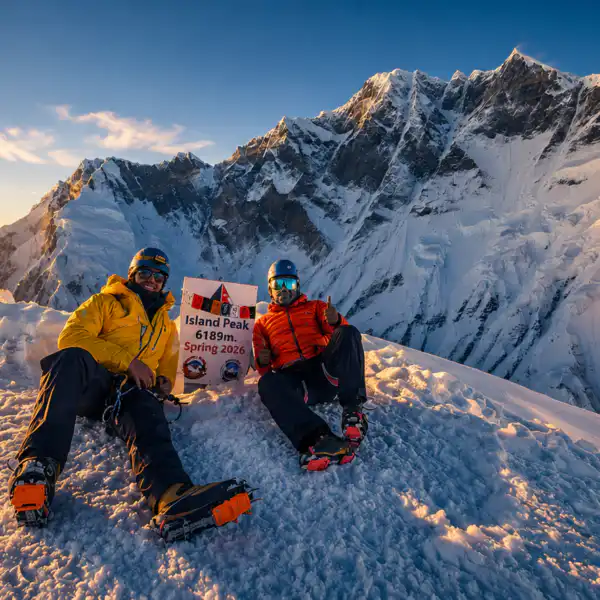
| Island Peak Climbing | Approximately 16–20 days | Island Peak summit: approximately (6,189 m / 20,305 ft) | Very challenging | Technical climbing, glacier travel and mountaineering preparation |
The time taken depends on the starting point, route, acclimatization plan and operator. Island Peak is not a typical trekking peak; it’s a climbing trek and requires the right gear, preparation, and climbing assistance.
For travelers with limited time who still want to visit Everest Base Camp and Kala Patthar, the helicopter-return itinerary reduces the need to walk back to Lukla. The shorter schedule doesn’t cancel out the physical challenge and danger of high-altitude trekking, though.
Everest Base Camp Trek Return by Helicopter FAQs
Can I visit Everest Base Camp and Kala Patthar on the same trek?
Yes, it does lead to Everest Base Camp and a first early-morning walk to Kala Patthar before the helicopter flies back.
Will I see Mount Everest from Everest Base Camp?
It’s not possible to see Mount Everest entirely from Base Camp. Generally, the viewpoint of Kala Patthar is great and looks better in fine weather.
Is the helicopter return public or private?
The arrangement will be based on the confirmed booking, the number of passengers, the aircraft capacity and the operating conditions. Be sure to check what kind of flight you can book before you book it.
Can the helicopter land at Everest Base Camp?
It’s not a promise to return to Everest Base Camp. The planned return departs from the Gorak Shep area, subject to operational conditions.
What is to happen if I am unable to do the Kala Patthar hike?
Let your guide know straight away. Your guide will be able to evaluate your health and communicate about safe options to return to Gorak Shep instead of the viewpoint.
Is it okay to exclude the acclimatization hike on Nagarjun Hill?
Yes, it is an optional hike. You may rest in Dingboche or turn back earlier if appropriate based on symptoms, fitness and the guide’s advice.
Are there luggage restrictions on the helicopter return?
Yes, the baggage allowance varies by aircraft and airline. Ensure the weight and the arrangements for excess baggage prior to departure.
Can I join this trek if I have never trekked above high altitude?
While experience at high altitudes is not a requirement, good fitness, careful acclimatization and preparation for the challenging walking days are important.
Is there a buffer day in the nine-day itinerary for flight delays?
This is not an itinerary that includes any separate buffer day. Please allow extra time before travelling abroad, as there is a possibility of flight delays to the mountains.
What other costs will I have to budget for on the journey?
Plan for personal beverages, snacks, wi-fi, charging, tipping, insurance and other costs that may arise due to delays that are unforeseen in your booking.
US$ 2,395 per person
- 24/7 Customer Support
- Experienced and Professional Team
- Hassle-Free and Easy Booking
- 99% Customer Satisfaction
- Fair Prices, Exceptional Service
- No Hidden Costs and Secure Payments
- Tailored and Personalized Itineraries
24 X 7 Live Support

Puru (+977-9851069558)
Related Trips


Recent From Our Blog Places of attractions, travel tips, news and more.
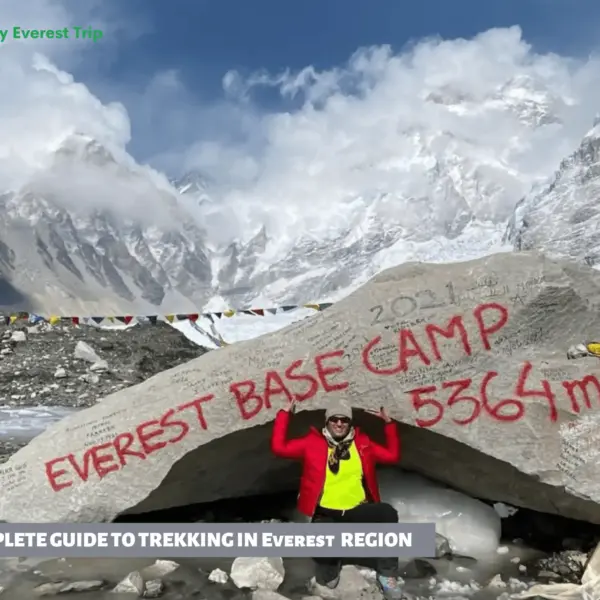
Everest, Blog, Trekking in Nepal
A Complete Everest Trekking Guide
A Complete Everest trekking guide covers many treks globally, but none is more well-known than the one…
Read the full post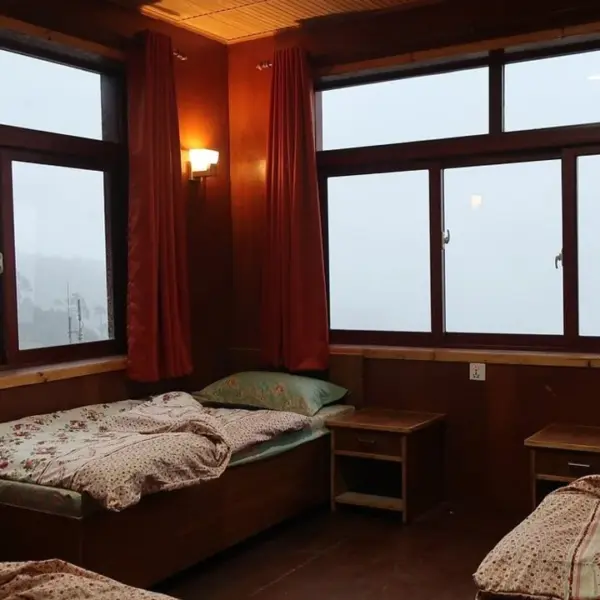
Everest, Blog
Accommodation on Everest Base Camp Trek
Accommodation is a major concern for trekkers, especially in remote Himalayan areas like the Everest…
Read the full post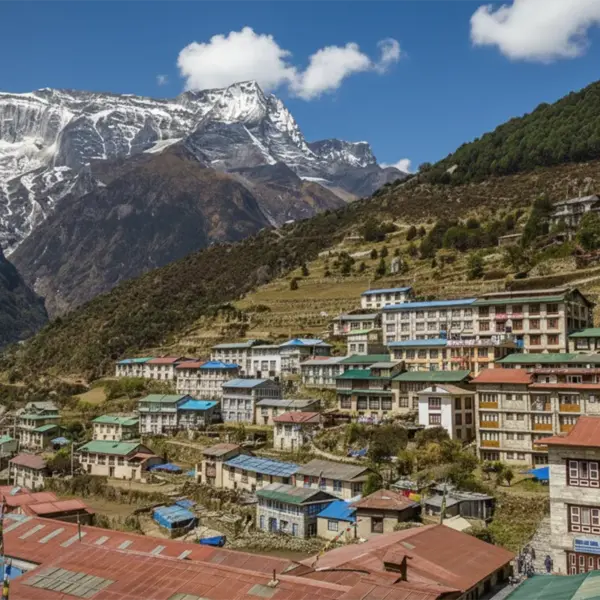
Blog
Animals That Live On Mount Everest : Wildlife of the World’s Highest Mountain
Introduction: Life Above the Clouds Mount Everest, the highest peak in the world with an…
Read the full post