





11 Days


Quick Facts

Ground transportation in Nepal

Hotels & tea-house accommodation

All meals except in Kathmandu

Guided tour & trek throughout the trip

Autumn, Spring

Moderate

Nepal

5,357 m / 17,575 ft

Kathmandu - Lukla - Gokyo Ri - Lukla - Kathmandu
US$ 1,150 per person
-
1 -
1 personUS$ 1350
-
2 + people
9999
US$ 1150
- 24/7 Customer Support
- Experienced and Professional Team
- Hassle-Free and Easy Booking
- 99% Customer Satisfaction
- Fair Prices, Exceptional Service
- No Hidden Costs and Secure Payments
- Tailored and Personalized Itineraries
24 X 7 Live Support

Puru (+977-9851069558)


Why 11 Days Everest Gokyo Ri Trek?
Everest Gokyo Ri Trek offers exceptional Himalayan views, turquoise Gokyo Lakes, thrilling mountain trails, and unforgettable adventures through the stunningEverest region of Nepal.
- Reach Gokyo Ri 5,357 m for wide views of four 8,000 m peaks: Mount Everest (8848.86 m), Lhotse (8,516 m), Makalu (8,485 m), and Cho Oyu (8,188 m).
- Visit the remote village of Gokyo, located at 4,790 m.
- Cross Ngozumpa Glacier (22KM), the longest glacier in the Himalayas.
- Experience challenging landscapes from forest to alpine to glacial zones.
- Trek through Sagarmatha National Park, a UNESCO World Heritage Site.
- Pass through remote settlements like Dole and Machhermo.
11 Days Everest Gokyo Ri Trek Overview
The Everest Gokyo Ri Trek takes you on a less crowded route to the Gokyo Valley, with its turquoise glacial lakes, giant glaciers, and traditional Sherpa villages. Unlike the busy Everest Base Camp route, the Everest Gokyo Ri Trek follows a quieter trail through the Dudh Koshi Valley, passing traditional Sherpa villages and gradually ascending towards the beautiful Gokyo Lakes.
This trek is ideal for those who want an adventurous, less-crowded alternative to the Everest Base Camp route. It involves a longer, more challenging route via Gokyo Valley, which attracts fewer first-time trekkers. About 20-25% of trekkers visiting the Everest region choose this route, while the majority follow the classic EBC trail.
The Gokyo Trek is one of Nepal’s most spectacular and rewarding Himalayan adventures, perfect for trekkers seeking fewer crowds and breathtaking scenery. This moderate-to-challenging trek takes you through beautiful Sherpa villages, turquoise Gokyo Lakes, and stunning mountain landscapes. The highlight is the hike to Gokyo Ri, where you will enjoy one of the finest panoramic views in the Everest region, including Everest, Lhotse, Makalu, and Cho Oyu. With crystal-clear lakes, majestic glaciers, and unforgettable sunrise views, the Gokyo Trek offers a peaceful, scenic, and truly life-changing trekking experience in the heart of the Himalayas.
The highlight of the Everest Gokyo Ri Trek is reaching Gokyo Village (4,790 m) beside the third Gokyo Lake, with the majestic Ngozumpa Glacier in the foreground and the Himalayas’ towering peaks in the background. The Gokyo Valley is home to six sacred glacial lakes, each known for its distinctive turquoise color. The area is particularly special for its peaceful atmosphere, stunning Himalayan scenery, and spiritual significance.
Another highlight is an early-morning climb to Gokyo Ri (5,357 m). The dawn climb to the summit offers stunning Himalayan views, including Mount Everest, Lhotse, Makalu, and Cho Oyu. This high point offers a fine view of the Ngozumpa Glacier and the series of Gokyo Lakes in the valley to the south.
Everest Gokyo Ri Trek Route
The Everest Gokyo Ri Trek route begins with a flight from Kathmandu to Lukla, then continues to Phakding and Namche Bazaar. In Namche Bazaar, we will spend a day acclimatizing, then head toward the Gokyo Valley.
From Namche Bazaar, the path leads to Dole and Machhermo through forests, mountain villages, and more open alpine terrain. We will continue along the Dudh Koshi River to Gokyo, where we visit the first and second Gokyo Lakes, then the third lake near Gokyo village.
Gokyo is the central base for exploring the surrounding lakes and climbing Gokyo Ri. The next day, we will ascend Gokyo Ri early in the morning for views of Mount Everest, Lhotse, Makalu, Cho Oyu, and other mountains. After returning to Gokyo, the itinerary continues toward the fourth and fifth Gokyo Lakes before returning to the village.
The return route follows the same valley back toward Machhermo and Dole before continuing to Namche Bazaar. From Namche, we will retrace the trail through the lower Khumbu villages to Lukla. The trek ends with a flight back to Kathmandu.
The main route is: Kathmandu – Lukla – Phakding – Namche Bazaar – Dole – Machhermo – Gokyo – Gokyo Ri – Gokyo – Machhermo – Dole – Namche Bazaar – Lukla – Kathmandu
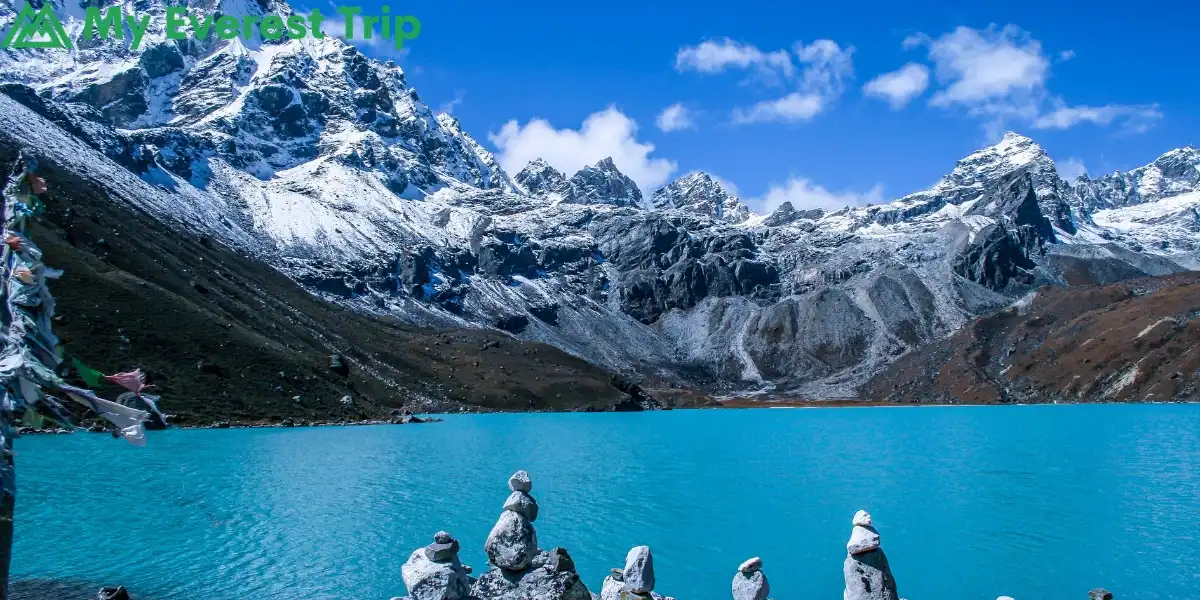
This route combines Sherpa villages, the Gokyo Lakes, the Ngozumpa Glacier, alpine landscapes, and high-mountain viewpoints. The existing Elevation Level and Total Distance section below provides the elevation and distance details for the main points along the route.
11 Days Everest Gokyo Ri Trek Itinerary
Day 01: Fly from Kathmandu to Lukla, trek to Phakding
Your journey to the 11 Day Everest Gokyo Ri Trek begins with an early morning flight (6:00-10:00 AM) from Kathmandu to Lukla (2,860 m). Lukla is a small town known as the gateway to Everest.
After landing, porters will come to meet the group, and you’ll start walking through Chheplung village, where you’ll see your first views of Kusum Kanguru (6,367 m). Then you’ll follow the Dudh Koshi River and cross your first suspension bridge at Thado Koshi.
Around midday, you’ll reach Ghat and continue through pine forests, passing painted mani walls before crossing the Kusum Khola. As you reach Phakding, you’ll see Rimishung Monastery on a nearby ridge. This short first day helps your body adjust to altitude and marks the official start of your trek through glaciers, lakes, and high mountain valleys.
Note: During peak months such as March, April, May, September, October, and November. The flight to Lukla is most likely to operate from Manthali (Ramechhap district) due to air traffic. So you may need to drive 5 to 6 hours early in the morning to catch the flight to Lukla.

Breakfast, Lunch, Dinner

Teahouse

9 km / 5.6 miles

2,800 m / 9,186 ft

3hrs
Day 02: Trek from Phakding to Namche Bazaar
You’ll start the day by walking along the Dudh Koshi River, which is about 130 km long. You’ll pass through Totok and Benkar villages, where you can see the Thamserku (6,608 m) mountain on the hill. After crossing a suspension bridge, you’ll reach Monjo (2,835 m), the entry point of the Sagarmatha National Park. Here, your permits will be checked before continuing through Jorsalle.
From Jorsalle, you’ll continue and cross the Hillary Suspension Bridge, the highest bridge on the trail, then begin a climb through rhododendron forest. Along the stretch, if the sky is clear, you may catch a glimpse of Mt. Everest. By late afternoon, you’ll reach Namche Bazaar, the main trade and cultural center of the Khumbu region and a key stop on the Everest Gokyo Ri trip.

Breakfast, Lunch, Dinner
Teahouse
10 km / 6.2 miles
3,440 m / 11,286 ft
5hrs
Day 03: Acclimatization Day in Namche Bazaar
On this day of the Gokyo Lake trek, you’ll stay in Namche Bazaar (3,440 m) to help your body adjust to the higher altitude. In the morning, you’ll hike up to the Everest View Hotel (3,880 m), one of the highest altitude hotels in the world.
On the way, you’ll pass through Syangboche Airstrip (3,780 m), which serves as a backup landing site for small aircraft. From the hotel viewpoint, you’ll see a wide mountain range including Everest, Lhotse, Ama Dablam, and Thamserku.
After the hike, you’ll return to Namche for lunch and spend the rest of the day exploring the village. You can visit the Sherpa culture museum and National Park Visitor Center, which explain the local traditions, geography, and history of the Everest region. The shops and bakeries in Namche provide a place to rest and refuel.

Breakfast, Lunch, Dinner
Teahouse
4 km / 2.5 miles
3,880 m / 12,730 ft
3hrs
Day 04: Trek from Namche Bazaar to Dhole
After spending a full day in Namche, you’ll begin the trek towards Kyangjuma. After some time, you’ll reach Sanasa and take the upper trail toward Mong La (3,957 m), from where you can see Ama Dablam and Kangtega (6,782 m). You’ll descend to Phortse Thenga (3,680 m), a riverside area beside the Dudh Koshi River. This point marks the entrance into the Gokyo Valley.
After crossing Phortse, you’ll cross a wooden bridge over the river and start the uphill section through forests. You’ll pass through the Thenga settlement and continue to Dhole, a village from which you can see Taboche Peak (6,495 m). Overnight at Dhole.
Breakfast, Lunch, Dinner
Teahouse
12 km / 7.5 miles
3,957 m / 12,982 ft
6hrs
Day 05: Trek from Dhole to Machhermo
On the fifth day of the trek, you’ll start the day from Dhole (4,200 m) and follow the trail that passes through the small settlements of Lhabarma (4,330 m), and then reach Luza (4,390 m), where you can witness Cho Oyu (the sixth highest mountain in the world. You’ll see yak pastures and small chortens as you gain height slowly.
By midday, you’ll reach Machhermo, the place known for the 1974 incident involving a reported Yeti sighting. Here you can rest and explore the valley for the rest of the day. The Himalayan Rescue Association post in Machhermo also gives a daily talk about altitude safety, which is important on the Everest Gokyo Ri trekking route.
Breakfast, Lunch, Dinner
Teahouse
10 km / 6.2 miles
4,470 m / 14,665 ft
5hrs
Day 06: Trek from Machhermo to Gokyo
Early in the morning, you’ll begin the trek from Machhermo and follow the Dudh Koshi River. After a short descent, you’ll pass through Pangka (4,390 m). From here, you’ll see the terminal moraine of the Ngozumpa Glacier, the longest glacier in Nepal, at around 36 km. You’ll then cross a bridge over a stream and continue upward to the first Gokyo Lake, known as Longpongo Tsho (4,690 m).
You’ll pass through the second lake, Taboche Tsho (4,710 m), and by midday you’ll reach the third lake, Dudh Pokhari (4,790 m), beside the village of Gokyo. This settlement lies beneath Cho Oyu, and from here, you can see the upper part of the Ngozumpa Glacier.
Breakfast, Lunch, Dinner
Teahouse
12 km / 7.5 miles
4,790 m / 15,715 ft
4-5hrs
Day 07: Explore Gokyo Valley, Climb Gokyo Ri, and hike to the fifth lake
This day is all about exploring the Gokyo region. You’ll start the morning early with a climb to Gokyo Ri (5,357 m). From the top, you’ll witness panoramic views of four of the world’s highest peaks: Everest, Lhotse, Cho Oyu, and Makalu, as well as the full Ngozumpa Glacier. After spending some time at the summit, you’ll descend back to Gokyo.
By midday, you’ll hike north towards the fourth lake, Thonak Tsho (4,840 m), and then reach the fifth lake, Ngozumpa Tsho (4,980 m). From here, you’ll witness close-up views of Cho Oyu. The lakes are fed by glacial melt from the upper Ngozumpa basin.
After exploring the area, you’ll return to Gokyo village for the night. This day in the Everest Gokyo Ri trek itinerary gives you both high-altitude views and glacier-lake exploration in one full day.

Breakfast, Lunch, Dinner
Teahouse
14 km / 8.7 miles
5,360 m / 17,585 ft
7hrs
Day 08: Trek from Gokyo to Dhole
Today, you’ll begin your descent from Gokyo by tracing the same trail beside Dudh Pokhari Lake before heading down the western side of the Ngozumpa Glacier. As you lose elevation, you’ll pass through the stone-walled pasture of Gokyo and reach Phangka.
From Phangka, you’ll continue toward Machhermo, observing the beautiful views of Cho Oyu to the north. From Machhermo, you’ll descend further past Luza to reach Dhole (4,200 m). This part of the Everest Gokyo Ri trek route lets you exit the high alpine zone and prepare for lower altitudes.
Breakfast, Lunch, Dinner
Teahouse
15 km / 9.3 miles
4,790 m / 15,715 ft
7hrs
Day 09: Trek from Dhole to Namche Bazaar
From Dhole, you’ll descend toward Luza, passing the trails above Dudh Koshi. After a short walk, you’ll reach Phortse Tenga, where the Dudh Koshi and its tributaries converge. The trail leads you toward Mong La, where you can take one last look at peaks like Ama Dablam and Thamserku.
From Mong La, you’ll walk through the forest to reach Kyangjuma. From here, you’ll reach the confluence of trails heading toward Tengboche and Everest Base Camp. You’ll then continue toward Namche Bazaar (3,440 m), where you’ll again reconnect to the popular routes of the Everest region.
Breakfast, Lunch, Dinner
Teahouse
14 km / 8.7 miles
3,957 m / 12,982 ft
6hrs
Day 10: Trek from Namche Bazaar to Lukla
Leaving the Sherpa hub, you’ll descend towards the Hillary Suspension Bridge. After crossing the bridge, you’ll pass through villages like Monjo and Jorsalle, and check out at the Sagarmatha National Park entrance. You’ll again see the meeting point of the Bhote Koshi and Dudh Koshi rivers near Larja Dobhan.
By midday, you’ll reach Phakding and trek through Ghat and Thado Koshi, crossing several suspension bridges. You’ll pass Chheplung before reaching Lukla, where the Everest Gokyo Ri trek completes its circuit.

Breakfast, Lunch, Dinner
Teahouse
19 km / 11.8 miles
3,440 m / 11,286 ft
7hrs
Day 11: Fly back to Kathmandu
Early in the morning, you’ll fly from Lukla to Kathmandu. The flight is short and follows the Dudh Koshi Valley, giving you one last glimpse of the Himalayan landscapes you trekked through.
Once you land at Tribhuvan International Airport in Kathmandu, your trek officially ends. After checking in at your hotel, you’ll have the rest of the day free. Many trekkers use this time to rest, explore local markets like Asan or Thamel, or visit cultural places such as Boudhanath or Pashupatinath.
Breakfast
Hotel
2,800 m / 9,186 ft
11 Days Everest Gokyo Ri Trek Map
What To Expect?
What's Included
Airport Pickup and Drop-off Services
- International arrival pickup
- Domestic airport drop-off from hotel (Start of trek)
- Domestic airport Pick-up and transfer to the hotel (After the trek)
- International drop-off on your final departure day
Accommodations Services
- 10 nights at local tea houses in the mountains (on a twin-sharing basis)
Trekking Permit
- Local Government Entry Permit (Trek Card)
- Sagarmatha National Park Permit (Everest Permit)
Domestic Flights
- Kathmandu to Lukla flight ticket
- Lukla to Kathmandu flight ticket
In case of Lukla Flight Via Ramechhap
- Kathmandu to Ramechhap drive by sharing transportation
- Ramechhap to Lukla domestic flight ticket
- Lukla to Ramechhap domestic flight ticket
- Ramechhap to Kathmandu by sharing a Jeep
Food During Kathmandu/Trekking
- 10 Breakfast: Local and continental choices from the tea house Menu
- 10 Lunch: A Simple and light lunch in the lunch camp tea houses
- 10 Dinner: Veg and Non-Veg Meals of your choice, Nepalese and continental foods from the local tea house Menu
Guide/Porter Services and Their Liabilities
- First-aid kit box carried by our team
- Trekking guide – English-speaking licensed guide with 10 + years of experience.
- Insurances for Guide & Porter (Emergency evacuation and accidental medical expenses)
- All meals for the Guide/Porter
- Salary as per the company standard rate (which is recommended by the concerned association of the tourism industry)
- Local sherpa for carrying your luggage up to 20 kg Maximum (2 guests sharing 1 Porter)
- Travel and Rescue Arrangements
What's Excluded
- Meals in Kathmandu before and after trekking,
- Your travel insurance ( Rescue )
- Nepal entry visa fee.
- Tips for trekking staff and driver
- Drinks (hot, cold, and alcoholic)
- Personal shopping, laundry, etc
- Personal trekking equipment.
11 Days Everest Gokyo Ri Trek Additional Information
How much does it cost to go to Gokyo Ri?
The Everest Gokyo Ri Trek costs USD 1,150 per person. However, the cost is not fixed and changes based on various factors. The overall trek duration, level of luxury you prefer, trekking season, whether hiring a guide and porter, group size, and customization of trip change the cost of the Everest Gokyo Ri Trek.
However, the cost covers all essential expenses during the trek, including domestic flights between Kathmandu and Lukla, accommodation in teahouses, all meals, permits for Sagarmatha National Park, and permits for Khumbu Pasang Lhamu Rural Municipality. There are no hidden charges, and the price includes government VAT and all applicable taxes.
Still, your visa, travel insurance, personal shopping, tipping, and extra nights and meals in Kathmandu aren’t included in your trip package. Likewise, some teahouses charge for wifi, hot showers, and device charging. Those expenses also come under your extra expenses.
What to Expect on the Everest Gokyo Ri Trek?
The Journey to Gokyo Ri is defined by awe at every turn, with diverse landscapes, high-altitude views, and varied opportunities. Here is what you can expect on the Gokyo Ri trek:
The Everest Gokyo Ri Trek is perfect for trekkers who love high-altitude views, turquoise glacial lakes, traditional Sherpa villages, and spectacular glacial scenery. In addition to the ascent to Gokyo Ri, it takes trekkers through the less-visited western part of the Khumbu region, past remote lakes, and through Sagarmatha National Park, where they can hear mountain stories from local people.
Summit Gokyo Ri at 5,357 m for Views of four 8,000 m Peaks
The best part of the Everest Gokyo Ri Trek is the climb to Gokyo Ri (5,357 m), the high point above the village. This steep, rocky route takes roughly 2-3 hours and requires a steady pace and proper acclimatization.
From the summit, you can enjoy a view of four of the world’s 8,000 m mountains: Mount Everest (8,848.86 m), Lhotse (8,516 m), Makalu (8,485 m), and Cho Oyu (8,188 m).
Many trekkers start early in the morning to catch the first light over the surrounding Himalayan summits. Gokyo Ri is one of the best vantage points in the Everest region, with an array of glacial lakes, rugged mountain ridges, and mountain summits.

Walk Through Machhermo Village
Along the route to Gokyo is a small Sherpa village called Machhermo (around 4,470 m). The village is also the setting of one of the region’s most popular Yeti stories, and it is an overnight stop for trekkers.
A reported attack happened while a Sherpa woman was caring for her livestock near Machhermo in July 1974, during which she saw a strange animal. According to reports, three animals similar to yaks attacked a woman. Though not substantiated, this story has become local folklore of the village.
Visit the Fifth Gokyo Lake
If you have a second day in Gokyo, it is worth hiking to the 5th Gokyo Lake (Ngozumpa Tsho) to explore outside of the village and its famous lakeside viewpoint.
From Gokyo, the trail climbs north, passing the Fourth Lake (Thonak Tsho) and then the Fifth Lake near the large Ngozumpa Glacier. The walk is quite long, so it’s a day-long stroll rather than a quick side trip, generally taking several hours each way.
- Seasonal birds like the bar-headed goose migrate near Gokyo Lakes
The wetlands around the Gokyo Lakes become a resting point for migratory birds such as the bar-headed goose, black-necked crane, and ruddy shelduck. These migrations are noticed during the pre-monsoon (April to May) and post-monsoon (September to October) periods. The high-altitude lakes provide food and shelter, and sightings add an ecological highlight to the trek.
Tea House Facilities During Everest Gokyo Ri Trek
Throughout the Everest region, well-established teahouses and mountain lodges support the Everest Gokyo Ri Trek. From Phakding and Namche Bazaar to Dole, Machhermo, and Gokyo, family-run teahouses and mountain lodges provide accommodation, meals, and resting facilities for trekkers.
As trekking tourism increased in the Khumbu region in the 1960s and 70s, so did the development of teahouse accommodation. The lodges still play a vital role in trekking today, especially in communities where other lodging options are scarce.
Most teahouses have simple twin sleeping rooms in which beds, mattresses, pillows, and blankets are provided. Bathrooms are shared, especially at higher elevations, and some lodges in larger settlements like Namche Bazaar have more comfortable rooms and amenities. As you ascend towards Gokyo, accommodation facilities become more basic. Hot showers, electricity, and internet access may be limited or available only at an additional cost.
Teahouses and mountain lodges are available in settlements such as Machhermo (4,470 m) and Gokyo (4,790 m). Nights in these mountain villages are for relaxing, enjoying freshly prepared meals, and getting ready to see the area’s highlights, like the Gokyo Ri summit and the surrounding glacial lakes.
Teahouses are especially useful for experiencing local Sherpa hospitality at higher elevations, where accommodations are simpler, and for enjoying a warm dining room after a very hard day of trekking.
What makes the Everest Gokyo Ri Trek difficult
The Everest Gokyo Ri Trek is moderate to challenging because of the elevation changes, long days of walking, steep ascent sections, and unpredictable mountain weather.
Risk of altitude sickness
One of the most difficult aspects of the Everest Gokyo Ri trek is its altitude. Lower oxygen levels as you head up from Lukla to Namche Bazaar, Dole, Machhermo, and Gokyo make physical exertion more challenging.
Available oxygen pressure is about half what it is at sea level at the summit of Gokyo Ri (5,357 m). Some people experience breathlessness, fatigue, headaches, or a decreased walking speed. A fast ascent can also heighten the risks of developing acute mountain sickness (AMS).
Gradual acclimatization, adequate hydration, and following your guide’s instructions help reduce the risks associated with high altitude. Do not keep going up if you have symptoms of altitude sickness without proper assessment.
Long hours on walking trails
You have to walk for 5-7 hours each day on a trail, depending on the day’s schedule and path conditions. Typical distances covered are 8–12 km per day, and there is a large variation in the amount of ascent and descent.
This trail takes you through rocky roads, stone steps, suspension bridges, glacial areas, and steep ascents. The trek from Gokyo village to Gokyo Ri is especially strenuous because of its long, steep climb at high altitude.
Even physically fit trekkers may experience increased breathlessness at higher elevations. Maintaining a steady walking pace and taking regular breaks can make longer trekking days more manageable.
Physical fitness and strength requirements
The Everest Gokyo Ri Trek is not a technical climb, but it does require good physical and leg strength. You should be comfortable walking for several consecutive days, including along steep ascents, descents, and uneven mountain trails.
When traveling with a porter, a light daypack with water, snacks, warm clothing, and other essentials is all you require. A heavier backpack can be much more challenging without the help of a porter.
Familiarizing yourself with hiking, uphill walking, stair climbing, cycling, and cardiovascular workouts before the trip can help build stamina and make the journey enjoyable. If physically ready, previous multi-day hiking experience is a plus but not a requirement.
Cold temperatures and changing mountain weather
Another factor that could make the Gokyo Ri Trek difficult is the weather. As elevation rises, temperatures drop significantly, and mornings and nights can be cold around Machhermo and Gokyo.
In winter, it can get very cold at the top, especially on Gokyo Ri, where strong winds make it feel even colder. Unfavorable weather can create challenging trail conditions, including snowfall, icy sections, and poor visibility, particularly during winter and periods of unstable weather.
Clothing, insulated gloves, a warm hat, and appropriate trekking boots should be part of your essentials for staying warm. The climb to Gokyo Ri is best done in the morning when the weather is good, so it’s best to start early. Weather can shift rapidly in the mountains.
Transportation and Lukla Flight Information
Transportation for the Everest Gokyo Ri Trek includes domestic flights between Kathmandu and Lukla. The flight to Lukla provides access to the trekking route, while the return flight brings us back to Kathmandu after completing the trek.
During peak trekking periods, flights to Lukla may operate from Ramechhap instead of Kathmandu because of air traffic conditions. Your package includes the necessary transportation when this arrangement is required.
| Journey | Transportation included |
| Kathmandu to Lukla | Domestic flight |
| Kathmandu to Ramechhap, when required | Shared transportation |
| Ramechhap to Lukla, when required | Domestic flight |
| Lukla to Kathmandu | Domestic flight |
| Lukla to Ramechhap, when required | Domestic flight |
| Ramechhap to Kathmandu, when required | Shared Jeep |
When flights operate from Ramechhap, we may need to leave Kathmandu early in the morning for the road journey to the airport. Your package includes shared transportation between Kathmandu and Ramechhap in this situation.
Lukla flights are dependent on weather and flight operations. Delays may occur when the flight schedule is affected by visibility or mountain weather. You should therefore maintain a certain degree of flexibility in your travel plans, particularly when planning a departure from Kathmandu to an international destination after the trek.
Most Favorable Time for Gokyo Trek
The best time for the Everest Gokyo Ri trek is from late September to November and from March to early May. During these months, the region experiences lower rainfall, with average precipitation of 30-50 mm per month, humidity levels between 40 and 60%, and cloud cover averaging less than 30%. These conditions provide clear skies, beautiful mountain views, and more stable weather by improving visibility and safety on the trail.
In contrast, the monsoon season from June to August brings heavy rainfall, often exceeding 300 mm per month, with humidity rising above 80%. Winter months from December to February have low precipitation, but temperatures can drop quickly below -15°C near Gokyo. This increases the risk of frostbite and makes trekking more difficult. Therefore, autumn and spring offer the most reliable weather for completing the trek, with manageable conditions.
| Season | Months | Weather and Trail Conditions | Main Advantage |
| Spring | March to May | Generally stable weather with clearer mountain views | Good visibility and comfortable trekking conditions |
| Summer / Monsoon | June to August | Rain, clouds, and changing trail conditions | Fewer trekkers and greener landscapes |
| Autumn | September to November | Generally clear skies and stable conditions | Excellent mountain visibility and favorable trekking conditions |
| Winter | December to February | Cold temperatures and possible snow at higher elevations | Quieter trails and winter scenery |
Everest Gokyo Trek Permit
The Everest Gokyo Ri trek requires two main permits: the Sagarmatha National Park Permit and the Khumbu Pasang Lhamu Rural Municipality Permit. The Sagarmatha National Park Permit, established in 1976 by Nepal’s Department of National Parks and Wildlife Conservation, costs USD 30 for foreign nationals and USD 15 for SAARC nationals. Similarly, the Khumbu Pasang Lhamu Permit costs around USD 25 and is issued by the local government to regulate trekking activities in the Khumbu region.
Both permits can be obtained in Kathmandu before the trek or at offices near the park entrance, such as in Monjo. You must carry these permits throughout the journey, as they are checked at checkpoints such as Jorsalle, Machhermo, and Namche. These permits play an important role in managing tourism, supporting conservation efforts, and helping local communities in the Everest region.
Why choose the 11-day Gokyo Trek with us?
Here are some reasons why you should choose the Gokyo Trek with us:
- We have expert guides with over 10 years of experience on the Everest Gokyo Ri trek.
- Guaranteed teahouse accommodations at all stops, including Gokyo and Machhermo.
- Strictly follow the acclimatization schedule to reduce the risk of altitude sickness while trekking.
- All necessary permits included: Sagarmatha National Park and Khumbu Pasang Lhamu.
- Daily trekking distances planned between 8 and 12 km for manageable pacing.
- 24/7 emergency support and evacuation arrangements in Lukla and Namche Bazaar.
- Transparent pricing with no hidden fees or unexpected taxes.
- A comprehensive pre-trek briefing with a detailed itinerary and gear advice.
What peaks can you see from Gokyo Ri?
From the summit of Gokyo Ri, you can see several major Himalayan peaks. These mountains are notable for their heights and geographic importance in the Everest region. Here is a list of key peaks visible from Gokyo Ri:
- Mount Everest (8,848.86 m): Known as “Sagarmatha“ in Nepali and “Chomolungma“ in Tibetan, it is the highest mountain on Earth.
- Lhotse (8,516 m): Called “South Peak“, it is the world’s fourth-highest mountain.
- Makalu (8,485 m): Considered one of the most difficult 8,000 m peaks to climb.
- Cho Oyu (8,188 m): Nicknamed the “Turquoise Goddess“, this peak is popular among climbers due to its easier climbing route.
- Gyachung Kang (7,952 m): The least-climbed mountain and the fifteenth-highest mountain in the world.
- Tawoche (6,462 m): A prominent mountain near Gokyo.
- Ngozumpa Kang (7,206 m): A main water source for the Everest region.

Elevation Level and Total Distance
The Everest Gokyo Ri Trek covers about 40-45 km (25–28 miles) one way, starting at Lukla and reaching up to Gokyo Ri. However, the exact distance depends on the chosen itinerary and any side trips. The journey starts at 2,860 m and reaches up to 5,357 m. Similarly, the trek passes through different elevations each day at prominent locations, which are as follows:
| Day | Location | Elevation |
|---|---|---|
| 1 | Lukla | 2,800 m/9,184 ft |
| 2 | Phakding | 2,652 m/8,700 ft |
| 3 | Namche Bazaar | 3,440 m/11,283 ft |
| 4 | Dhole | 4,110 m/ 13,480 ft |
| 5 | Machhermo | 4,470 m / 14,663 ft |
| 6 | Gokyo Valley | 4,800 m/15,744 ft |
| 7 | Gokyo Ri | 5,357 m/17,570 ft |

How do you get ready for the Gokyo Ri Trek?
Preparing for the Gokyo Ri trek requires physical training, mental readiness, and careful packing. This helps ensure safety, comfort, and a better overall experience. Below are the key steps to get ready for the journey.
- Physical fitness: Focus on cardiovascular exercises like running, cycling, or swimming to build stamina. Do strength training for legs, core, and back to handle difficult terrain. Practice hiking with a loaded backpack to simulate trek conditions.
- Mental preparation: Learn about altitude sickness and its symptoms so you can recognize early signs. Prepare to stay patient and adaptable as weather and trail conditions change.
- Packing essentials: Bring layered clothing suitable for temperatures from -15°C to 10°C, including thermal wear and waterproof jackets. Carry trekking boots with good ankle support. Include essential gear such as a sleeping bag, trekking poles, a first-aid kit, water purification tablets, and sun protection.
- Acclimatization plan: Follow the recommended schedule, with rest days at key points such as Namche Bazaar, to allow your body to adjust to altitude changes.
- Travel logistics: Book flights early, especially the Kathmandu-Lukla sector; prepare for possible weather-related delays, or grab the package from us; we’ll handle everything.
Local Guide & Porter Info For Everest Gokyo Ri Trek
One unique aspect of My Everest Trip is that we provide our clients with a local guide and porter for their trip. We mainly offer local Sherpa guides for Himalayan expeditions, who are experienced professionals known for their bravery. They are familiar with the region’s trails, landscape, and culture. Most of our guides are born and raised in the areas where the trek takes place. They provide complete knowledge of the area’s history, diverse ecosystem, and culture.
Furthermore, our porters come from the area trekkers will pass through, which can be exhausting, especially in rugged terrain. They are friendly and hardworking, and they carry all your backpacks so you can stay focused on the trek. As our porters are local, we aim to support the local economy by hiring them.
If you want to combine a trip like the Gokyo Ri & Everest Base Camp Trek, we can customize it for you.
Meal options during the Everest Gokyo Ri Trek
During the Gokyo Ri trek, several meal options are served in teahouses and lodges along the trail. Items such as Dal Bhat, Tibetan bread, pancakes, eggs, potatoes, tea, and coffee are often served at every accommodation. Here is a clear table of food items that will be served along the trek.
| Breakfast | Lunch | Dinner |
|---|---|---|
|
|
|
Everest Gokyo Ri Trek vs Everest Base Camp Trek
The Everest Gokyo Ri Trek and Everest Base Camp Trek both explore the Everest region, but their main attractions are different. Your 11 day itinerary focuses on the Gokyo Valley, Gokyo Lakes, Gokyo Ri, and views of major Himalayan peaks rather than continuing to Everest Base Camp.
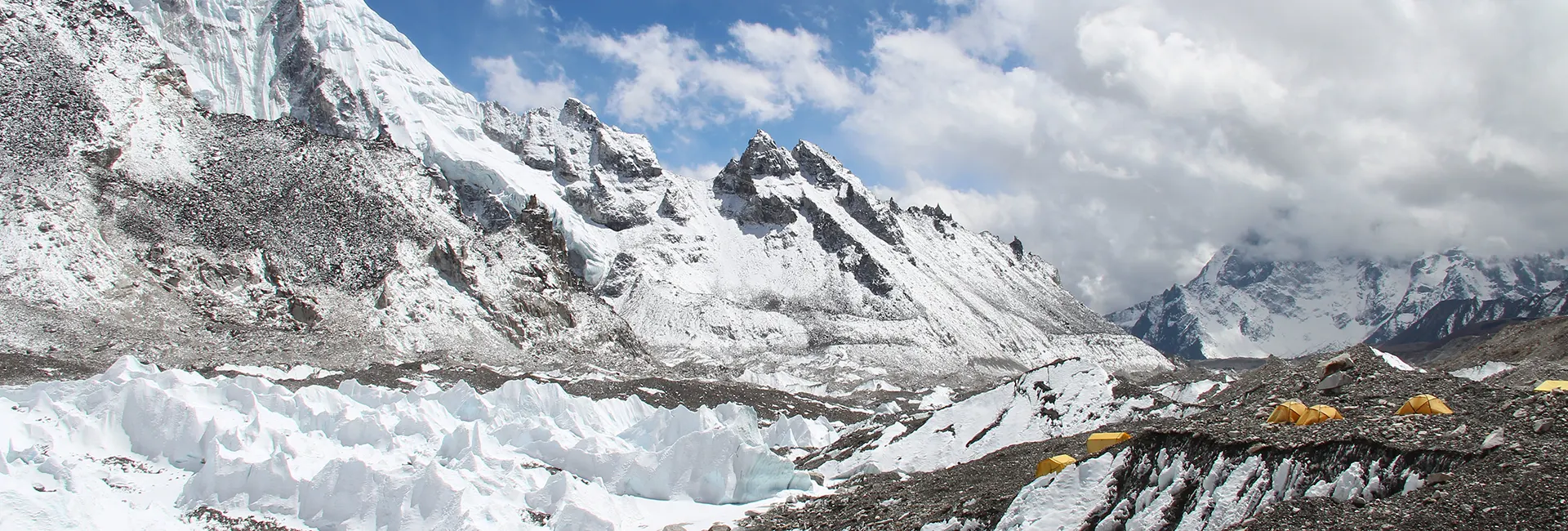
The Gokyo route suits trekkers who want to experience a different side of the Everest region and prefer the Gokyo Lakes and Gokyo Ri as the main highlights. If reaching Everest Base Camp is your main goal, the Everest Base Camp Trek is the more appropriate choice.
| Feature | Everest Gokyo Ri Trek | Everest Base Camp Trek |
| Main highlight | Gokyo Lakes and Gokyo Ri | Everest Base Camp and Kala Patthar |
| Highest point | Gokyo Ri at 5,357 m / 17,575 ft | Kala Patthar at 5,545 m / 18,192 ft |
| Main route | Lukla→ Phakding→ Namche Bazaar→ Dole→ Machhermo→ Gokyo | Lukla→ Phakding→ Namche Bazaar→ Tengboche→ Dingboche→ Lobuche→ Everest Base Camp |
| Major mountain views | Everest, Lhotse, Makalu and Cho Oyu | Everest, Lhotse, Nuptse and surrounding peaks |
| Main lake experience | Gokyo Lakes | No Gokyo Lakes on the standard EBC route |
| Trek duration | 11 days | 12-14 days |
| Best suited for | Trekkers interested in Gokyo Lakes and Gokyo Ri | Trekkers whose main goal is Everest Base Camp |
Both paths are high-altitude treks and require preparation. The main difference is the experience you want from the Everest region. Select the Gokyo route when your focus is on Gokyo Lakes and Gokyo Ri, or the EBC route when you have to visit Everest Base Camp as part of your trip.
Who Should Choose the Everest Gokyo Ri Trek?
The Everest Gokyo Ri Trek is suitable for trekkers who want to visit Gokyo Valley and Gokyo Ri without following an itinerary to reach Everest Base Camp. The route includes Gokyo Lakes, Ngozumpa Glacier, Sherpa villages, and high-altitude mountain views.
This trek is particularly suitable if you want to see Mount Everest, along with Lhotse, Makalu, and Cho Oyu, from the Gokyo Ri viewpoint. It is also very suitable for trekkers who do not want to follow the usual Everest Base Camp path but prefer a route centered on the Gokyo Valley.
You need to be ready to walk several hours per day and handle the rising altitude as the trail climbs from Lukla to Gokyo. The plan includes an acclimatization day in Namche Bazaar before proceeding to the higher elevations of the Gokyo Valley.
Choose this trek if you:
- Interested in visiting Gokyo Lakes and Gokyo Ri.
- Desire expansive views of Everest, Lhotse, Makalu, and Cho Oyu.
- Use the Gokyo Valley path.
- Want something different from the usual route to Everest Base Camp.
- Prepared to do high-altitude trekking.
- Ability to walk multiple hours on consecutive days.
- Does not require Everest Base Camp as part of the itinerary
If your main objective is specifically to stand at Everest Base Camp, this 11 day itinerary is not the right package because it focuses on Gokyo Valley and does not include Everest Base Camp. In that case, an Everest Base Camp itinerary or a Gokyo trek with Everest Base Camp would be more appropriate.

Tripadvisor Reviews






Google Reviews


11 Days Everest Gokyo Ri Trek FAQs
What is the origin of the name 'Gokyo'?
‘Gokyo’ comes from the Sherpa language, meaning “five sacred lakes”. The trek passes through this valley, known for its cluster of glacial lakes that hold religious importance to the local Sherpa community.
Are there any endangered species I can spot near the Gokyo region?
Yes, the area is home to endangered species such as the snow leopard and the Himalayan blue sheep (bharal). Sightseeing is rare, but their presence represents the ecological importance of the region.
What is the significance of the Ngozumpa Glacier in regional hydrology?
Ngozumpa Glacier supplies meltwater to the Dudh Koshi River, a major tributary of the Koshi River System. Changes in its volume affect the availability of water downstream for thousands of people who depend on the river for agriculture, drinking water, and hydropower.
What is the record of the lowest temperature recorded near Gokyo during winter?
The lowest temperature recorded near Gokyo during winter was around -20°C (-4°F) during nighttime. Strong winds at high altitude increase the cold, which requires proper clothing and equipment to avoid hypothermia and frostbite during cold weather.
How do the geology and rocky types affect trail conditions on the Gokyo Ri trek?
The trail crosses sedimentary and metamorphic rocks formed by glacial activity. Loose rocks, scree slopes, and moraine ridges are common, which sometimes create unstable trail sections. These conditions require good footwear and proper planning.
Are there endangered medicinal plants I can find around the trail?
Yes, Yarsagumba (Cordyceps sinensis), an endangered medicinal fungus, can be found around the trail. It is highly demandable for traditional medicine, but it has been facing problems currently due to overharvesting.
How do altitude and UV radiation interact on the Everest Gokyo Ri trek?
Higher altitudes have a thinner atmosphere, which increases UV radiation exposure by up to 50% compared to sea level. This raises the risk of sunburn and eye damage; therefore, sun protection is essential for everyone doing such a high-altitude trek.
What time of day can I get the clearest view of Gokyo Ri summit?
The best time for clear visibility at Gokyo Ri summit is early morning between 6 AM and 8 AM. During these hours, wind speeds are lower and cloud cover is minimal, which improves conditions for mountain viewing and photography.
What role does yak herding play in Gokyo Valley communities?
Yak herding provides meat, milk, and transport. Yaks are essential for carrying supplies to remote villages and lodges. Herding supports local livelihoods and cultural practices of the Everest region.
What is the impact of microplastics on the Everest Gokyo Ri trek environment?
The impact of microplastics on the Everest Gokyo Ri trek environment includes contamination of water sources and soil near trekking routes. These plastic particles come from discarded waste and pose risks to local wildlife and ecosystems.
How reliable are weather forecasts in the Everest Gokyo Ri region?
Weather forecasts in the region use satellite data and local observations, but can be unpredictable due to rapid mountain weather changes. You should prepare for storms and temperature shifts even if the forecast shows clear skies.
What are the common altitude sickness symptoms I may experience near Gokyo Ri?
You might experience symptoms like headaches, dizziness, nausea, and fatigue. These appear due to reduced oxygen levels at elevations above 4,500 m and require proper rest and acclimatization to manage.
What vaccines should I take before the Everest Gokyo Ri trek?
You are recommended to take Hepatitis A and B, Typhoid, Tetanus, and routine childhood immunizations. Some of the trekkers also get the influenza vaccine, and the Yellow fever vaccine is only required if coming from affected countries. Vaccination helps to reduce the risk of common infections in remote areas during the trek.
What common illnesses should I be aware of on the Everest Gokyo Ri trek?
You should be aware of common issues like respiratory infections, gastrointestinal upset, altitude sickness, and minor injuries. Carry a basic first aid kit with basic medications and practice hygiene to minimize this risk.
What emergency protocols are in place for health issues on the trek?
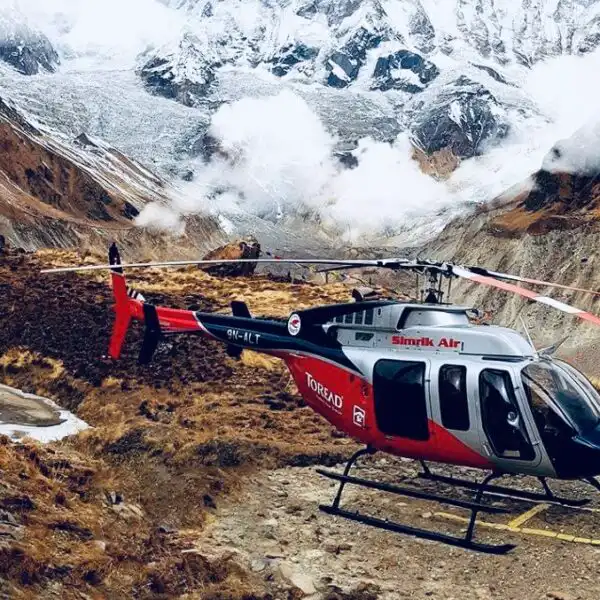
Local guides and agencies have evacuation plans, including helicopter rescue. Communication with health posts is possible via radio or satellite phone. You should carry emergency contact numbers and insurance covering high-altitude evacuation.
US$ 1,150 per person
- 24/7 Customer Support
- Experienced and Professional Team
- Hassle-Free and Easy Booking
- 99% Customer Satisfaction
- Fair Prices, Exceptional Service
- No Hidden Costs and Secure Payments
- Tailored and Personalized Itineraries
24 X 7 Live Support
Puru (+977-9851069558)
Related Trips


Recent From Our Blog Places of attractions, travel tips, news and more.

Everest, Blog, gokyo, Gokyo Trek, Trekking in Nepal
Things to Know About Everest Gokyo Ri Trek
The Gokyo Valley calls it "The Valley of Death," and as it should be –…
Read the full post
Nepal, Tour In Nepal
7 Most Beautiful Lakes in Nepal
Best Lakes in Nepal offers you stunning natural beauty and cultural immersion. Some include Rara…
Read the full post
Everest, Blog, Trekking in Nepal
A Complete Everest Trekking Guide
A complete Everest trekking guide covers many treks globally, but none is more well-known than the one…
Read the full post