




1 Day


Quick Facts

Ground transportation in Nepal

Hotels & tea-house accommodation

All meals except in Kathmandu

Guided tour & trek throughout the trip

Autumn, Spring

Easy

Nepal

5,555

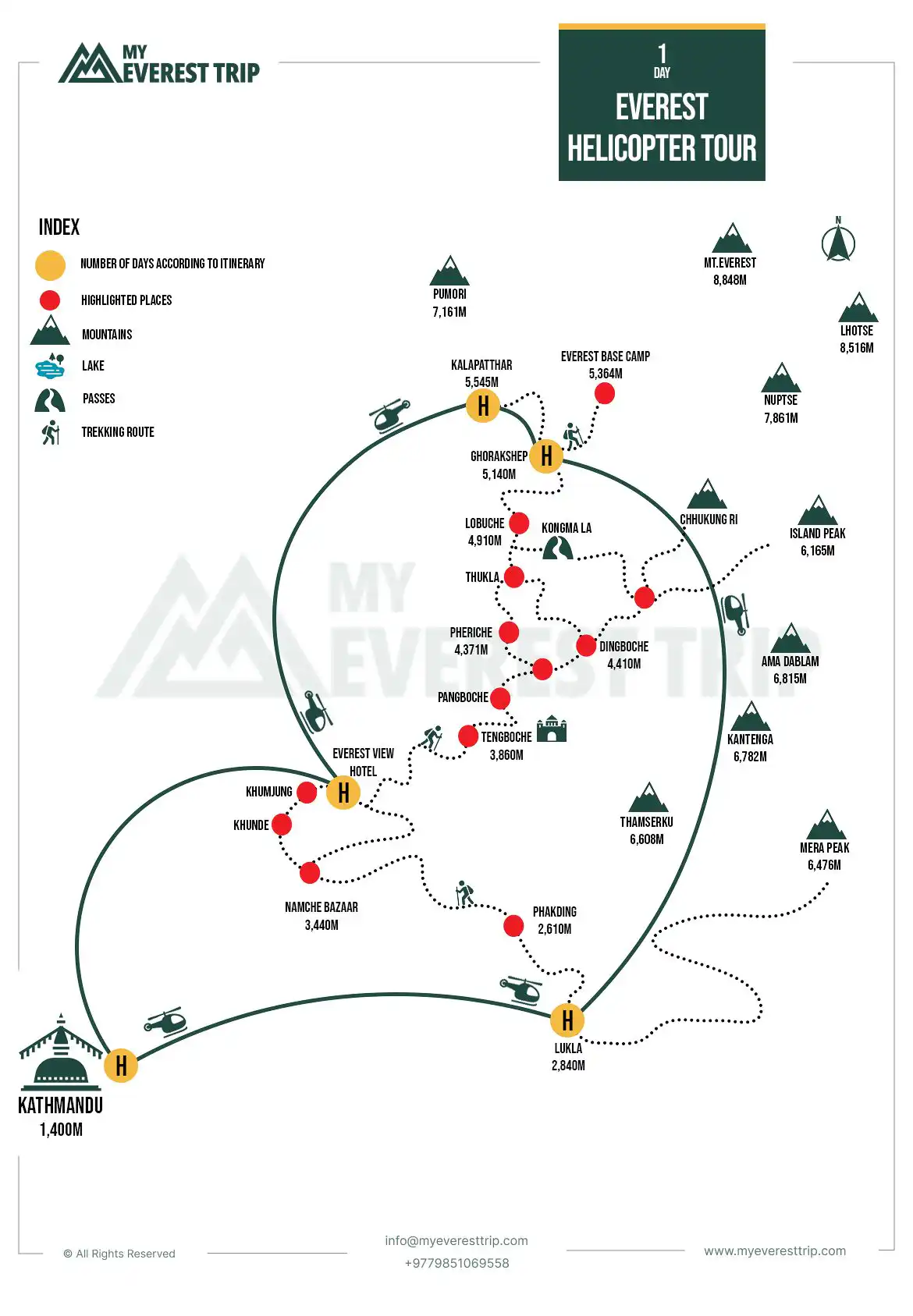
Kathmandu - Lukla - Everest view Hotel- Over flight EBC - Lukla - Kathamndu



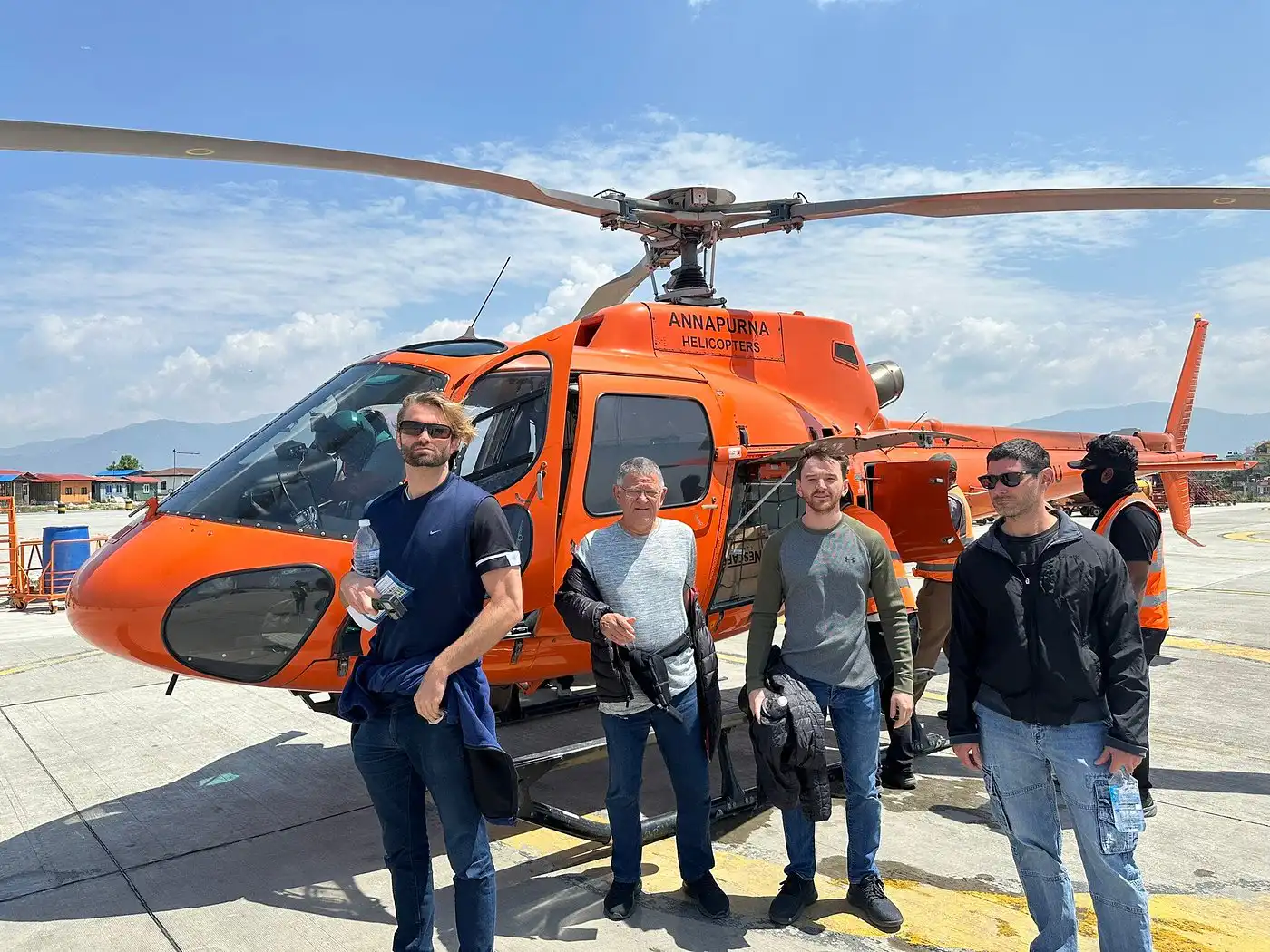
Why 1 Days Everest Base Camp Helicopter Tour?
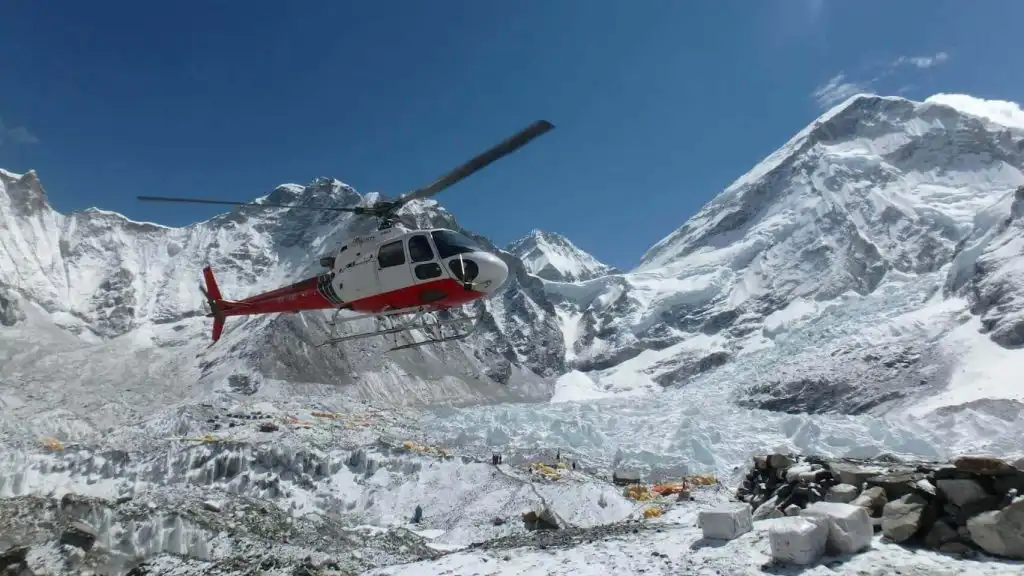
Experience the magic of the Himalayas on an unforgettable 1-day helicopter journey from Kathmandu to the legendary Everest region. Soar above breathtaking landscapes, majestic peaks, and charming Sherpa villages as you create memories to treasure for a lifetime.
- Scenic Himalayan Flight: Fly from Kathmandu toward the Everest region and enjoy mesmerizing views of the world’s most spectacular mountain landscapes.
- Magnificent Mountain Views: Admire breathtaking panoramas of Mount Everest, Lhotse, Nuptse, Ama Dablam, Pumori, and other awe-inspiring Himalayan peaks.
- Kala Patthar Landing: Land at or near Kala Patthar (approximately 5,545 m) for an unforgettable, up-close view of Mount Everest and its surrounding giants.
- Everest Base Camp & Khumbu Icefall: Enjoy incredible aerial views of Everest Base Camp and the Khumbu Icefall, offering a truly magical perspective of the Everest landscape.
- Discover the Khumbu Valley: Fly over iconic Himalayan settlements such as Lukla, Namche Bazaar, and Tengboche, surrounded by dramatic mountain scenery and the beautiful Sherpa culture.
- Breakfast with a View: Enjoy a delightful breakfast at Hotel Everest View in Syangboche, where every moment comes with a breathtaking Himalayan backdrop.
- Perfect for a Short Escape: Complete this extraordinary adventure in approximately 4–5 hours and return to Kathmandu the same day.
- No Long Trek Required: Experience the beauty and grandeur of Everest without the need for a demanding multi-day trek—perfect for travelers with limited time.
- A Dream for Photographers: Capture unforgettable photographs of soaring peaks, deep valleys, glaciers, and enchanting Himalayan landscapes.
- A Lifetime Memory: From the moment you take off to the moment you return, this helicopter adventure promises a sweet, thrilling, and truly unforgettable Himalayan experience.
Note: Flight routes, landing locations, and schedules may vary depending on weather conditions, aviation regulations, and local clearances. Safety always remains the highest priority.
1 Days Everest Base Camp Helicopter Tour Overview
The Everest Base Camp helicopter tour is a short way to reach the world’s highest mountain in just a few hours. It takes you from Kathmandu to Everest Base Camp at 5,364 m in a few hours, without days of trekking. The helicopter lands at key viewpoints such as Lukla Airport, Kala Patthar, and Syanboche, allowing you to see Everest, Lhotse, Nuptse, and Ama Dablam up close. It is designed for travelers who want the whole Everest experience in a single day.
Everest Scenic Helicopter Flight departs from Kathmandu and flies east, crossing several green hills before entering the Khumbu region. The aircraft lands at Lukla (2,860 m), home to the famous Tenzing-Hillary Airport, before heading deeper into the Himalayas. From above, you can observe Sherpa villages, Tengboche Monastery, and the Dudh Koshi River.
The trek’s primary purpose is to reach Kala Patthar (5,545 m), one of the best vantage points for Mount Everest. Here, you can stand almost at the foot of the mountain and photograph the Khumbu Icefall, Khumbu Glacier, and the basin of the Western Cwm.
During climbing season, the base camp is full of colorful tents and expedition groups, visible as the helicopter hovers above. Stops are short because of the thin air and last about 10-15 minutes to keep passengers safe. In just 4-5 hours, you return to Kathmandu with memories of standing near Everest and flying over the world’s tallest peaks.
1 Days Everest Base Camp Helicopter Tour Itinerary
Day 01: Everest Base Camp Helicopter Tour
5:30 AM-6:00 AM: Hotel Pickup and Transfer to Tribhuvan International Airport
You’ll be picked up from your hotel in Kathmandu by our representatives and driven to Tribhuvan International Airport. During the drive, enjoy the early morning city vibe as you prepare for your Everest Himalayan adventure. Make sure your camera is ready because this day promises memories you’ll never forget.
6:00 AM-6:30 AM: Flight Preparation and Documentation
Arriving at the airport, you’ll complete your flight preparation. Our team will check passports, tickets, weight checks, airport boarding passes, and permits (handled by our operators), and guide you to the departure point. Once everything is set, you’ll board the helicopter for your morning flights toward the mountains.
6:30 AM-7:30 AM: Helicopter Flight from Kathmandu to Lukla for refueling
At 6:30 AM, the helicopter lifts off, flying east over Kathmandu Valley and heading towards the Mahalangur Himalayan range. You’ll first land at Lukla (Tenzing-Hillary Airport) to refuel and explore the mountaintop settlement.
7:30 – 8:00 AM: Depart from Lukla and head towards the Everest region
Then the helicopter flies toward Everest Base Camp (5,364 m). You’ll get aerial views of the Khumbu Glacier, Western Cwm, Khumbu Icefall, and colorful expedition tents. A short hover over Everest Base Camp allows you to observe the base of the world’s highest peak from above.
8:30 – 9:30 AM: Land at Everest View Hotel (Syangboche) for breakfast and a short break
After exploring the base camp, you’ll land at Everest View Hotel at Syangboche (3,880 m) for a rest. Here you can enjoy views of Ama Dablam, Thamserku, Lhotse, Nuptse, and the Khumbu Himal range.
9:00-10:30 AM: Return Flight to Kathmandu via Lukla
After a beautiful morning, the helicopter lands again in Lukla to refuel and takes you back to Kathmandu. You’ll fly over Phakding, Monjo, and the Dudh Koshi River, bidding farewell to the Himalayan peaks.
11:30-12:30 PM: Drop Back to Hotel
Landing at Tribhuvan International Airport, our team will drive you back to your hotel. You can relax, recall your day’s adventure, and prepare for your next Himalayan experience.

Breakfast

5,545 m / 18,192 ft
1 Days Everest Base Camp Helicopter Tour Map
What To Expect?
What's Included
- Pick up / drop from your hotel to the airport.
What's Excluded
- Jacket
- Camera
- Permit
- Breakfast etc

Tripadvisor Reviews








Google Reviews


1 Days Everest Base Camp Helicopter Tour Additional Information
New Updates on Everest Base Camp Helicopter Tour In 2026
Due to physical and environmental damage, Nepal’s government first decided to ban the EBC helicopter tour. The ban was announced in December 2024, and as of January 1, 2025, all EBC helicopter tour packages were prohibited, which would have impacted Nepal’s tourism industry.
Everest Base Camp Helicopter Tour
However, Luxury Everest Helicopters in the Everest region aren’t for everyone. Medical evacuation flights and those transporting essential supplies to climbers are allowed, specifically up to Pangboche (3,985 m). The restrictions mainly affect areas above 4,000 m.
Sagarmatha National Park has banned commercial helicopter flights, but the Civil Aviation Authority of Nepal declared this ban “illegal” on December 13. They claimed that the park does not have the authority to stop helicopter flights and told operators to continue their services as usual.
However, the local government in the Everest region supports the ban. On December 10, the Khumbu Pasanglhamu Rural Municipality held a meeting with local community members and decided to suspend commercial helicopter flights, effective January 1. They issued a notice expressing concerns about noise pollution from helicopters and their impact on the forest, wildlife, and the local community surrounding Sagarmatha National Park.
Why the Everest Base Camp helicopter tour is a must-do in 2026

Fastest Way to Reach Everest Base Camp
The helicopter tour is the fastest way to reach Everest Base Camp. While the trek takes 12-14 days, the helicopter lands at Kala Patthar in just a few hours. This gives you beautiful aerial views of Mount Everest, Lhotse, and Nuptse without long walking days. In 2025, more travelers with limited time are expected to choose this tour as air travel saves effort.
Safe and Reliable Flight Service Up to Kala Patthar
Flights are operated with modern helicopters designed for high-altitude conditions. Pilots are trained to handle the challenging Himalayan environment. The helicopters carry oxygen support for emergencies, which adds extra safety. In 2025, safety standards are tighter, and operators like My Everest Trip follow the Civil Aviation Authority of Nepal (CAAN) guidelines to guarantee safe journeys.
Best Value for Money on the 2025 Everest Helicopter Tour
The tour costs about USD 1,200-1,500 per person on a group-sharing basis. Compared to trekking expenses, including permits, food, lodging, and guides for 2 weeks, the helicopter option saves time and provides a luxury experience slightly more than the standard EBC trek and less than the Luxury Everest Base Camp trek. With rising trekking costs in 2025 due to higher lodge and permit prices, many travelers see the helicopter tour as a cost-effective way to enjoy the Everest region.
Beautiful Himalayan Views like Everest, Lhotse, Nuptse in a Few Hours
The helicopter ride offers 360° views of the Mahalangur Himalayas. From Kathmandu, you’ll fly over Lukla, Namche Bazaar, Tengboche, Dengboche, and the Khumbu Glacier. Peaks like Ama Dablam, Pumori, Cho Oyu, and Makalu are clearly visible. Landing at Kala Patthar gives the best view of Mount Everest. You’ll fly over turquoise Gokyo Lakes, which are another gem in the Everest region.
Flight Over Sagarmatha National Park and Land at Everest View Hotel (3,880 m)
Another major attraction of the EBC helicopter tour in Nepal is the chance to land at Hotel Everest View. This hotel is also popular among landing destinations, not only because of the landing but also because of the opportunities to have breakfast. This hotel is located in Sagarmatha National Park (also known as Everest National Park) in Nepal, a UNESCO World Heritage Site. Every corner has a view of Mt. Everest that helps you to enjoy this beautiful scenery in luxury. The hotel opened in 1971 and was recognized in the Guinness Book of World Records in 2004 as the world’s highest hotel at 13,000 feet.
Perfect for All Age Groups
Unlike the EBC trek and Annapurna Circuit trek, which demand fitness and stamina, the helicopter tour is open to almost everyone. Families, senior travelers, or those with limited time can enjoy the Everest panorama. In 2025, this diversity makes the trip even more popular, as adventure seekers of all backgrounds can safely join. It is ideal for those who dream of Everest but cannot commit to long treks.
Total Cost and Additional Cost Factors for the Everest Helicopter Tour
Everest Helicopter Tour costs range from USD 1,300 to 6,000 per person, depending on the trip type. A luxury private trip can cost up to USD 5,500 per person and offers greater privacy and comfort. However, here’s a precise detail of the private and group trip cost:
- Private Helicopter – 2 Persons: USD 2,850 per person.
- Private Helicopter – 5 Persons: USD 2,500 per person.
- Joining Group: USD 1,400 per Person
| Cost Factor | Explanation | Approximate Cost (USD) |
| A Sagarmatha National Park Permit | is required for entry into the park. | USD 30 |
| Airport Taxes | : Domestic airport taxes at both departure and arrival airports. | USD 40 |
| Tips for Crew | : It is Customary to tip pilots and ground staff. | USD 20-USD 50 |
| Travel Insurance | . It is essential to cover any unforeseen medical emergencies or trip cancellations. | Varies depending on the coverage |
| Accommodation and Meals | : If staying overnight in Kathmandu or other locations. | USD 50-USD 100 per day |
| Transportation to/from Airport | : Costs associated with getting to and from the airport in Kathmandu. | USD 5-USD 10 per trip |
| Personal Expenses | Souvenirs, snacks, beverages, etc. | Varies depending on spending habits |
| Possible Extra Fees | Weather delays, changes in itinerary, or unexpected events. | Can vary significantly |
Best Seasons for Everest Base Camp Helicopter with Landing Flight

| Spring (March-May) | Summer/Monsoon (June-August) |
|
|
| Autumn (September-November) | Winter (December-February) |
|
|
Hence, spring and autumn are the best seasons for the helicopter flight to Everest, though it is accessible year-round.
Everest Base Camp Helicopter Flight Route
The Everest Base Camp helicopter tour is a unique day trip from Kathmandu that lasts approximately 4 to 5 hrs.
Route Overview:
- Starting Point: The tour begins in Kathmandu, flying over the Kathmandu Valley before landing in Lukla.
- Second Phase: After refueling in Lukla, the flight continues over Namche Bazaar, Tengboche Monastery, and Pheriche, and lands at Kala Patthar for sunrise views.
- Khumbu Glacier: Kala Patthar, and Everest Base Camp.
- Breakfast Stop: The helicopter lands at Everest View Hotel (Syangboche) for breakfast.
- Return Trip: After breakfast, the tour returns to Lukla for refueling and then to Kathmandu.
Weather at Kathmandu Domestic Airport
The weather at Kathmandu Domestic Airport is usually mild, with average daytime temperatures ranging from 10°C in winter to 28-34°C in summer. Rainfall is highest in the monsoon months of June to August, when the airport receives 300-400 mm of rain per month. Visibility at the airport is best in autumn and spring, which is the safest time for mountain flights and helicopter tours.
Morning hours are the most reliable for flights, as wind speeds are below 10 km/h and the air is clearer before cloud buildup later in the day. During winter, fog can reduce visibility below 1,000 m, affecting takeoffs, while in summer, afternoon thunderstorms are common. Pilots and airlines schedule flights early in the morning to take advantage of calm weather and clearer windows.
Weather and Climate Change for Everest Helicopter Tour
| Stop | Daytime Temperature | Nighttime Temperature | Average Weather Conditions | Things to Carry | Avoid or Take |
| Kathmandu (Starting Point) | 15-25°C (59-77°F) | 10-15°C (50-59°F) | Generally pleasant, with occasional rain during monsoon (June-September) | Light jacket, comfortable shoes, sunglasses, sunscreen | – |
| Lukla Airport (2,800m/9,186ft) | 10-15°C (50-59°F) | 0-5°C (32-41°F) | Cooler, with potential for rain or snow, especially during monsoon | Warm layers (fleece, down jacket), waterproof jacket and pants, sturdy hiking boots | – |
| Namche Bazaar (3,440m/11,286ft) | 5-10°C (41-50°F) | -5 to 0°C (23-32°F) | Colder, with higher chances of precipitation | Same as Lukla, plus a beanie and gloves | – |
| Everest Base Camp (5,364m/17,598ft) | -10 to 5°C (14-41°F) | -15 to -10°C (5-14°F) | Very cold, with strong winds and potential for snowfall | ||
| Kala Patthar (5,545m/18,192ft) | -15 to -5°C (5-41°F) | -20 to -15°C (-4-5°F) | Extremely cold, with strong winds and potential for whiteout conditions | Same as Everest Base Camp, plus crampons and an ice axe (for guided hikes) | Avoid during whiteout conditions or strong winds |
Why Choose Everest Base Camp Helicopter Tour?
- The helicopter tour takes you to Everest Base Camp (5,364 m) in just a few hours, compared to the 12-14 days required for a traditional trek
- You can land at Kala Patthar (5,545 m) for a sunrise view of Mount Everest, Lhotse, Nuptse, and Pumori without the physical strain of climbing
- The tour includes landing at Syangboche, where you can have breakfast with panoramic views of Ama Dablam, Thamserku, and the Khumbu Himal range
- You get aerial views of the Khumbu Glacier, Western Cwm, and Khumbu Icefall, which are impossible to see fully from the trekking route.
- Flights offer views of 7 Gokyo Lakes, Sherpa villages, and monasteries without needing to trek long distances
- The helicopter tour is suitable for travelers with limited time or physical restrictions
- Helicopter flights operate in the morning hours when wind speeds are lowest (usually under 10km/h), ensuring safety and stable flying conditions.
Why Doesn’t a Helicopter Land at Everest Base Camp?
Helicopters do not land at EBC due to the lack of a stable helipad on the unstable Khumbu Glacier and the thin air. The air density is very low, which reduces the rotor lift that the helicopter relies on to stay airborne. Helicopters also have engine power limitations at high altitudes because thinner air contains less oxygen for combustion. Hence, it can throw the helicopter off balance, which can be dangerous.
Instead, helicopters hover above the Base Camp for observation. This helps passengers to see the Western Cwm, colorful expedition tents, and the Khumbu Glacier safely from the air. Landings are usually done at safer high-altitude points like Kala Patthar or Syangboche, where the areas are stable, have slightly better air conditions for rotor lift, and have fewer hazards.
What Should You Do During Emergency Conditions at the EBC Helicopter Tour?
- Follow Crew Instructions Immediately: The helicopter crew is trained for high-altitude emergencies. Listen carefully and respond quickly to their instructions.
- Wear Oxygen Masks if Provided: At altitudes above 5,000 m, oxygen levels drop significantly. Use supplemental oxygen if the crew provides it to prevent hypoxia.
- Apply Seat Belts and Secure Belongings: Sudden turbulence or gusts are common in the Khumbu region. Keep your seat belt fastened at all times.
- Remain Calm: Panic can worsen breathing and circulation at high altitude. Take slow breaths to maintain oxygen intake.
- Report Symptoms Immediately: Inform the crew if you feel dizziness, nausea, headache, or shortness of breath, as these may be early signs of altitude sickness.
- Follow Emergency Landing Protocols: If weather or mechanical issues occur, the pilot may perform a precautionary landing at safer points like Lukla, Syangboche, or Phakding.
- Avoid Moving Around the Cabin: Moving during high-altitude flight or emergency landing increases the risk of injury. Remain seated and brace for impact.
Does a Helicopter Tour Carry a Risk of Altitude Sickness?
Yes, a helicopter tour to Everest Base Camp can carry a risk of altitude sickness, but it is lower than trekking. Helicopters reach high altitudes quickly, such as EBC and Kala Patthar. The fast landing gives the body little time to adjust to lower oxygen levels, which can cause headache, nausea, dizziness, and shortness of breath in sensitive travelers.
However, the short duration of the tour (4-5 hrs) reduces the risk compared to multi-day treks. You’ll stay at high altitudes for only a few minutes during landings or hovering stops, which is not long enough to trigger severe altitude sickness. Pilots and our team will also monitor weather and altitude carefully to ensure safe exposure times for passengers.
To stay safe, it is recommended to avoid alcohol, stay hydrated, and inform the crew of any medical conditions before the flight. People with heart or lung problems, or those prone to altitude sickness, should consult a doctor. Most healthy travelers experience only mild symptoms or none at all, making the helicopter tour a fast and relatively safe way to enjoy the high-altitude scenery of Everest.
Should I have Travel Insurance for the EBC Helicopter Tour?
- Book Early for Peak Seasons: Spring and Autumn have the clearest skies and stable weather. Helicopter seats fill quickly, so book at least 2-3 months in advance.
- Arrive Early at the Airport: Morning flights are safest due to low wind speeds and better visibility. Arrive 1-1.5 hrs before departure for check-in and preparation.
- Dress in layers: Temperatures at Kala Patthar can range from -10°C to 5°C in spring and autumn. Wear thermal inner layers, a down jacket, gloves, and sunglasses
- Carry Small Essentials: Bring a camera, water bottle, and light snacks. Keep bags small, as helicopters have limited storage.
- Stay Hydrated: High altitude can cause mild dehydration. Drink at least 500-700 ml of water before and during the tour.
- Limit High-Altitude Exposure: Spend only 10-15 minutes at Kala Patthar and short stops at Syangboche to reduce the risk of altitude sickness.
- Check Flight Cancellation Policies: Weather can change suddenly in the Khumbu region. Confirm policies for rescheduling to avoid any circumstances.
- Prepare for Turbulence: The Khumbu region can have strong winds. Stay seated, buckle up your seatbelt, and secure cameras or bags.
Why Choose the Everest Helicopter Tour Over the EBC Trek
The Everest Base Camp trek takes 12-14 days of walking through high-altitude trails, while the helicopter tour completes the journey in just one day. Both options are exciting, but the helicopter tour is best for travelers with limited time or physical challenges. Here’s a side-by-side look to help you choose.
| Factor | Everest Helicopter Tour | Everest Base Camp Trek |
| Duration | 4-5 hrs of trekking | 12-14 days of trekking |
| Accessibility | Suitable for all, including those with limited fitness | Requires good physical fitness and preparation |
| Altitude Exposure | Short stays at Kala Patthar, Lukla, and Syangboche | Continuous exposure to high altitude for several days |
| Cost | USD 1,350-USD 5,500 per person, depending on group and private flight | USD 1,250-USD 1,800 average, including permits, guides, and food |
| Comfort | Luxury, fast, oxygen support available | Basic teahouse lodges, shared facilities |
| Safety | Weather-dependent, short exposure reduces altitude risk | Risk of altitude sickness due to long stay at high points |
| Physical Demand | Minimal, only short walks at landing points | Demanding, long walking hours daily |
| Best For | Time-limited travelers, families, and luxury seekers | Adventure trekkers, cultural immersion lovers |
Why Book Everest Base Camp Helicopter Tour With MET (My Everest Trip)?
- Best Price Guarantee: Join group flights starting from USD 1,350 per person, or book private options at competitive rates with no hidden costs.
- Flexible Options: Choose between groups sharing or private luxury flights, which are easy to fit your budget and preferences
- All-Inclusive Service: The cost covers hotel pickup and drop-off, airport transfers, permits, and government taxes, so you don’t pay extra on the spot
- Small Group Size: Each helicopter carries a maximum of 5 passengers, giving you more space and better window views
- Prime Landing Spots: Guaranteed landing at Kala Patthar and Syangboche for photos and breakfast, included in the package
- Oxygen Support: Supplemental oxygen is always available onboard for high-altitude safety
- Local Expertise: MET is a Nepal-based company with knowledge of the Everest region, its weather, and challenges
- 24/7 Support: From booking to post-trip assistance, our team is available round the clock to make your experience smooth and worry-free.
Trekking gears for 1 Days Everest Base Camp Helicopter Tour
We’ll start our thrilling journey to Everest Base Camp early in the morning. Before we take off, we’ll ensure the weather is stable. As seasoned travelers, we are always prepared for any unexpected weather changes during our trips. Here are some common items that travelers typically require for the Everest Base Camp Helicopter trip.
Cloths
- Waterproof Trousers
- Trekking Socks (merino wool) x 3
- Sports Bra (merino wool) x 2
- Fleece Down Jacket
- Long-sleeved Thermal Top (for evening/sleeping)
- Liner Socks (optional) x 3
- Buff Sunglasses (+ spare pair)
- Socks (for the evening)
- Waterproof Jacket
- Gloves x 2 (thin + thick)
- Thermal Leggings (for evening/sleeping)
- Hiking Boots/Shoes (+ insoles)
- Trekking Trousers (preferably with zip-off shorts)
- Silk Leggings (for winter/high altitude)
- Sandals (for the evening)
- Thermal Tank Top (for winter/high altitude)
- Underwear (merino wool) x 3
- Trousers (for the evening)
- Long-sleeved T-shirt (merino wool)
- Short-sleeved T-Shirt (merino wool)
- Hat x 2 (sun hat + warm hat)
- Belt
Tea House Items
- Washing Line (optional)
- Travel Towel Scrubba & Suds (for laundry, optional)
- Silk Liner Eye Mask & Ear Plugs
- Packable Bag (optional)
- Penknife + Repair Kit/Tape
- Sleeping Bag
Equipment
- Sleeping bag
- Charging Unit + Charging Cable
- Travel Adapter
- Backpack or Day pack
- Raincoat
- Water bottle
- Trekking pole
- Cable Portable Solar Panel (optional)
- Power Bank + Charging
- Camera + SD Card + Batteries +
- Phone + Charging Cable
- Towels
Medicals and Hospitality
- Hand Sanitiser
- Insect Repellent
- First Aid Kit
- Deodorant
- Eye Drops
- Any Other Personal Medication
- Ibuprofen
- Sunscreen (face + body + lips)
- Soap
- Wet Wipes
- Antihistamines
- Steripen + Filter (or similar) / Water Purification Tablets
- Compeed (or similar)
- Paracetamol
- Tampons/Pads/Cup
- Shampoo
- Toilet Paper
- Diarrhoea Relief + Rehydration Sachets
- Nail Clippers (for longer treks)
- Decongestant
- Strepsils (or similar)
- Toothbrush + Toothpaste
- Electrolyte Tablets
- Moisturiser
- Diamox (optional)
1 Days Everest Base Camp Helicopter Tour FAQs
How many kilometers does the helicopter cover during the EBC tour?
The Everest Base Camp helicopter tour covers around 137-175 km round-trip from Kathmandu. The route includes flying over Lukla, Namche Bazaar, Tengboche, Kala Patthar, Everest Base Camp, Kala Patthar, and Syangboche before returning.
Can I fly to the top of Mount Everest during my helicopter tour?
No, during your Everest Base Camp Tour, you will only fly up to the base camp point and Kala Patthar, whose maximum elevation is 5,644m. Furthermore, you can’t travel to Mount Everest in a helicopter due to air pressure, as the maximum elevation you can gain from it is 7,900 m.
What is the fuel consumption for one EBC helicopter trip?
A standard helicopter consumes approximately 150-300 litres of aviation fuel for a round trip to Everest Base Camp. Fuel stops at Lukla are scheduled to maintain enough reserves. Our operators will plan flights carefully by balancing weight and altitude to maintain safety in the Himalayan air.
Should I be physically fit to take a helicopter tour to Everest?
Although the Helicopter tour doesn’t require physical activities like a trek, getting physically fit will help you indirectly, like keeping you safe from altitude sickness, dehydration, and fatigue at high altitudes.
How many passengers fit in one helicopter?
Helicopters carry 2-5 passengers depending on model and weight. Small groups guarantee comfort, better window views, and safety at high altitudes. Private helicopter tours are available for 2-5 people, while group flights allow individuals to join others.
Is it possible to take photos during the flight?
Yes, photography is possible during the flight. Large windows provide unobstructed views of Everest, Kala Patthar, Khumbu Glacier, and Sherpa Villages. You can use cameras or smartphones safely while seated.
How long do helicopters hover over Everest Base Camp?
The helicopter hovers 5-10 minutes over Everest Base Camp for observation. You can view expedition tents, Khumbu Icefall, Western Cwm, and Khumbu Glacier from above. The helicopter doesn’t land at Everest Base Camp due to unstable terrain and winds.
What happens if the flight is canceled due to weather?
If the helicopter flight is canceled due to bad weather, the tour can be rescheduled the same day or the next available day. Safety is prioritized, and pilots avoid flying in low visibility, strong winds, or storms. MET offers full support to rebook flights and add buffer time.
Is the Everest Base Camp Helicopter Tour suitable for all ages?
The helicopter tour of EBC is suitable for travelers of all ages because it does not require much physical exertion. However, there might be some risk for children under seven and the elderly above 70 since the oxygen level will be lower at high altitudes.
What is the altitude difference covered by the helicopter?
The helicopter covers an altitude difference of around 4,700 m, ascending from Kathmandu (1,400 m) to Kala Patthar (5,545 m). Rapid ascent requires specially designed helicopters and careful planning to handle thin air, reduced lift, and high-altitude aerodynamics safety.
How far can you see from Kala Patthar?
From Kala Patthar, visibility can reach up to 200 km on a clear day. You can witness Everest, Lhotse, Nuptse, Ama Dablam, and even Cho Oyu. Morning flights maximize clarity because the air is less humid and the winds are calmer.
What is the weight limit for passengers going on helicopter tour?
The weight limit for passengers going on helicopter tour is around 250-300 pounds (about 113-136 kg). This means operators may restrict individual passenger or luggage for safety and proper helicopter performance at high altitude.
Can I exit the heliocopter at landing points?
Yes, you can exit at landing points like Kala Patthar or Syangboche. This allows photography, short walks, and tea breaks. Ground exposure is less due to extreme cold and wind, and guides guarantees safety while outside.
How do pilots navigate during Everest flights?
Pilots use GPS, high-resolution maps, and visual cues from ridges and glaciers. Mountain flying requires constant monitoring of wind, altitude, and air pressure. Pilots are trained to adjust flight paths for safety and maximum sightseeing.
What type of helicopters are used for the Everest tour?
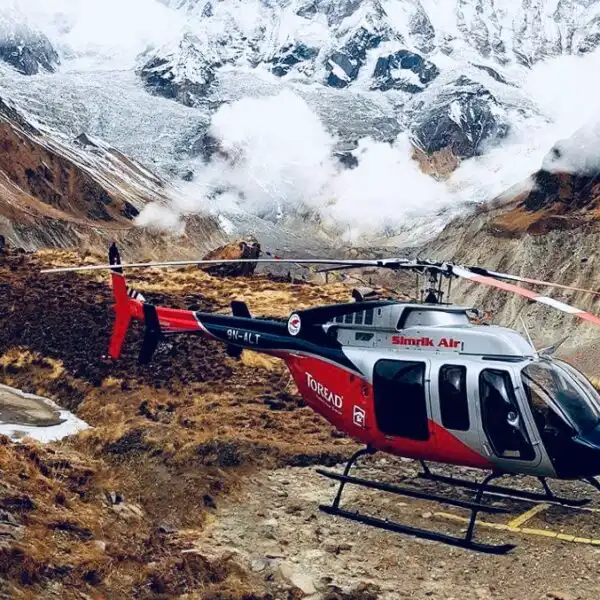
High-altitude helicopters like the Airbus H125, Bell 407, and Eurocopter AS350 are commonly used. These helicopters are designed for thin air, steep climbs, and strong Himalayan winds. Their engines can operate efficently above 5,500 m.
US$ 1,300 per person
- 24/7 Customer Support
- Experienced and Professional Team
- Hassle-Free and Easy Booking
- 99% Customer Satisfaction
- Fair Prices, Exceptional Service
- No Hidden Costs and Secure Payments
- Tailored and Personalized Itineraries

24 X 7 Live Support

Puru (+977-9851069558)
Related Trips


Recent From Our Blog Places of attractions, travel tips, news and more.
Blog
Animals That Live On Mount Everest : Wildlife of the World’s Highest Mountain
Introduction: Life Above the Clouds Mount Everest, the highest peak in the world with an…
Read the full post
Everest, Blog, Trekking in Nepal
A Complete Everest Trekking Guide
A complete Everest trekking guide covers many treks globally, but none is more well-known than the one…
Read the full post
Blog
10 Interesting Facts About Nepal That Will Surprise You
Nepal is a small Himalayan country between India and China but it has an amazing…
Read the full post