



Mount Everest, standing at 8,849 meters, is Earth’s highest mountain. Nepal calls it Sagarmatha, and Tibet calls it Chomolungma; it has inspired generations of climbers. The summit of Everest is the goal of many explorers, and over time, various Everest Climbing Routes have been developed to reach the summit.
Although over a dozen routes are documented, only two are used frequently today: the South Col route in Nepal and the North Ridge route in Tibet.
The most popular Everest Climbing Route is the South Col route, also known as the Southeast Ridge. It starts at Everest Base Camp in Nepal and passes through well-known landmarks such as the Khumbu Icefall, the Western Cwm, and the Lhotse Face. The trail provides strong support systems, trained Sherpa guides, and established camps, which contribute to the success rate. It is crowded, though, during the main climbing season.
The second most common route is the North Ridge way across Tibet. It avoids the dangerous Khumbu Icefall, but it involves lengthy exposed ridge climbing in extremely cold, windy weather. This side is less crowded and feels more remote; however, it may be a bit more technical.
Beyond these two popular Everest Climbing Routes, several very challenging routes exist, including the West Ridge and the Kangshung Face. They are rarely attempted and demand high-level mountain skills. Choosing the right path depends on experience, cost, and personal objectives.
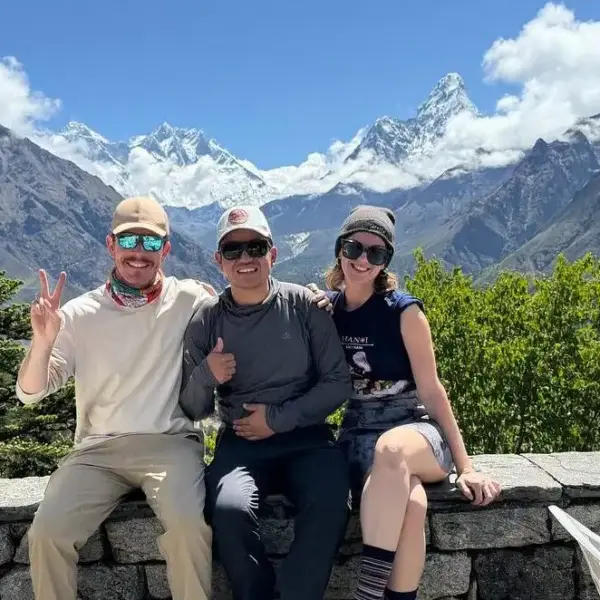
Everest Base Camp Trek 12 days
Mount Everest, standing at 8,849 meters, is Earth's highest mountain. Nepal calls it Sagarmatha, and Tibet calls it Chomolungma; it has inspired…
Overview of Main Routes
When it comes to Everest Climbing Routes, two routes are the most popular for reaching the summit: the South Col route and the North Ridge route, located in Nepal and Tibet, respectively. Both paths account for the vast majority of successful ascents and are the standard options for guided climbers.
The classic line, the original route successfully ascended by Sir Edmund Hillary and Tenzing Norgay in 1953, is the South Col route, or Southeast Ridge. It starts at Everest Base Camp in Nepal and leads through the dangerous Khumbu Icefall, where mountaineers climb ladders over deep crevasses and under ice chunks.
From there, they proceed along the Western Cwm and up the steep Lhotse Face to the South Col, at approximately 8,000 meters. It is the last camp before the summit push.
This route is not the most technical of all the routes to Everest; it still requires supplemental oxygen and strong mountaineering skills. It is comparatively more successful, though it is the busiest one, particularly in the springtime.
The North Ridge route starts on the Tibetan side of the mountain. Climbers are transported to Base Camp by vehicle, then to Advanced Base Camp and the North Col before walking the long, exposed ridge to the summit.
This route bypasses the Khumbu Icefall but includes steep snow, rocky sections, and a difficult Second Step toward the summit. The North Ridge is a little more technical and colder, with fewer climbers, and it feels more remote.
Each Everest Climbing Route presents its own challenge, and it depends on experience, preference, and the nature of the expedition.
Other Major Routes
Most climbers use either the South Col or the North Ridge; however, these are not the only Everest Climbing Routes, as the others are much harder and less frequently attempted. These are routes that are extremely difficult, risky, and unsupported. These are for highly skilled, experienced mountaineers with the technical know-how.
The West Ridge
The West Ridge is considered one of the most renowned alternative routes on Everest, first ascended in 1963 by Tom Hornbein and Willi Unsoeld. It runs along the mountain’s western side and can be accessed from either Nepal or Tibet.
The West Ridge is steep rock climbing, ice climbing, and mixed climbing at extremely high altitudes, frequently above 8,000 meters. Unlike traditional routes, there are no predefined routes, permanent ropes, or established camps; teams must set everything up themselves.
The ground is bare and unpredictable, and movement can be extremely slow because of loose rocks and hectic snow. This line, particularly the Hornbein Couloir, is dangerously steep. A few climbers have reached the summit via this variation. The West Ridge does not get much traffic annually because of its technicality and high risks.

The Kangshung Face
The Kangshung Face, which is on the eastern side of the mountain in Tibet, is another challenging route among the Everest Climbing Routes. This impressive wall rises sharply above the underlying glacier and consists of a long rock buttress followed by steep snow slopes that are easily affected by avalanches.
The Kangshung Face is also regarded as one of the most difficult paths on Everest, as it was first climbed in 1983. The site is isolated; rescue options are limited, and weather conditions can be harsh. Few teams take this path, and even fewer of them make it to the top.
These are lesser-known Everest Climbing Routes, and they are a true test of ability, physical strength, and determination.
Other Notable Routes
Besides the primary climbing routes, there are other Everest climbing routes that are historic, challenging, and adventurous. These tracks are rarely taken and are not followed by commercial groups. Instead, they attract only highly skilled mountaineers seeking extreme challenges beyond the ordinary routes.
The Great Couloir
The North Face of the mountain has one of the most well-known Everest climbing routes: the Great Couloir, or Norton Couloir. It is a sharp, open gully that gained global attention in 1980 when Reinhold Messner climbed it without supplemental oxygen. His climb is also one of the most significant success stories in mountaineering history.
This couloir is very dangerous, icy, and narrow, with very few successful repeats over the years.
The Southwest Face (Bonington Route)
The other major route is the Southwest Face, first ascended in 1975 by a British team led by Chris Bonington. This path climbs straight up a huge, rocky, and icy wall and then connects to the Southeast Ridge at the summit.
It consists of challenging mixed climbing at high altitude and has never been repeated on many occasions.
The South Pillar (American Buttress)
Similarly, the South Pillar, also called the American Buttress, is a straight, technical route that requires excellent climbing ability on rock above 8,000 meters.
It follows a direct line on the southwest side of the mountain and involves steep, exposed sections with very little room for error. Because of its high technical difficulty and serious risks, this route is rarely attempted and suits only highly experienced climbers.
Northeast Face (Japanese Couloirs)
On the northeast side, Japanese climbers established steep icy lines in 1970 that are now commonly referred to as the Japanese Couloirs. These Everest Climbing Routes follow narrow, snow-filled gullies on the Northeast Face and require strong technical skills on ice and mixed terrain. Because of their steep angles, exposure, and remote location, they are rarely attempted and remain among the least used routes on the mountain.

Fantasy Ridge (East Ridge)
The East Ridge, also known as Fantasy Ridge, has not been climbed yet and has been subject to constant avalanche threat, which shows how serious some Everest Climbing Routes are.
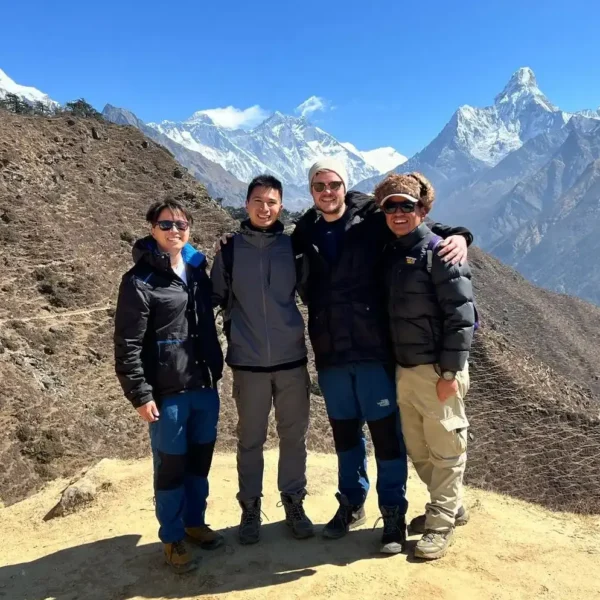
Mount Everest, standing at 8,849 meters, is Earth's highest mountain. Nepal calls it Sagarmatha, and Tibet calls it Chomolungma; it has inspired…
West Face (Southwest Couloir)
The West Face, or Southwest Couloir, is one of the least successful Everest Climbing Routes. Although mountaineers such as the team led by Chris Bonington have made significant attempts on the Direct Southwest Face, the lines are extremely uncommon.
The terrain is steep, technical, and exposed, with complex rock and ice passages that require a high level of mountaineering skill. Very few teams take the difficult, risky side of the mountain because it is hard and involves high risk.
Because of the remote location, technicality, and risk, only elite climbers with strong alpine skills can attempt these Everest climbing routes.
Route Comparisons: Difficulty, Success, Cost, Permits, Acclimatization, Crowds
When comparing Everest Climbing Routes, consider the most important factors: difficulty level, success rates, costs, permits, acclimatization, and crowds. Each route offers a unique experience, and understanding these differences can help climbers choose the option that best fits their abilities and objectives.
The South Col and North Ridge are moderate in terms of difficulty and high in elevation. They are very challenging because of the elevation, but they have fixed ropes, camps, and reinforcements.
In contrast, routes such as West Ridge, Kangshung Face, Hornbein Couloir, and Great Couloir are extreme. These Everest climbing routes include sharp rock and ice climbing with little or no support; therefore, they are only suitable for high-level mountaineers.
Success rates also vary. The average success rate on the South Col route is the highest, at 60-65 percent. The North Ridge comes next with 50-55 percent. The Everest Climbing Routes are more technical, and success rates are very low because only a small number of climbers attempt them and the obstacles are significantly more difficult.
It is expensive on both the Nepalese and Tibetan sides. South Col expeditions cost between USD 40,000 and 100,000, whereas the North Ridge is between USD 35,000 and 85,000. Permit fees cost about USD 15,000 to 18,000 per climber.
The acclimatization process also differs. South Col is a long walk to Base Camp along the Khumbu Valley, whereas the North Ridge approach gives vehicle access to Base Camp, resulting in a shorter approach.
South Col also has the densest crowds, particularly in spring. The North Ridge is not crowded, and the extreme Everest Climbing Routes are hardly ever congested.
Below is the detailed overview of each route, including its difficulty, success rate, permit side, cost range, and crowd level.
| Route | Difficulty | Success Rate | Permit Side | Cost Range | Crowd Level |
| South Col | Moderate–High | 60–65% | Nepal | $40k–$100k | Very High |
| North Ridge | Moderate–High | 50–55% | Tibet/China | $35k–$85k | Low–Moderate |
| West Ridge | Extreme | Very Low | Nepal/Tibet | Very High | None |
| Kangshung Face | Extreme | Very Low | Tibet/China | Very High | None |
| Great Couloir | Extreme | Very Rare | Tibet/China | Very High | None |
Travel and Expedition Planning Tips
Climbing any Everest Climbing Route takes a lot of preparation time and dedication. The initial one is to select the appropriate season. Most climbers set out to climb Everest in spring, between late April and May, when the weather is more predictable, and the mountain windows are clearer. Another option is autumn, which offers shorter climbing windows.
Most permits, particularly for the famous Everest Climbing Routes on the Nepal side, can sell out months in advance, so early planning is essential.
Travel logistics vary depending on the side of the mountain. In Nepal, climbers fly to Lukla and then walk about ten days through Sherpa villages before reaching Base Camp. This walk helps with acclimatization.
On the Tibet side, climbers travel to Lhasa and then drive to Base Camp, where they reach high altitude faster. Because of this faster ascent, it is important to spend additional days acclimatizing to the altitude.
The most important aspect of all Everest Climbing Routes is acclimatization. Most expedition schedules consist of a series of weeks in which climbers alternate between camps before a final summit attempt.
Rest days are required to minimize the risk of altitude sickness. Using professional guides and Sherpa support makes it safer and increases the chances of summiting. Comparing different guide services and checking how many Sherpas support each climber can make a big difference.
Proper gear is also critical. Climbers need to be ready for cold climates, high winds, and thin air. High-quality boots, down suits, oxygen systems, and safety equipment are essential. Budgeting is also essential because permits, guide services, equipment, and insurance can total tens of thousands of dollars.
Lastly, responsible climbing means respecting local culture and regulations. Whether on the Nepal side or the Tibet side, it is important to follow the rules and respect traditions when climbing any Everest Route.

Environmental and Cultural Considerations
Climbing any Everest Climbing Route is not only a physical challenge but also a responsibility. Mount Everest lies in geographically protected regions across the border. In Nepal, this mountain belongs to the Sagarmatha National Park, which is on the UNESCO World Heritage list. In Tibet, it is part of the Qomolangma National Nature Preserve.
They aim to conserve vulnerable alpine ecosystems and benefit local communities. Individuals climbing Mt. Everest are expected to follow park regulations, stay on designated trails, and comply with conservation provisions.
Waste management has become a significant issue in recent years. Each season, thousands of climbers, along with support personnel, come to the area and leave garbage and human waste, which can cause serious environmental problems.
To address this, Nepal has introduced a mandatory waste deposit that climbers must carry down so they can be refunded. The same applies on the Tibetan side. All Everest Climbing Routes should have responsible climbers who follow Leave No Trace principles, carry out everything they bring in, and use special waste bags. There are also regular clean-up campaigns that clear old garbage off the mountain.
Another growing issue is climate change. Glaciers around Everest are melting and thinning, increasing the risk of rockfall and unstable ice. Other climbing routes, like the Khumbu Icefall, change every year, making some Everest climbing routes unpredictable. Warmer conditions also affect base camp conditions and water supplies.
Respect for culture is critical. Sherpas and Tibetans consider Everest holy. Many climbers attend a traditional puja before beginning their ascent. Responsible travel means honoring monasteries, community traditions, and village communities.
When choosing among Everest Climbing Routes, consider the impact on the environment and Himalayan culture.
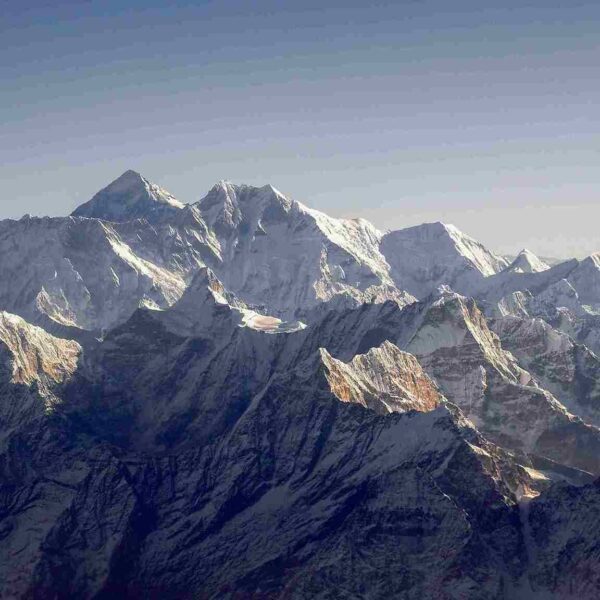
Mount Everest, standing at 8,849 meters, is Earth's highest mountain. Nepal calls it Sagarmatha, and Tibet calls it Chomolungma; it has inspired…
Conclusion
Mount Everest is the final test for climbers worldwide, and the range of Everest climbing routes shows how different that test can be. Whether you take the popular South Col route in Nepal or the lesser-known North Ridge in Tibet, each route offers a different experience.
Some routes offer better infrastructure and higher success rates, while others require technical expertise and bold decision-making. These are some of the differences you must understand before deciding which route to take.
The Everest Climbing Routes are the most common routes on Everest, supported by fixed camping tents, ropes, and senior Sherpa staff, and most climbers feel comfortable using them.
Meanwhile, the similarities between the historic and less famous paths, such as the West Ridge, Kangshung Face, or Great Couloir, also show that Everest remains a place of exploration and extreme risk. These paths are not merely difficult options; they demand high-level mountaineering skills, careful planning, and deep respect for the mountain.
Beyond the challenge and expense, climbers should also consider environmental responsibility and cultural sensitivity. Everest lies in Sagarmatha National Park and holds deep spiritual significance for local communities. Each climber is responsible for producing less waste, respecting local traditions, and following regulations.
Finally, Everest climbing route decisions involve more than just the mountain. It involves planning, seriousness, and understanding the true scale of the expedition. Climbing Everest is a life-altering event that requires proper planning, respect, and dedication.