



Nepal introduced a significant update to its trekking regulations in 2026, which particularly affects those who prefer to travel alone. The news that solo trekking is now permitted in selected regions has brought about much excitement, and also a lot of confusion.
The question many trekkers are asking now is: Can I now trek with complete freedom in Nepal’s restricted areas? It is not as simple as it appears.
This step-by-step guide covers everything you need to know about Nepal’s solo trekking regulations for 2026, including the changes, the old rules, how to obtain and use permits, and how to plan and organize your trek successfully using cost-effective methods.
The 2026 Rule Change Explained Clearly
For a long time, Nepal had a strict rule requiring at least two trekkers to obtain a Restricted Area Permit (RAP). It implied that, as a solo traveler, one had to either join a group or find a partner, even though one might want to trek solo.
This rule was finally revised in 2026. Solo trekkers can now apply for a Restricted Area Permit independently, without the presence of a second individual.
On the face of it, this sounds like Nepal has completely liberalized the restrictions on independent trekking. That is not quite true, however.
The most important point to note is that the rule has been changed only with respect to the minimum group size requirement, rather than the entire trekking system.
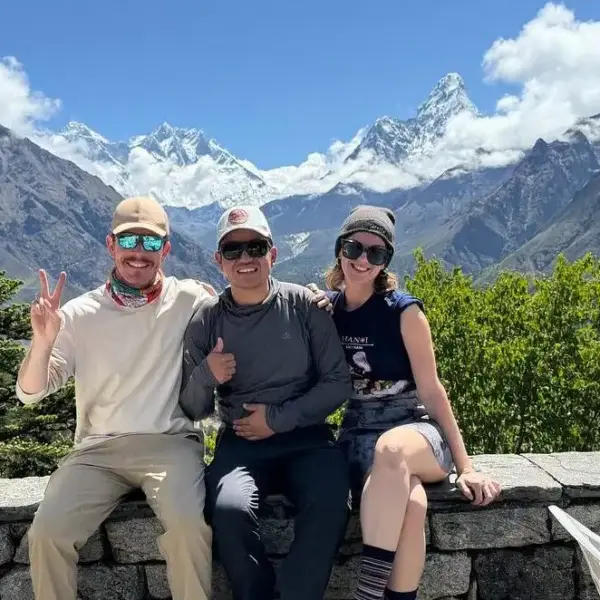
Everest Base Camp Trek 12 days
Nepal introduced a significant update to its trekking regulations in 2026, which particularly affects those who prefer to travel alone. The news…
The Reality: Solo Trekking Is Allowed, But Not Fully Independent
The biggest confusion about the Nepal solo trekking rules 2026 is that many people think they can now enter restricted areas without a guide, which is not true.
Trekking all by yourself, in an actual sense, is still not allowed.
Despite the new regulations, you must use a registered trekking agency in Nepal because individuals cannot request restricted permits directly.
Employ a trekking guide with a license, and the guide will lead you on the trek.
Adhere to the proposed itinerary provided in the application for the permit.
This implies that although it is now possible to travel as a single trekker, you remain in a controlled trekking system.
Consider this: Nepal has permitted single entry, but not single operation.

Why Nepal Still Requires Guides in Restricted Areas
To understand why we retain the guide requirement, we need to consider the nature of restricted areas in Nepal.
These are not commonly used trekking areas. They are isolated, usually close to international borders, and lack infrastructure. Most of these places are culturally significant and inhabited by groups with ancient traditions and lifestyles.
Severe safety issues are also present. Trails might be troublesome to follow, the weather might change quickly, and the medical facilities might be quite far away.
For example, trekkers on the Manaslu Circuit must cross the Larkya La Pass at 5,160 meters (16,929 ft). A person is more prone to altitude sickness at this elevation, and proper guidance is necessary.
The government has been able to provide trekkers with support and monitoring by ensuring they do not go out alone, but instead have licensed guides who can attend to them in case of any emergency.
What Defines a Restricted Area in Nepal?
Restricted areas are government-designated areas that require permits to access. These are generally less accessible and less commercial compared to the popular trekking routes.
They are commonly found in remote Himalayan areas near international borders, and are reputed to have their distinct cultural and natural setting.
A few of the most popular restricted trekking regions are Upper Mustang, Upper Dolpo, the Manaslu region, Tsum Valley, Nar Phu Valley, and some sections of the Kanchenjunga region.
These places provide an extremely dissimilar experience from common trekking trails. You will find fewer people, less artificial culture, and untamed and open landscapes.
Nonetheless, some regulations and duties come with these advantages.
Permits Required for Restricted Area Trekking
Trekking within restricted zones requires various permits, and it is important to be familiar with each permit to prevent a hassling trip.
The greatest is the Restricted Area Permit (RAP). It is an obligatory permit granted by the Department of Immigration. It indicates where exactly you can go and how long you are permitted to stay.
Besides the RAP, most treks require conservation area and national park permits. For example, walking through the Manaslu area also requires the Manaslu Conservation Area Permit and the Annapurna Conservation Area Permit, since the route passes through both areas.
A TIMS (Trekkers’ Information Management System) card can also be mandatory depending on the trekking organization, but as of recently, this is more inconsistent in the case of guided treks.
All permits must be arranged through a registered trekking agency which handles the process on your behalf and connects you with the government.

The 2026 Online Permit System
Among the most effective changes that can be enhanced in 2026, a digital permit processing system is one of them.
In the past, permits might have been time-consuming and would have involved numerous visits to government offices. Registered agencies can now process applications online, resulting in a more efficient and faster process.
If you wish to get permits, you must submit your passport information, an authentic Nepal tourist visa, a trekking program itinerary, and evidence of travel insurance, including emergency evacuation insurance.
It is a new requirement that a visa number be included in the application process. This is to maintain accessibility to restricted areas by only legitimate registered visitors.
Though it is a digital system, you will still get the physical permits, which you will bring with you on the trek and present at checkpoints.
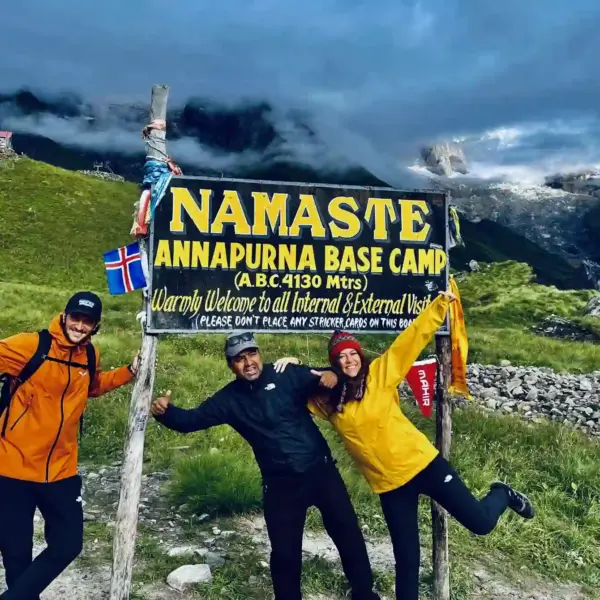
12 Days Annapurna Base Camp Trek
Nepal introduced a significant update to its trekking regulations in 2026, which particularly affects those who prefer to travel alone. The news…
Step-by-Step Trek Planning Process
It is important to plan a trek in a restricted area.
The initial one is to get a Nepal tourist visa. This is achievable online before arrival, at the Tribhuvan International Airport on entry into Kathmandu, or at any big land borders.
Then you have to select a good trekking agency. It is a very important decision, because the permits, logistics, and guide arrangements will be managed by the agency.
After choosing an agency, you will submit all of the documents and decide on your itinerary. The agency then submits your permits and approves your plan to go trekking.
You will meet your guide before the trek begins, and go over the itinerary and make sure all documents are in place.
Since restricted area permits are routeand date-specific, you should make efforts to adhere to your approved plan as much as possible.
Cost Breakdown and Budget Expectations
Trekking in restricted places is costlierthan trekking in open places like Everest or Annapurna.
This is primarily due to the Restricted Area Permit, which is more likely to include a daily charge. The price is determined by the region, and Upper Mustang and Upper Dolpo are some of the priciest.
Along with permit fees, you also need to plan to pay guide fees, agency fees, accommodations, meals, transportation, and insurance.
Since the guide is required, this contributes to the total cost, yet makes it more convenient and safer.
It might be expensive overall, but most trekkers will discover that the indescribable experience, a lack of people, and unspoiled scenery is well worth the cost.

Safety and Risk Management in Remote Areas
Safety is an important issue in the restricted areas of Nepal, and the rules take care of this.
One of the greatest challenges is high altitude. The oxygen content reduces as you get higher, and you are more likely to develop altitude sickness. You must be properly acclimatized and monitored.
Managing these risks involves the role of guides. The guides are trained to identify signs of altitude sickness and take action concerning when to take rest, descend, or seek assistance.
Another consideration is emergency evacuation. In extreme cases, a helicopter rescue could be necessary and therefore, travel insurance is a prerequisite.
Mistakes can be severe in isolated locations, so appropriate guidance is necessary.
Best Time to Trek in Restricted Areas
The time of year is an important factor to consider when planning your trek.
The most preferred time is spring (March to May) and autumn (September to November). The climate in these seasons is mostly predictable, the skies are clear, and the weather is moderate.
Blooming rhododendrons and colorful scenes are available in spring, and clear mountain views and bright visibility are available in autumn.
Some restricted zones, like Upper Mustang and Upper Dolpo, are in rain-shadow areas. This makes them accessible throughout the monsoon season when other trekking trails cannot be used.
The appropriate time of the year also allows minimizing risks and improves the general trekking experience.
Cultural Sensitivity and Responsible Trekking
Not only geographically remote, but restricted areas are also culturally unique. The traditional ways of life practiced by many communities in these areas are ancient and have not changed over generations.
As a trekker, one should not mistreat the local customs, traditions, and religious practices.
Your guide will show you the local manners, such as how to act in villages, monasteries, and houses.
Responsible trekking also means caring for the environment. This includes disposing of waste properly, avoiding plastic use and using natural resources wisely.
This way, you can be a part of sustainable tourism and save these areas for future generations.
Advantages of the 2026 Update
The updated Nepal solo trekking rules 2026 offer several clear benefits.
It gives the independent traveler more freedom in scheduling their tours without having to seek out someone to join them on a trek.
It decreases complications and delays in the permit process.
It also helps to make Nepal more available to independent tourists, which can increase tourism without compromising safety.
Meanwhile, the necessity of guides also helps to keep the system safe and well-regulated.

Common Misunderstandings to Avoid
A common misunderstanding is that solo trekking means traveling completely alone without any support.This is not true.
Another misconception about permits is that they can be obtained on their own. As a matter of fact, even permits still have to be done via a registered agency.
Some trekkers also think that the restricted areas are similar to the normal trekking routes, only that they are much more remote and difficult.
Understanding these areas also helps you see what mistakes to avoid, so you can plan your trek more effectively.
Nepal introduced a significant update to its trekking regulations in 2026, which particularly affects those who prefer to travel alone. The news…
Final Thoughts
The Nepal solo trekking rules 2026 are a middle ground between the current trekking requirements. Nepal has opened its restricted areas by permitting individual applicants to venture in, but at the same time has preserved the setups required to ensure safety and cultural preservation.
When you are intending to travel to such areas, the rules should be known, and adequate preparations should be made. Even though you can now travel as a solo trekker, you will still have a guide and a trekking agency supporting you throughout the journey.
Trekking in the restricted areas of Nepal can be one of the most fulfilling experiences in the world with the right planning, permits, and mindset.
The door is now open to the individual explorer, but you are never alone in the Himalayas, and herein lies the secret of keeping the journey safe and memorable.