




15 Days


Quick Facts

Ground transportation in Nepal

Hotels & tea-house accommodation

All meals

Guided tour & trek throughout the trip

Autumn, Spring

Moderate

Nepal

5360



Why Gokyo Renjo La Pass Trek 15 Days?
- Scenic mountain flight to Lukla at an elevation of 2,860 m / 9,383 ft, at Lukla, the entrance to the Everest region.
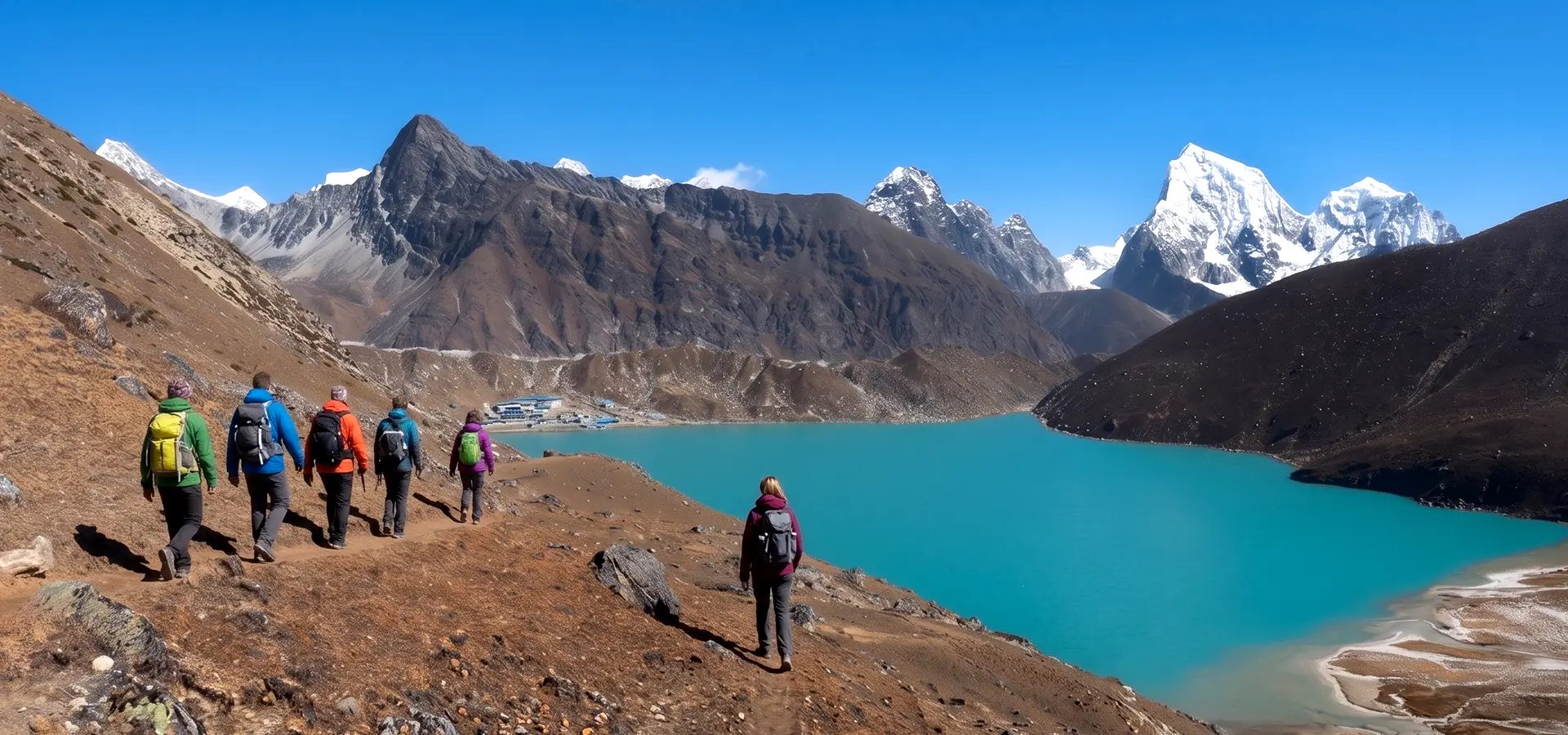
- Visit the beautiful turquoise Gokyo Lakes, among the most beautiful high-altitude lakes in Nepal.
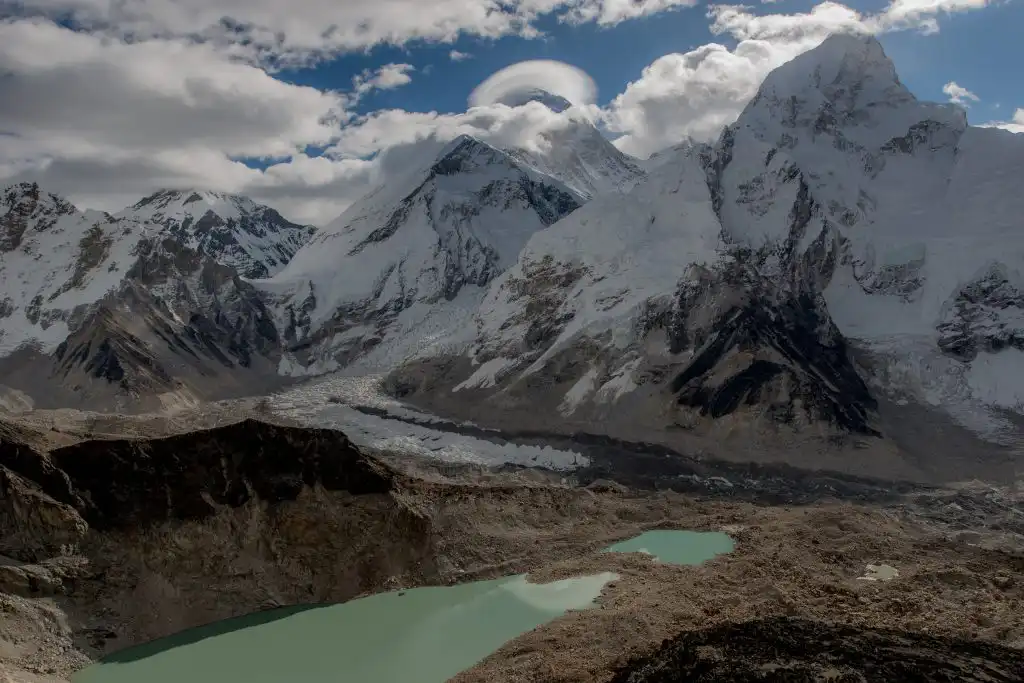
- Trek to the Gokyo Ri (5,357 m / 17,575 ft) to enjoy breathtaking panoramic views of Everest, Cho Oyu, Makalu, and other peaks around.
- Cross the exciting Renjo La Pass (5,360 m / 17,585 ft), which is one of the most fulfilling high mountain passes in the Everest area.
- Enjoy the genuine Sherpa culture, old-fashioned villages, monasteries, and home-style tea house services.
- Walk along various sceneries such as rhododendron woodlands, suspension bridges, glacial valleys, and alpine landscapes.
- Test yourself with a rewarding, high-altitude Himalayan adventure with stunning scenery and individual accomplishment.
Trip Overview
The Gokyo Renjo La Pass Trek is a memorable Himalayan journey full of beautiful mountain views, serene trekking routes, altitude challenges, and the Sherpa culture of Nepal’s Everest region. This is an ideal trek for a traveler to enjoy the beauty of the Himalayas without necessarily having to walk along some of the more popular trekking routes. Rather than just the classic Everest Base Camp route, you are introduced to picturesque mountain villages, glacial valleys, alpine scenery, and the beautiful Gokyo Lake system, resulting in a more relaxing and fulfilling trekking experience.
The trip starts with a picturesque mountain flight to Lukla at 2,860 m / 9,383 ft, the entrance of the Everest region. The route then winds through the classic Sherpa villages of Phakding, Namche Bazaar, Tengboche, Phortse, and Machhermo. During the journey, trekkers cross suspension bridges, walk along mountain streams and through rhododendron shrubs, and receive true Himalayan hospitality in local teahouses. Each day provides a new landscape and a more intimate relation to mountain life.
Among the major highlights of the Gokyo Lake and Renjo La Pass Trek is access to the lovely Gokyo Lakes, which are among the most attractive high-altitude lake systems in Nepal. The hike also includes the Gokyo Ri hike to 5,357 m (17,575 ft), one of the best viewpoints in the Everest region, offering breathtaking panoramic views of Everest, Cho Oyu, Makalu, and other Himalayan peaks. The final task of the trek is to cross Renjo La Pass (5,360 m / 17,585 ft), a difficult yet extremely rewarding mountain pass offering unforgettable views of snowy mountains, valleys, and isolated landscapes.
The Renjo La pass trek offers a more natural experience compared to busier Everest trekking routes while still providing world-class mountain scenery. In addition to the scenery, the traditional villages, monasteries, and mountain ways also present the true Sherpa culture to the trekkers. The majority of accommodation is provided in teahouses, which offer a basic yet cozy and comfortable trekking experience.
This trek is very fit, patient, and well-acclimatized to the altitude, yet the payoffs are extraordinary. It is an all-round Himalayan experience, whether you want to go on an adventure, capture mountain images, have cultural experiences, or achieve personal success. With expert organization and detailed guidance from My Everest Trip, trekking visitors can explore and enjoy a safe, systematic, and memorable journey in one of Nepal’s most scenic mountainous regions.
Why This Trip?
The Gokyo Renjo La Pass Trek is a great option for trekkers seeking adventure and a serene mountain experience in the Everest region. This trip offers a more natural and peaceful Himalayan experience, without the overcrowding you may encounter on trekking trails, while still offering some of the best scenery in the area. Trekkers are delighted with lovely alpine lakes, Sherpa villages, mountain monasteries, and gorgeous viewpoints all along the way.
Another important feature of the Gokyo Lake and Renjo La Pass Trek is the ascent to Gokyo Ri (5,357 m / 17,575 ft) and the exciting traverse of Renjo La Pass (5,360 m / 17,585 ft). These would offer memorable mountain views and adventure. The Renjo La Pass trek can be the best choice for any tourist seeking a physical and cultural adventure. This trek is a hassle-free, satisfying, and easy Himalayan experience with My Everest Trip, with experienced guides, well-planned logistics, safety planning, and reliable support.
Gokyo Renjo La Pass Trek 15 Days Itinerary
Day 01: Arrival in Kathmandu
In Kathmandu, Nepal’s capital, you will be welcomed at the airport and transferred to your hotel. This is mainly an arrival and rest day and preparation for the trekking adventure that will follow. This is a good time to relax at your hotel, pack your trekking gear, and meet your trekking team, if you have one.
The trip to the mountains starts the following day; a good night’s rest is necessary, and all preparations should be arranged. You can also take time to go sightseeing, buy any last-minute trekking gear, or just rest after your international flight, depending on your arrival time. This first day is an easy one that will help your body relax before the trek in the Himalayas starts.

Breakfast, Lunch and Dinner

Hotel

Airport transfer

1,400 m / 4,593 ft

Arrival and trip preparation, Depends on flight arrival
Day 02: Flight to Lukla and Trek to Phakding
Today will start your mountain adventure with a scenic flight from Kathmandu to Lukla, one of the most exciting mountain airports in the world. The altitude of Lukla is 2,860 m (9,383 ft), and the flight offers spectacular views of the Himalayan landscape. Upon arrival, your initial walk will be a downhill hike through little Sherpa villages to Phakding at (2,610 m / 8,563 ft). The path is along the Dudh Koshi River, with suspension bridges and scenic mountain views.
This initial trekking day is fairly easy; your body will slowly adapt to the higher altitude, and you will enjoy the natural beauty of the Everest region. That night, you will be staying in Phakding, a small village that is a popular place of stay for Everest climbers.
Breakfast, Lunch and Dinner
Teahouse
8 km
2,860 m / 9,383 ft
Flight and trekking, 3–4 hours
Day 03: Trek from Phakding to Namche Bazaar
On leaving Phakding (2,610 m / 8,563 ft) after breakfast, you resume trekking towards Namche Bazaar, the renowned Sherpa town of the Everest region. It is also among the more difficult first trekking days, since the path has a few suspended bridges and a gradually sloping mountain. The path runs along the Dudh Koshi River and through picturesque forests and traditional villages.
The mountainous landscape only gets better at higher elevations. The capital trading center of the Khumbu region is Namche Bazaar, located at 3,440 m (11,286 ft). It is a vibrant mountain city that boasts teahouses, bakeries, trekking shops, and spectacular views of the surrounding mountains. Namche is a significant landmark along your trek, as it is the point where you will enter the Everest region.
Breakfast, Lunch and Dinner
Teahousae
10–11 km
3,440 m / 11,286 ft
Trekking, 6–7 hours
Day 04: Acclimatization Day at Namche Bazaar
It is an acclimatization day in Namche Bazaar today at 3,440 m (11,286 ft). On higher-altitude days, rest is required to allow your body time to get used to the thinner air safely before you climb further. This is referred to as a rest day, but it is generally advised to do light exercise to aid acclimatization. You will have time to visit Namche Bazaar and prepare for the rest of the trek.
The hub of the Everest region is Namche, which presents cozy teahouses, local markets, and stunning panoramas. This extra day will help you avoid the risk of altitude sickness and increase the likelihood of a safer time trekking. One of the most significant aspects of high-altitude trekking in Nepal is proper acclimatization.
Breakfast, Lunch and Dinner
Teahouse
3–5 km
3,880 m / 12,730 ft
Acclimatization hike and exploration, 2–4 hours
Day 05: Trek from Namche Bazaar to Tengboche
After acclimatization, you continue your trek from Namche Bazaar at (3,440 m / 11,286 ft) to Tengboche at (3,860 m / 12,664 ft). The current trail provides some of the most picturesque mountain landscapes in the Everest area. The path consists of slow pacing and mountain-climbing through woodland and old villages. Tengboche has a renowned monastery and a beautiful mountainous environment.
The air is thinner as you keep climbing the mountain, so you want to take a steady pace. This day of trekking is a blend of nature, culture, and an enjoyable mountain experience. An overnight stay in Tengboche is a nice place to unwind with a view of the Himalayas and to acclimatize to the higher-altitude sections of the journey ahead.
Breakfast, Lunch and Dinner
Teahouse
9–10 km
3,860 m / 12,664 ft
Trekking, 5–6 hours
Day 06: Trek from Tengboche to Phortse
Today you will be walking towards the traditional Sherpa village of Phortse at 3,840 m (12,598 ft). The path is a combination of downs and slow ascents through serene mountain scenery, with beautiful views of the nearby mountains and valleys. It is a comparatively less-busy part of the Everest routes and offers a more placid and serene trekking experience.
A stroll through the traditional settlements would allow you to have a closer look at the day-to-day life in the Himalayan settlements. The height gain is not much, but the day still involves steady high-altitude walking. By the time you reach Phortse, you will have gone deeper into the less congested section of the Khumbu region, and be ready to move higher into the trekking days ahead onto Machhermo and Gokyo.
Breakfast, Lunch, and Dinner
Teahouse
8–9 km
3,860 m / 12,664 ft
Trekking, 5–6 hours
Day 07: Trek from Phortse to Machhermo
Today’s journey takes you from Phortse at (3,840 m / 12,598 ft) to Machhermo at (4,470 m / 14,665 ft). The higher you go, the more exposed and rugged the scenery becomes, with fewer trees and more mountainous views. It is a significant acclimatization day when you proceed to elevations above 4,000 m (13,123 ft). The path has some gradual uphill climbs, and you need to walk at a comfortable pace to allow your body to acclimatize to the lighter air.
On the way, you cross the mountainous Himalayan landscape with breathtaking views and a serene mountain environment. Machhermo is a tiny village frequented by trekkers passing through Gokyo on their way. This is a significant milestone in the process of trail climbing and hydration, and rest is particularly important before proceeding higher the following day.
Breakfast, Lunch, and Dinner
Teahouse
10–11 km
4,470 m / 14,665 ft
Trekking, 6–7 hours
Day 08: Trek from Machhermo to Gokyo
After leaving Machhermo at (4,470 m / 14,665 ft), you continue your ascent toward Gokyo at (4,790 m / 15,715 ft). The modern path is a high-alpine route with increasingly dramatic mountain scenery. The higher the elevation, the colder and more open the environment becomes, making the Himalayan experience real. The trail leading to Gokyo is considered one of the most beautiful routes in the Everest region, with its quiet nature and the beauty of the high altitude.
Walking at a slow, steady pace is important due to the thinner air at this elevation. In the Gokyo, it is the thrilling Gokyo lake area and the spectacular mountain views that surround you upon arrival in Gokyo. This unassuming mountain village is a great place to stay overnight before you proceed to explore and climb Gokyo Ri the next day.
Breakfast, Lunch, and Dinner
Teahouse
7–8 km
4,790 m / 15,715 ft
Trekking, 4–5 hours
Day 09: Explore Gokyo Lakes and Hike to Gokyo Ri
It is one of the best days of the trek as you venture into the beautiful Gokyo region and climb to Gokyo Ri at 5,357 m / 17,575 ft. Beginning at Gokyo (4,790 m / 15,715 ft), the climb to Gokyo Ri is difficult due to the steep ascent and the altitude, but the view is a breathtaking panorama of the Himalayas. This day will leave you with time to visit the well-known Gokyo Lakes and have one of the most remarkable points of view within the Everest area.
Due to the height, one should walk slowly and have frequent rest. Upon arrival at the summit viewpoint, you go back to Gokyo and spend another night. It is a physically challenging day, but one that is unforgettable for its scenery and a good preparation for crossing Renjo La Pass.
Breakfast, Lunch, and Dinner
Teahouse
6–7 km
5,357 m / 17,575 ft
Exploration and hiking, 4–6 hours
Day 10: Cross Renjo La Pass and Trek to Lungden
This is one of the hardest and most gratifying days of the trek. You leave Gokyo at (4,790 m / 15,715 ft) and cross Renjo La Pass at (5,360 m / 17,585 ft) before descending to Lungden at (4,380 m / 14,370 ft). It is a strenuous climb to the pass, the trail being steep and the elevation exceeding that of the Alps, and an early start and slow step are essential.
Up here, you can see the spectacular mountain views as well as a real Himalayan adventure. Once past the pass, the trail leads through rough mountainous terrain to Lungden. This is a tiring day of trekking, though, one of the most unforgettable moments of the trip. Pacing, hydration, and rest are critical on this high-altitude crossing.
Breakfast, Lunch and Dinner
Teahouse
11–13 km
5,360 m / 17,585 ft
Pass crossing and trekking, 7–9 hours
Day 11: Trek from Lungden to Thame
Today you will trek from Lungden to Thame. The path slowly descends through serene mountainous scenery, rural communities, and less-busy parts of the Everest region. This walk is now easier than it was the day before, and your body has a chance to recuperate after the high-altitude pass crossing.
When you are down, you can breathe more easily as the elevation is lower. Thame is a small Sherpa village with a peaceful mountain environment and cultural significance in the Khumbu region. The part of the trek offers an opportunity to take a slower pace while enjoying the beautiful Himalayan scenery. Having reached Thame, you have taken another important step in the journey and are prepared to return to lower elevations.
Breakfast, Lunch, and Dinner
Teahouse
10–12 km
4,380 m / 14,370 ft
Trekking, 4–6 hours
Day 12: Trek from Thame to Monjo
Today, you continue descending from Thame at (3,820 m / 12,533 ft) toward Monjo at (2,835 m / 9,301 ft). This is a trekking day that involves walking along well-known routes in the Everest region, slowly heading back to lower altitudes. The trail passes through classic Sherpa villages, mountainous landscapes, and serene hiking paths on your way back to the lower regions of Khumbu. Going down the mountain will help you breathe easier and give your body some rest after the hard, high-mountain part of the trek.
The walk is longer and usually less strenuous than the previous uphill trekking days. Monjo is an easy place to stay over and a regular resting place for trekkers after visiting the Everest region. This day is a definite shift from the high distant Himalayas back to the lower trekking path to Lukla.
Breakfast, Lunch, and Dinner
Teahouse
15–16 km
3,820 m / 12,533 ft
Trekking, 6–7 hours
Day 13: Trek to Lukla
Today is your final trekking day as you walk from Monjo at (2,835 m / 9,301 ft) back to Lukla at (2,860 m / 9,383 ft). The trail includes common trails that pass through villages, forests, and crossings of rivers as you finish your journey in the Everest region. This last day is not very high, but is nonetheless a steady walk as you rejoin the mountain airstrip town where you started your adventure.
Arriving in Lukla is a gratifying experience, marking the successful completion of your trekking expedition to Gokyo and Renjo La Pass. Lukla is a busy place with trekkers usually celebrating the completion of their Himalaya expedition. This last-day trek gives one time to enjoy the stunning mountain views, cultural experiences, and a sense of accomplishment in completing this difficult path.
Breakfast, Lunch, and Dinner
Teahouse
13–14 km
2,860 m / 9,383 ft
Trekking, 5–7 hours
Day 14: Flight Back to Kathmandu
After breakfast in Lukla at (2,860 m / 9,383 ft), you take a scenic mountain flight back to Kathmandu at (1,400 m / 4,593 ft). This brief yet sweet flight gives the last chance to experience the aerial views of the Himalayan scenery. Coming back to the capital city is a significant contrast of the rural Nepalese mountain atmosphere and the bustle of the city. Once in Kathmandu, you can relax, spend some time in a comfortable hotel, or spend your free time in the city, shopping or celebrating the successful end of your trip.
This day is mainly a traveling day and one of rest following days in the mountains. Kathmandu will mark the official end of the trekking portion of your tour, and thereafter, you will have enough time to rest before your international flight.
Breakfast, Lunch, and Dinner
Hotel
Flight transfer
2,860 m / 9,383 ft
Flight and transfer, 30–40 minutes flight
Day 15: Final Departure
This is the last day of your stay in Nepal. You will leave Kathmandu (1,400 m /4593 ft) as per your international flight schedule. Depending on when you leave, you might have some spare time to pack at the last moment, relax, or take a quick tour around the city. This day will be dedicated to airport transfer and departure arrangements after the completion of your memorable Himalayan trekking adventure.
The mountain passes, the quiet villages, the picturesque trails, and the breathtaking viewpoints leave long-lasting memories of the Everest region. At the end of your journey, you will leave Nepal with a sense of accomplishment, having completed a difficult yet deeply gratifying trek through one of the world’s most renowned mountain ranges.
Breakfast, Lunch, and Dinner
Airport transfer
1,400 m / 4,593 ft
Departure, Depends on flight schedule
What To Expect?
What's Included
- Airport pick-up and drop-off.
- Kathmandu hotel accommodation
- Lukla round-trip flights
- Teahouse accommodation on trek.
- Breakfast, lunch, and dinner on trek.
- Experienced trekking guide
- Porter service
- Sagarmatha National Park permit and Khumbu local permit
- First aid support
- Trekking route management
- Service charges and taxes by the government.
What's Excluded
- Nepal visa fees
- International flights
- Travel insurance
- Personal trekking gear
- Hot showers
- Wi-Fi and charging of devices.
- Soft drinks and food.
- Personal expenses
- Additional hotel days because of delays.
- Helicopter rescue expenses in case of emergencies.
- Tips for guide and porter
- Any services not mentioned in the included section

Tripadvisor Reviews








Google Reviews


Gokyo Renjo La Pass Trek 15 Days Additional Information
Weather and Best Season
Gokyo Renjo La Pass Trek is pleasant in spring (March to May) and autumn (September to November). These seasons tend to have clear skies, predictable weather, and great mountain scenery. Spring is characterized by rhododendron forests in blossom and warm days, and autumn by clear air and visibility after the monsoon. Experienced trekkers can do the winter but the temperatures are very low, particularly at Renjo La Pass (5,360 m / 17,585 ft).
Trail conditions may also be impacted by heavy snowfall. June to August is not the best time to visit Lukla due to delays in flights to Lukla and the possibility that trails might be wet or slippery. The Gokyo Lake and Renjo La Pass Trek is best in terms of weather conditions, with stable conditions that make the trekking experience safer, more comfortable, and more rewarding for mountain lovers.
Route and Elevation
The Gokyo Renjo La Pass Trek is one of the most picturesque trekking trails in the Everest region. The expedition starts with a flight to Lukla (2,860 m / 9,383 ft), then continues with a trek to Phakding, Namche Bazaar, Tengboche, Phortse, Machhermo, and Gokyo. Among the highlights is the mountain Gokyo Ri (5,357 m / 17,575 ft), which offers spectacular mountain scenery. The path then traverses Renjo La Pass (5,360 m / 17,585 ft) and descends to Lungden and Thame.
This is a path with quiet paths, steep mountain trails, and Alpine lakes. The Renjo La pass trek is less busy and more remote than the busier routes in the Everest region. The shifting topography, from forest to rocky alpine landscape, is not only aesthetically satisfying but also presents a veritable Himalayan trekking experience at high altitude.
Food and Accommodation
On the Gokyo Renjo La Pass Trek, local teahouses are used primarily for accommodation throughout the trek. Lower rooms are generally more comfortable, whereas higher locations have fewer facilities as they are remote. Such destinations as Gokyo at (4,790 m / 15,715 ft) have simple yet hospitable teahouse lodging and common facilities in most instances. The meals are plain, hot, and geared towards giving trekking energy.
The most frequent ones are dal bhat, fried rice, noodles, soups, potatoes, eggs, pancakes, and hot beverages. The higher the altitude, the fewer food options are available, yet trekkers can still get sufficient healthy food. It is always good to have snacks. My Everest Trip helps trekkers focus on the experience by planning accommodation and meals throughout the trip, so they can avoid logistics and instead savor Everest hospitality.
Altitude Sickness
Altitude sickness is also worth considering when taking the Gokyo Renjo La Pass Trek, since the trail is extremely high, and the pass reaches its highest point at Renjo La Pass (5,360 m / 17,585 ft). These symptoms can be headache, dizziness, nausea, fatigue, insomnia, or lack of appetite. It is important to properly acclimatize, which is why the itinerary includes an acclimatization day in Namche Bazaar (3,440 m / 11,286 ft). It could be reduced by walking slowly, maintaining hydration, eating, and drinking alcohol.
Symptoms must never be ignored by trekkers but must be reported at the earliest. The Gokyo Lake and Renjo La Pass Trek involves significant altitude gain; therefore, one should respect their body to stay safe. Guides keep a close watch on the trekkers and can assist in case of problems. The most effective means of safely undertaking high-altitude trekking in Nepal’s Everest region is prevention, gradual ascent, and awareness.
Visa and Permits
Foreign visitors joining the Gokyo Renjo La Pass Trek must have a valid Nepal tourist visa, which they can obtain upon entry at Tribhuvan International Airport in Kathmandu or online before travel. Your passport must have at least six months’ validity. Trekking permits are also required for this trek, such as the Sagarmatha National Park Entry Permit and the Khumbu Pasang Lhamu Rural Municipality Permit. These are documents that are inspected at different points. Trekkers ought to carry copies of key travel documents.
The requirements that permit you to work may change over time; it is always good to check the current rules before you arrive. When you book with My Everest Trip, the arrangements are normally made on your behalf, so it is not as hard as preparing. With the right documents, one is bound to have an enjoyable trekking experience without spending time on meaningless waste and administrative issues throughout the adventure.
Health & Safety
In the Gokyo Renjo La Pass Trek, health and safety are crucial due to the high altitude and the trek’s remote, mountainous nature. Trekkers are advised to be hydrated, eat well, dress up in layers, and walk at a comfortable pace. Energy levels may be affected by cold weather, elevation, and long trekking days; thus, good preparation can minimize risks. Simple first aid assistance is welcome, and personal medication must always be in possession. Depending on weather conditions around the Renjo La Pass (5,360 m / 17,585 ft), trails may be steep, rocky, and slippery.
Trekking with a professional guide enhances safety, especially when the weather varies abruptly. In uncommon circumstances, emergency evacuation might be necessary. The option to have a professional operator like My Everest Trip provides practical support, local knowledge, and safety management, allowing trekkers to have a more enjoyable experience in the Everest area with greater confidence.
Transportation
The Gokyo Renjo La Pass Trek is typically reached by arriving in Kathmandu or taking a domestic flight to Lukla (2,860 m / 9,383 ft), the trek’s primary base. This mountain flight is a short and beautiful Himalayan sightseeing trip and also saves a lot of time on travel. Having made the trek, the way back is usually another flight back to Kathmandu. Flights within the country, particularly those to mountainous areas, may be delayed due to weather conditions, especially when conditions are unstable.
Kathmandu Airport transfers are normally made according to your package. Hotel transfers and movement within the city are done by ground transportation when necessary. It is always prudent to plan some leeway in your traveling schedule. To ease the pressure of arranging transportation, operators can be used to facilitate travel before and after your trekking adventure in Nepal.
Travel Insurance
The Gokyo Renjo La Pass Trek strongly recommends using travel insurance, as it is an adventure in a high-altitude, remote mountain area. Emergency medical care, helicopter evacuation, trip cancellation coverage, altitude-related illness coverage, and baggage coverage should be included in your policy, where possible. Given that the trek reaches elevations up to Renjo La Pass (5,360 m / 17,585 ft), it is important to have insurance that specifically covers trekking beyond high-altitude restrictions.
This type of trekking coverage may not be included in some standard policies, so it should be checked. Travel plans can also be affected by weather delays (particularly flights to Lukla). Always bring your insurance paperwork electronically and in hard copy. Peace of mind and financial security are excellent insurance that will enable trekkers to focus more on the mountain experience than on unforeseen events.
Your Extra Expenses
Whereas in most trekking packages, core services are covered, trekkers will incur personal expenses when doing the Gokyo Renjo La Pass Trek. Additional expenses can be snacks, bottled water, hot showers, Wi-Fi, charging electronic devices, laundry, beverages, guide and porter tips, and personal shopping in Kathmandu. Food and services are more expensive at high altitudes because food must be transported to isolated places. Some places, such as Gokyo at 4,790 m (15,715 ft), might not have many services, and those that do are priced higher.
It is better to have Nepali money, since it is not easy to pay by card in the mountain villages. It is better to budget additional money to prevent inconvenience on the trip. Everyone has different spending habits, but the key is to plan to make the process easier. Emergency backup cash is also beneficial in case of weather delays or extended stays in the mountains.
Language & Communication
The national language of Nepal is Nepali, but local Sherpas in the Everest region can also speak their own native languages. In trekking regions, English is a common language, especially among guides, lodge owners, and tourism staff; thus, in the Gokyo Renjo La Pass Trek, communication is not a problem. In rural areas, there might be limited communication, but simple needs are typically not hard to communicate.
The route provides mobile network coverage in part, although the signal is weak or unreliable higher up. Wi-Fi may be available in certain teahouses for a fee, though speeds tend to be slow. It is a clever idea to carry offline maps and important contact details. The lack of connectivity can even make the trekkers’ mountain experience more serene, free from distractions by their digital devices.
Don’ts on This Trip
It is important to remember a few things not to do during the Gokyo Renjo La Pass Trek to stay safe and respectful. Also, avoid walking too fast at high altitude, as this increases the risk of altitude sickness. Consumption of alcohol and smoking should be avoided during elevation as it may interfere with acclimatization. Do not overlook symptoms such as headaches, dizziness, or unusual fatigue. Be sensitive to local culture and dress, and seek permission before taking pictures of people.
Littering should be avoided since the Everest region is a sensitive environment. Do not rely solely on card payments, as in mountain villages, it is difficult to get cash. It is not advisable to walk alone in bad weather, particularly around the Renjo La Pass (5,360 m / 17,585 ft). Risks can also arise from ignoring the guide’s instructions. Responsible trekking ensures that the journey is safer, smoother, and more enjoyable for everyone.
Trip Extension
The Gokyo Renjo La Pass Trek is a very popular trek that many trekkers extend after finishing it. Popular options include a trip to the cultural heritage sites in Kathmandu, a relaxing experience in Pokhara, a jungle safari in Chitwan, or a second short Himalayan trek. Others who undertake the Renjo La pass trek with the Everest Base Camp trek, in case they desire to have an extended experience with the mountain. Those who wish to enjoy a scenic aerial view of the area can also avail themselves of helicopter sightseeing tours after trekking.
The physically challenging mountain adventure can be balanced by a relaxing trip or cultural tour with a short extension. Travel operators such as My Everest Trip can assist in making other plans according to the time they have and their interests. Adding destinations enables the visitor to have a broader experience of Nepal beyond the Everest region, making the entire holiday even more memorable.
Photography & Drone Rules
Gokyo Renjo La Pass Trek offers amazing photo opportunities, including the mountains and alpine lakes, as well as a Sherpa village. The most common natural light for the clearest mountain photographs is early morning and late afternoon. Cold weather may affect battery life; therefore, it is advisable to carry extra batteries. When you intend to use a drone, it may need to be officially permitted under existing Nepal laws and the rules of protected areas.
Unauthorized drone flights are subject to fines or seizure. Certain places might have limitations on the use of drones due to safety or privacy concerns. Always be mindful of local communities, religious sites, and other trekkers when taking photos. It is good etiquette to ask people permission to take their photographs. Supportive photography can be used to save nature and cultural integrity in the investigation.
Tips for First-Time Visitors
Good preparation is important, especially when it is your first Gokyo Renjo La Pass Trek. Begin some light training before you go on a trip to enhance stamina and ease on the long trekking days. Change of weather at the mountain; pack layered clothing and carry proper trekking shoes that are already broken in. Pace yourself, and keep hydrated on the way. Bring small first aid, snacks, sunscreen, lip balm, and a reusable water bottle.
Learn some simple Nepali greetings to get to know people. Simple accommodation is to be expected in isolated locations like Machhermo at 4,470 m (14,665 ft). Remember to allow some flexibility in your schedule as flights and weather may change at any time. Above all, have fun and do not be in a hurry. The first time, Himalayan trekking is much more pleasant and satisfying with a steady pace, positive attitude, and realistic expectations.
Gokyo Renjo La Pass Trek 15 Days FAQs
Is the Gokyo Renjo La Pass Trek more difficult than the Everest Base Camp Trek?
The Gokyo Renjo La Pass Trek is normally said to be more difficult due to the mountain pass crossing, steep, and higher elevation.
How many hours a day do I require to walk?
The average trekking day is between 4 and 8 hours of walking, based on the path, elevation, and the trail conditions.
How high will you be in the trek?
The summit is Renjo La Pass (5,360 m / 17,585 ft), the most challenging part of the trail.
Is it possible to do the Gokyo Renjo La Pass Trek without prior trekking experience?
Yes, novices who are physically fit, trained and move at a comfortable speed can complete the trek.
Should I have a guide to this journey?
A guide is strongly advised in terms of safety, navigation, monitoring of altitude and local assistance throughout the trip.
Does the trek have safe drinking water?
Yes, in teahouses, there is drinking water, but it is suggested to use purification pills or a water filter.
Will I be able to charge my phone and camera on the trek?
Yes, charging facilities are provided in most teahouses at a fee, but this might not be easily available at higher altitudes.
Does the trekking route have ATM facilities?
There are ATMs in Kathmandu and Namche Bazaar, but they are unreliable in high trekking regions.
What type of toilets do you have when trekking?
The teahouses of the lower region can be equipped with simple modern toilets, and the upper regions can have simpler shared ones.
What will happen should my Lukla flight be delayed or cancelled?
Mountain flights are usually characterized by weather delays, and it is highly advisable to have additional buffer days in your travel plan.
Are vegetarians or individuals who have dietary limitations able to cope with this trek?
Yes, vegetarian food is very common; however, special diets are to be noted in advance.
Does the Lukla flight have a weight limit on the baggage?
Yes, in domestic mountain flights, baggage is typically restricted, and thus, light packing is essential.
What kind of trekking equipment will be necessary for this trip?
Trekking poles, sun protection, good trekking boots, warm layers, sleeping bag, down jacket, gloves, and trekking boots are all very much suggested.
Can solo travelers do this trek?
Yes, individual trekker can enroll in guided departures or make bookings of their own trek with the assistance of guides.
What amount of tipping is likely to occur with guides and porters?
Tipping is not compulsory, though it is a common practice in Nepal based on the quality of service and the length of the trip.
US$ 1,650 per person
- 24/7 Customer Support
- Experienced and Professional Team
- Hassle-Free and Easy Booking
- 99% Customer Satisfaction
- Fair Prices, Exceptional Service
- No Hidden Costs and Secure Payments
- Tailored and Personalized Itineraries
24 X 7 Live Support

Puru (+977-9851069558)
Related Trips


Recent From Our Blog Places of attractions, travel tips, news and more.
Everest, Blog
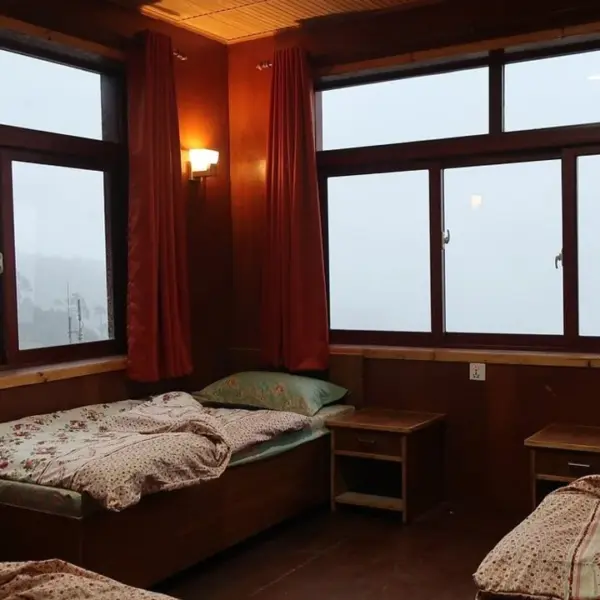
Accommodation on Everest Base Camp Trek
Accommodation is a major concern for trekkers, especially in remote Himalayan areas like the Everest…
Read the full post
Blog
Animals That Live On Mount Everest : Wildlife of the World’s Highest Mountain
Introduction: Life Above the Clouds Mount Everest, the highest peak in the world with an…
Read the full post
Trekking in Nepal
Everest Base Camp Trek Cost
12 Days Everest Base Camp Trek Cost The 12 Days Everest Base Camp Trek Cost…
Read the full post