





9 Days


Quick Facts

Ground transportation in Nepal

Hotels & tea-house accommodation

All meals except in Kathmandu

Guided tour & trek throughout the trip

Summer, Autumn

Moderate

Nepal

4,570 m

Kathmandu - Lukla - Namche - Ama Dablam Base camp - Lukla - Kathmandu


Why Ama Dablam Base Camp Trek?
- Have the opportunity to look closely at the legendary Ama Dablam Mountain, one of the most beautiful Himalayan mountains.
- Get to experience unbelievable panoramic vistas of Everest, Lhotse, and Nuptse, among other Himalayan titans.
- Visit beautiful Sherpa villages such as Namche, Pangboche, and Dingboche to learn about their culture and traditions.
- See historic monasteries, such as Tengboche, with spectacular mountain views in the background.
- Enjoy glaciers, moraine, and alpine trekking.
- Sees sunrises and sunsets between the Himalayan mountains to do epic photography.
Trip Overview
The Ama Dablam Base Camp Trek is a beautiful and adventurous trek in Nepal’s Everest region that brings you close to one of the most striking mountains in the Himalayas. Mt. Ama Dablam is 6,812 meters (22,349 ft) high and is commonly referred to as the Matterhorn of the Himalayas due to its sharp, graceful profile.
The Ama Dablam Base Camp Trek is also good for trekkers who want a more meaningful, quieter Himalayan adventure without walking on congested trails, while still getting a glimpse of the world-famous mountain scenery. My Everest Trip (MET) will organize this trek, including all logistics and permits, so you can enjoy the trek’s cultural and natural offerings to the fullest.
The Ama Dablam Base Camp Trek is an exciting journey that starts with a thrilling flight from Kathmandu to Lukla, at an altitude of approximately 2,860 meters (9,383 feet). Starting here, the path passes through beautiful valleys, pine forests, rhododendrons, and Sherpa villages of olden times. You will also walk along the Dudh Koshi River, passing high-hanging bridges and gradually rising in elevation as you head into the inner region of Khumbu.
Some of the places you will see along the journey include Namche Bazaar, at approximately 3,440 meters (11,286 feet), and Tengboche, home to the famous Tengboche Monastery, at approximately 3,867 meters (12,687 feet).
The Ama Dablam Base Camp Trek is less hectic than the Everest Base Camp route; it is peaceful and less crowded. The route will treat you to spectacular Everest, Lhotse, and Nuptse, and numerous other Himalayan Mountain peaks, all at altitudes of more than 8000m. Trekkerers spend several days at altitudes above 3,000 meters (9,843 feet) to acclimatize and help their bodies adapt safely to higher altitudes.
The highlight of the trip is Ama Dablam Base Camp, located at about 4,600 meters (15,092 feet). When you are at the base camp, you have an impressive close-up of the giant south face of Ama Dablam, and you frequently encounter climbers preparing to ascend the peak.
The Ama Dablam Base Camp Trek is not easy, yet it is a very rewarding experience, offering an ideal blend of nature, cultural immersion, and adventure. It is an exciting experience for trekkers who desire to see the heart of the Himalayas clearly and satisfyingly.
Ama Dablam Base Camp Trek Itinerary
Day 01: Kathmandu to Lukla Flight, Trek to Phakding
The Ama Dablam Base Camp Trek starts with an early-morning flight from Kathmandu to Lukla, one of the most exciting flights in the Himalayas. The breathtaking scenery of snow-capped mountains and rolling hills is visible during the short flight to Lukla, the gateway to the Everest region.
The trek begins with a pleasant downhill stroll along the Dudh Koski River after meeting the trekking crew and equipping themselves. The path passes through prayer wheels, mani walls, suspension bridges, and small Sherpa villages, offering a calm start to the Ama Dablam Base Camp Trek.
It is a gradual, easy walk that can be considered when acclimating. You reach Phakding, a small village along the river, and rest and get ready to continue.
Distance: 8 km (5 miles)/ Flight: 35 minutes (Kathmandu to Lukla)/ Trek Duration: 3–4 hours (Lukla to Phakding)/ Highest Altitude: 2,840 m (9,318 ft) at Lukla/ Meals: Lunch, Dinner/ Activity: Scenic flight & easy trekking

Lunch, Dinner

Teahouse

8 km (5 miles)

2,840 m / 9,318 ft

3–4 hours (Lukla to Phakding)
Day 02: Phakding to Namche Bazaar
The Ama Dablam Base Camp Trek path is along the Dudh Koshi River through the pine forests and the traditional Sherpa villages. You pass several suspension bridges that are adorned with prayer flags and get into Sagarmatha National Park at Monjo. The path leads to Jorsalle, then the well-known Hillary Suspension Bridge.
At this point, a gradual ascent to Namche Bazaar begins. On a clear day, as you climb up, you might get the first sight of Mount Everest. The ascent is not easy but very rewarding.
Then you are in Namche Bazaar, the bustling Sherpa town, and surrounded by Himalayan giants. This is a vibrant mountain town that serves as a significant acclimatization base for the Ama Dablam Base Camp Trek.
Breakfast, Lunch & Dinner
Teahouse
11 km (6.8 miles)
3,440 m / 11,286 ft
5–6 hours
Day 03: Acclimatisation Day in Namche Bazaar
This day is devoted to acclimatizing, as it is a crucial part of the safe Ama Dablam Base Camp Trek. Your breakfast is followed by a short hike to a higher altitude, and the rest of the day is spent in Namche Bazaar to allow your body time to adapt to the altitude.
One of the most popular hikes leads to the Everest View Hotel, where the view of Everest, Ama Dablam, Lhotse, and Thamserku is considered the most beautiful.
The other alternative is to visit the Sherpa villages of Khumjung and Khunde, where one can explore monasteries, schools, and local culture.
The remaining time is spent at Namche Bazaar, in the museums, or in local cafes. The acclimatization day builds your stamina for the trails ahead on the Ama Dablam Base Camp Trek.
Breakfast, Lunch & Dinner
Teahouse
3–5 km (1.8–3.1 miles)
3,880 m / 12,730 ft
2–4 hours
Day 04: Namche Bazaar to Tengboche
The Ama Dablam Base Camp Trek will be followed by a beautiful route between Namche Bazaar and Tengboche. It is an excellent trail that offers beautiful views of Everest, Lhotse, and Ama Dablam as it climbs gently through the hillsides.
You pass through rhododendron bushes on your way to PhunkiTenga, where you have lunch. Once on the opposite side of the river, there is a steep uphill hike to Tengboche. This section is challenging and yet very rewarding.
Tengboche has a gorgeous monastery that overlooks dramatic scenery. You can visit a prayer evening service and experience some serene mountain nature. This day gives a very deep cultural touch to the Ama Dablam Base Camp Trek.
Breakfast, Lunch & Dinner
Teahouse
9 km / 5.6 miles
3,867 m / 12,687 ft
5–6 hours
Day 05: Tengboche to Pangboche
Ama Dablam Base Camp Trek is followed by a short and scenic stroll from Tengboche to Pangboche. The path then descends through rhododendron and fir forests, offering fantastic views of the sunrise over Ama Dablam and Everest, to Deboche, with a serene nunnery along the way.
Then you cross the Imja Khola River and start taking a slow uphill walk toward Pangboche. Musk deer and Himalayan thar are also common wildlife that are seen on the slopes.
Pangboche is also among the highest and most permanent Sherpa villages in the region and offers excellent views of Ama Dablam, which stands nearby. The afternoon is spent at Pangboche Monastery, then resting and getting ready for the day’s studies, which is the main attraction of the Ama Dablam Base Camp Trek.
Breakfast, Lunch & Dinner
Teahouse
5 km (3.1 miles)
3,930 m / 12,894 ft
2–3 hours
Day 06:
The most significant day of the Ama Dablam Base Camp Trek is today. You depart from Pangboche with a light pack after an early start, and you take a trail that is less used towards the Base Camp of Ama Dablam.
The path is gradual, traversing the alpine meadows and the yaks’ pastures, and the mountain scenery is dramatic. Going up in terms of altitude, Ama Dablam ascends right into your face, and the images are breathtaking.
Several hours of climbing up the mountain take you to Ama Dablam Base Camp, which is established under the massive ice and rock walls. The time is used to relax, take pictures and celebrate the success.
You get down gradually after soaking in the scenery, back to Pangboche to get a well-deserved rest and dinner.
Breakfast, Lunch & Dinner
Teahouse
10 km (6.2 miles) round trip
4,570 m / 14,993 ft
6–7 hours
Day 07: Pangboche to Namche Bazaar
The Ama Dablam Base Camp Trek then starts going back to Namche Bazaar after breakfast. The path goes down through forests and villages, providing the parting scenery of Ama Dablam in a new perspective.
You cross Deboche and ascend a short way to Tengboche, where you can take tea and make your last visit to the monastery.
Here begins a steep path to PhunkiTenga, from which one gradually walks uphill through pine trees to Kyangjuma. The fact that it is walking at a lower altitude makes it more comfortable.
By the afternoon, you get to Namche Bazaar, where you can rest, visit the local stores, and congratulate yourself on the completion of the main part of the Ama Dablam Base Camp Trek.
Breakfast, Lunch & Dinner
Teahouse
13 km (8.1 miles)
3,930 m / 12,894 ft
5–6 hours
Day 08: Namche Bazaar to Lukla
Following breakfast, you have to go down steeply out of Namche Bazaar to the Dudh Koshi River and retrace the route back through Jorsalle and Monjo. You officially leave Sagarmatha National Park and pass through the familiar villages of Phakding and Ghat.
The road is downhill, with some small uphill climbs. The further you descend, the greener and warmer the landscape is. You continue on the way after lunch, then make the last push to Lukla.
The last day is arrival at Lukla; this marks the end of the Ama Dablam Base Camp Trek and the night spent celebrating with the trekking crew.
Breakfast, Lunch & Dinner
Teahouse
18 km (11.2 miles)
3,440 m / 11,286 ft
7–8 hours
Day 09: Fly from Lukla to Kathmandu
Ama Dablam Base Camp Trek finishes with an aerial view of Kathmandu following a scenic morning flight that takes place in Lukla. You fly after your breakfast to the airport and board a small plane on a final flight for an aerial view of the Himalayas. Upon clear weather, you will have last glances at Ama Dablam, Everest, and the Khumbu valleys you hiked across.
The brief flight transports you back to Kathmandu, where bustling urban life stands in sharp contrast to the serene mountains.
At this point, you are taken to your hotel. The remaining day is at leisure, and the opportunity to savour good food and go through the priceless experience of the Ama Dablam Base Camp Trek.
Breakfast, Lunch & Dinner
Teahouse
2,860 m / 9,383 ft
30–35 minutes
What To Expect?
What's Included
Before the trip begins, we will provide you with a brief introduction to the 10-day Ama Dablam journey.
1, Pickup and Drop-off Services
- Domestic airport drop-off from hotel (Start of trek)
- Domestic airport Pick-up and transfer to the hotel (After the trek)
2, Accommodations Services
- 8 nights at local tea houses in the mountains (on a twin-sharing basis). For luxury accommodation in Kathmandu, we would like to discuss options with our travel specialist.
- If you Need Private room accommodation during the trek, it can be arranged for an additional cost. Please consult with our expert.
3, Domestic Flights
- Kathmandu to Lukla flight ticket
- Lukla to Kathmandu flight ticket
4, Food During Kathmandu/Trekking
- Breakfast: Local and continental choices from the tea house Menu
- Lunch: A Simple and light lunch in the lunch camp tea houses
- Dinner: Veg and Non-Veg Meals of your choice, domestic and continental foods from the local tea house Menu
5, Guide/Porter Services and Their Liabilities
- Trekking guide – English-speaking licensed guide with 10 + years of experience.
- Local sherpa for carrying your luggage up to 20 kg Maximum (2 guests sharing 1 Porter)
- Insurances for Guide & Porter (Emergency evacuation and accidental medical expenses)
- All meals for the Guide/Porter
- Salary as per the company standard rate (which is recommended by the concerned association of the tourism industry)
6, Permits and Taxes Included:
- Everest National Park Entry Permit,
- Pasang Lhamu Rural Municipality Trekking Card Fee:
- All agency service charges, government taxes, and VAT
7, Complimentary Inclusions for the Ama Dablam Trek
- Trekking maps of the Ama Dablam Base Camp route
- Oximeters for monitoring oxygen levels during the trek
- First-aid kit box carried by our team
- Water purifying tablets for safe drinking water
- Emergency rescue service arrangement (Note: Please ensure you have travel insurance from your home country that covers medical emergencies and evacuation)
- Four-season sleeping bag provided upon request by My Everest Trip (must be returned after the trek)
- Complimentary duffel bag for your belongings (carried by a porter if required)
- Certificate of achievement upon completion of the trek
What's Excluded
- Meals in Kathmandu before and after trekking
- Your travel insurance ( Rescue )
- Nepal entry visa fee.
- Tips for trekking staff and driver
- Drinks (hot, cold, and alcoholic)
- Personal shopping, laundry, etc
- Personal trekking equipment
Fixed Departures for Ama Dablam Base Camp Trek

Tripadvisor Reviews


Google Reviews


Ama Dablam Base Camp Trek Additional Information
Ama Dablam Base Camp Trek Difficulty, Challenges & Trail Conditions
The Ama Dablam Base Camp Trek is described as moderate to hard, primarily due to its elevation and extended trekking days. Over the course of more than 9 days, the trekkers will pass through varied landscapes, forested paths, and rocky alpine terrain. The grounds are clearer in the lower parts, and in the higher parts are steeper and more rugged.
The altitude, especially above 3,500 m (11,483 ft), when the air is less dense, is one of the greatest challenges.
The average number of hours walked each day is 5 to 8. There can be narrow paths, suspension bridges, and even snow or ice, which can make it more challenging.
The right acclimatization in Namche Bazaar can help minimize risks. The Ama Dablam Base Camp Trek is challenging but not impossible with good fitness, steady pacing, and guidance, which is highly rewarding.
Best Time to Visit Ama Dablam Base Camp & Seasonal Weather Guide
The optimum season of the Ama Dablam Base Camp Trek is spring (March to May), as well as autumn (September to November). These are the seasons when the weather is predictable, the skies are clear, and the mountain views are also good.
During spring, it is warm during the day and chilly at night, particularly over 4,000 m (13,123 ft). Rhododendron groves are also in blossom, and the road is all colorful. Autumn is also favored for its dry weather and clear air, offering breathtaking views of Ama Dablam and Everest.
The winter (December through February) is colder, with temperatures below -15 °C at higher camps, and snow can cover trails at higher elevations.
The rain and clouds of the monsoon season (June to August) make trails slippery. In general, the Ama Dablam Base Camp Trek is best done during spring and autumn.
Food and Drink on the Ama Dablam Base Camp Trek
In the Ama Dablam Base Camp Trek, food is provided in local tea houses along the way. Food is also basic, fresh, and nutritious, providing trekkers with sufficient energy to walk long days.
Dal bhat is the most popular meal, consisting of rice, lentil soups, vegetables, and pickles, and is famous for giving people strength at high altitudes. There are other alternatives such as noodles, pasta, fried rice, soups, potatoes, and dumplings.
When you rise above 4,000 m (13,123 ft), the food options are more basic, although hot meals are never out of options. Vegetarian food is often recommended as easier to digest.
The most prevalent beverage is tea, which comprises ginger, lemon, and black tea. It is also important to stay hydrated, so it is recommended to drink 3-4 litres of water every day. In general, food on the Ama Dablam Base Camp Trek is healthy and fit for high-altitude trekking.
Transportation and Accommodation During the Trek
The Ama Dablam Base Camp Trek starts with an aerial flight offering scenic views from Kathmandu to Lukla at an elevation of 2,850 m (9,350 ft). The flight is approximately 35-40 minutes, and the views of the Himalayas are amazing. Flights can be run between Manthali and Kathmandu during the peak seasons. Beyond Lukla, all travel is on foot since the Everest region has no roads.
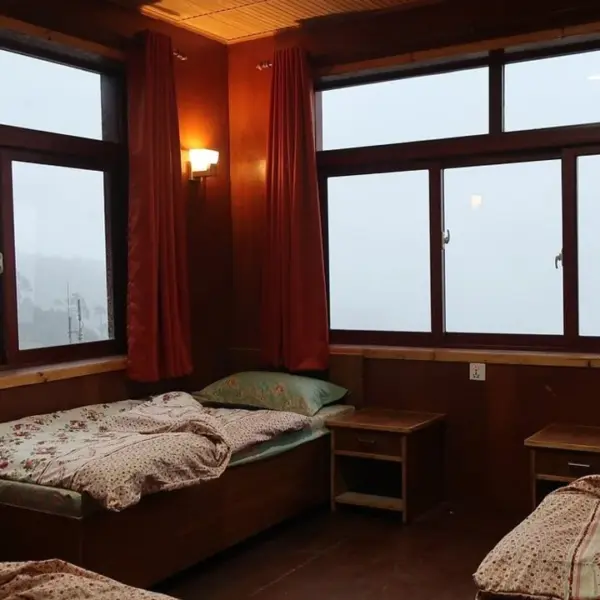
The trek accommodations are in traditional tea houses, small lodges that are operated by locals. The rooms are quite simple, normally twin sharing with beds, blankets, and pillows.
In lower places such as Namche Bazaar at 3,440 m (11,286 ft), amenities are more developed, in many cases including a hot shower.
Further up, things are simpler, and rooms are not heated. Even though tea houses are simple, they are also clean, warm, and welcoming, contributing to the exotic appeal of the Ama Dablam Base Camp Trek.
Altitude, Acclimatisation& Risk of Altitude Sickness
The Ama Dablam Base Camp Trek is carried out in a high-altitude area, and therefore awareness of altitude and acclimatisation is highly significant. The base camp of Ama Dablamat 4,600 m (15,092 ft) is the highest point of the trek.
Oxygen concentration in the air is significantly lower at such altitudes than at sea level, a factor that may lead to Acute Mountain Sickness (AMS). The typical signs are a headache, nausea, dizziness, anorexia, and increased sleepiness.
To minimise them, the Ama Dablam Base Camp Trek itinerary includes an adequate acclimatisation day at Namche Bazaar (3,440 m / 11,286 ft).
The trekkers are advised to walk at a slow pace, maintain a high level of hydration, and adhere to the principle of climb high and sleep low. Health is strictly monitored by guides, and when the symptoms become more serious, the most appropriate option is to reduce the altitude. Most trekkers can safely go through the trek with proper pacing and acclimatisation.
Required Fitness Level & Trek Preparation Tips
You may not be a professional athlete, but you can finish the Ama Dablam Base Camp Trek, though you should be quite fit. The expedition is a 5- to 7-hour daily walk along highland trails, with steep, sharp uphill and downhill sections. Walking fitness is intriguing during long walks, such as the walk to Namche Bazaar and the trek to the Ama Dablam Base Camp.
It is advisable to complete the training 8 to 12 weeks before the trek. Endurance is enhanced through activities such as hiking, brisk walking, cycling, climbing stairs, and swimming. It is also good to do leg and core strength training. Breaking in hiking boots beforehand and practicing with a daypack are highly essential.
Psychological conditioning is also important; amenities are basic; mornings are early and cold. The Ama Dablam Base Camp Trek is a very rewarding mountain and can be accomplished with a steady pace, proper training, and a positive attitude.
Permits, Entry Fees & Nepal Visa Information
Trekking to Ama Dablam Base Camp requires a certain number of permits and a valid Nepal tourist visa.
The initial one is the Sagarmatha National Park Entry Permit. It is a permit that is inspected at Monjo and used to support conservation in the Everest region.
The second is the Khumbu Pasang Lhamu Rural Municipality Permit, also known as the local permit. This permit is issued in Lukla or Monjo and has replaced the former TIMS card for this area.
My Everest Trip (MET) will arrange all the trekking permits for you so that you don’t have to go through the hassle of obtaining the permits.
For Nepal entry, most travelers can obtain a visa at Kathmandu airport. The 13-day trek to the Ama Dablam Base Camp and any additional days should be included in a 30-day visa, which costs around USD 50. The passports should be valid for at least 6 months.
Health, Safety & Emergency Support During the Ama Dablam Base Camp Trek
The Ama Dablam Base Camp Trek takes health and safety very seriously, given the remote, high-altitude terrain. Our guides from My Everest Trip (MET) have experience and are trained in first aid and altitude sickness. They routinely monitor trekkers’ condition, particularly above 3,500 m (11,483 ft), using equipment such as pulse oximeters.
A simple first-aid kit is carried to treat minor problems like headaches, blisters, or stomach aches. Should any major case of altitude sickness, such as HAPE or HACE, develop, the first step is descent, and, if necessary, helicopter evacuation to Kathmandu.
They have clinics and facilities in Pheriche (4,240 m / 13,911 ft), where further medical attention can be sought.
You must have travel insurance that covers high-altitude helicopter rescue. The roads are mostly safe, the locals are very welcoming, and crime is minimal.
With professional guides, acclimatization, and emergency plans, the trekkers can comfortably experience the Ama Dablam Base Camp Trek without apprehension.
Travel Insurance and Coverage
The Ama Dablam Base Camp Trek will require travel insurance due to the remote location and the mountain’s high elevation. It should include at least 6,000 m (19,685 ft) of trekking, emergency medical evacuation, and helicopter rescue, which may be costly in the Everest region.
It is also supposed to include medical treatment, cancellation or interruption of trip, baggage loss, and repatriation. Provider policies (such as World Nomads, Global Rescue, IMG, etc.) are reliable and ensure that they have a presence in Nepal and 24/7 coverage.
Make sure to carry your insurance certificate and your emergency contact’s contact details, and forward them to your trekking agency. Guides are involved in coordinating emergencies, yet the evacuation and treatment costs are covered by insurance.
Travel insurance will be a relief, even if you do not utilize it, and will provide you with peace of mind in the event of unforeseen circumstances during your Ama Dablam Base Camp Trek.
Mobile Network, Internet & Charging Facilities
Connections during the Ama Dablam Base Camp Trek are feasible but limited. In larger villages such as Namche Bazaar (3,440 m / 11,286 ft), there is mobile coverage through either Ncell or NTC, but 3G/4G is available in only a few locations.
The signal is patchy further up at Tengboche or Lobuche. Lodges have Wifi, but this is slow and expensive, particularly above Namche. In tea houses, one can pay a small amount (usually NPR 100-500 / $1-5 per device or hour).
Remote villages are powered by either solar or generators. A power bank is essential, and in cold weather, the batteries must be kept warm.
Although connectivity is sporadic, an emergency communication system provided by a guide is available, making the trek manageable and enhancing the beauty of a digital detox on the Ama Dablam Base Camp Trek.
Language, Culture & Local Etiquette on the Trail
The Ama Dablam Base Camp Trek is also a cultural experience. The Khumbu region is dominated by the Sherpa, who speak Sherpa (influenced by Tibetan) and Nepali, though the majority of the people engaged in tourism speak English. Greetings such as Tashi Delek and Namaste are common.
Tourists must observe Buddhist culture: spin clockwise on prayer wheels, walk clockwise around mani stones, and take off their shoes and hats in monasteries such as Tengboche. In villages and religious places, modest attire is acceptable.
On the trail, uphill walkers should have priority, and should, when yaks or mules go by, stand on the uphill side. Do not litter, do not treat spiritual places carelessly.
Treating people with respect, smiling at them, and requesting their consent to capture photos will enhance positive interactions. With the right attitude, respect for local etiquette, and participation in Sherpa culture, your Ama Dablam Base Camp Trek becomes more valuable and meaningful.
Your Extra Expenses
Although most essentials are included in the package, the Ama Dablam Base Camp Trek requires trekkers to have additional funds. In Kathmandu, meals, beverages, snacks, and hot drinks on the trail can cost 2 to 5 dollars, depending on the level, though they are more expensive at the higher levels.
Using Wi-Fi or charging devices can cost between $ 1 and $ 10 per session. Hot showers, offered at certain lodges, cost NPR 500 (about USD 4-5).
It is acceptable to tip guides, porters, and drivers about 10-15 dollars per day for guides and 7-10 dollars for porters.
Souvenirs in Namche or Lukla can increase costs, and a small emergency fund is prudent in case of flight delays, additional nights, or unexpected purchases.
Money in Nepali Rupees is needed because there are very few ATM beyond Namche. The cost of personal expenses may range from USD 100 to 300, depending on lifestyle, and there will be room to feel comfortable and flexible during the Ama Dablam Base Camp Trek.
Side Trips Around Ama Dablam Base Camp Trek
The Ama Dablam Base Camp Trek also offers several valuable side trips that would be good to include in the program and do not involve any additional technical considerations.
Namche Bazaar offers a few brief walks on the acclimatization day to the Everest View Hotel or to the surrounding villages such as Khumjung and Khunde, where trekkers can see the mountain and learn about the Sherpa culture.
An enriching cultural side activity is a visit to Pangboche Monastery on Day 5 in Pangboche (3,930 m / 12,894 ft), which is the oldest monastery in the Khumbu region.
In Tengboche, trekkers can visit the renowned monastery and watch Everest and Ama Dablam. These are just some side excursions that add a cultural edge and scenic highlights without altering the itinerary of the Ama Dablam Base Camp Trek.
Local festivals such as Mani Rimdu in Tengboche are also timed to coincide with the local festivals. Side trips can add variety to your adventure, but they should be planned carefully to ensure you can maintain acclimatization and safety.
Photography Tips & Drone Regulations in Ama Dablam Base Camp Trek
Ama Dablam Base Camp Trek is one of the places photographers can call heaven, offering dramatic peaks, cultural scenes, and wildlife. The best light is in the early morning and late afternoon, and mountains such as Ama Dablam (6,812 m / 22,349 ft) and Everest (8,849 m / 29,032 ft) are shining brightly.
Use foreground elements such as mani stones, yak caravans, or rhododendrons to create form. Get cultural shots – prayer flags, spinning prayer wheels, and local monks – respectfully, but never without permission, to get close shots.
Avoid photography in cold weather and at high altitude, as it can rapidly drain batteries. Carry additional batteries and memory cards.
Landscapes should use a wide-angle lens; people and scenery, mid-range zoom; and wildlife or peaks, a telephoto lens at a distance.
Sagarmatha National Park is extremely regulated concerning drones. Foreigners must have permission from the authorities, and they cannot fly near villages, people, or animals. In many instances, in-person traditional photography is safer and more spectacular.
What Not to Do on the Ama Dablam Base Camp Trek
In the Ama Dablam Base Camp Trek, it is imperative to respect the mountains, culture, and environment. Do not disregard the rules of acclimatization – when rising too fast, it may cause altitude sickness.
Repeat “bistari, bistari,” which means slowly, slowly, and take a rest. Do not overwork, and do not carry more than you need; porters have their way.
Do not litter or pollute, as the Khumbu is a delicate area. Honor local virtues, take off shoes in monasteries, circumvent Mani walls clockwise, and do not climb holy and sacred things.
Exaggerated bargaining, alcohol, and smoking in elevated areas should also be avoided, as they can aggravate dehydration and altitude problems.
Do not disturb animals or animals, and never walk off-road by yourself. Be in charge of your health, keep hydrated, eat on time, and inform your guide about any problems.
These rules will keep you safe, protect the environment, and treat the locals with respect, making your Ama Dablam Base Camp Trek more fulfilling and interesting.
Trek Extensions After the Ama Dablam Base Camp Trek
Once the Ama Dablam Base Camp Trek is complete, there are several ways trekkers can continue their adventure. Some go to Everest Base Camp (5,364 m / 17,598 ft) and Kala Patthar (5,545 m / 18,192 ft) to see the iconic mountain scenery, or to Gokyo Lakes and Gokyo Ri to explore the turquoise alpine lakes and the Ngozumpa Glacier.
Bold climbers can choose to climb mountains such as Island Peak (6,189 m / 20,305 ft), Lobuche East, or Mera Peak, which require permits, guides, and technical equipment.
Kathmandu Valley offers cultural tours that allow one to visit UNESCO World Heritage Sites such as Bhaktapur, Patan, and Boudhanath. Chitwan Jungle Safari is enjoyed by nature lovers, where rhinos, elephants, and tigers can be seen, whereas relaxation can be found in Pokhara at Phewa Lake, with optional paragliding or short treks such as Poon Hill.
Recovery after trekking can be supported through wellness activities like yoga or Nepali massage.
The extensions will be time-based, seasonal, and permit-based, and My Everest Trip may help you plan your post-trek experience smoothly.
Cultural Festivals on the Trail
The Ama Dablam Base Camp Trek is not merely a mountain climb but also a cultural experience that takes one to the heart of Sherpa land. Trekking in villages such as Namche Bazaar, Tengboche, and Pangboche, trekkers could have the chance to attend Himalayan traditional festivals, depending on the season.
Mani Rimdu is one of the most significant festivals, held at the Tengboche Monastery, where monks perform masked dances, prayers, and rituals to promote peace and compassion. The Ama Dablam Base Camp Trek is particularly unique this season, with various colorful ceremonies set against the spectacular mountain scenery.
Local villages also hold other festivals, such as Dumje and Losar (Tibetan New Year), which are celebrated with prayers, family get-togethers, music, and traditional food. Monastery visits, prayer flags, and chanting are also frequent.
Through these festivals, trekkers gain a better understanding of the Sherpas’ beliefs and Buddhist traditions, as well as their daily life. Festivals in the local areas in the Ama Dablam Base Camp Trek give the journey a cultural meaning and unforgettable memories.
Tips for First-Time Trekkers in Nepal
First-time Ama Dablam Base Camp trekkers must focus on preparation, safety, and fun. Select a reputable trekking firm with a licensed guide, like My Everest Trip (MET), to handle logistics, health, and safety, particularly in high-altitude areas.
Bring the right equipment, including layers of clothing (a waterproof jacket, broken-in boots), a sleeping bag (-15 °C), a small first-aid kit, a headlamp, water purification, and an aid kit.
Pre-train with cardio, stair climbs, and hikes to build endurance before the trek.
I got to Kathmandu a couple of days ago to get over jet lag and attend briefings about the trek.
When on the trail, slow down, drink often (3-4 liters/day), and have small meals to help prevent altitude sickness. Ward off blisters using liner socks and trekking poles.
Be content with a simple tea house. Pay attention to your body for signs of altitude sickness, keep your insurance and documents in hand, and think positively. Absorb the landscape, culture, and fellowship, the experience is even better than the place.
Ama Dablam Base Camp Trek FAQs
What is the age limit of the Ama Dablam Base Camp Trek?
There is no strict age limit. It has been done by trekkers aged 10 to 70, as long as they are in good condition.
What is the age limit of the Ama Dablam Base Camp Trek?
There is no strict age limit. It has been done by trekkers aged 10 to above 70 years of age, as long as they are in good condition.
When will be my first encounter with Mount Ama Dablam?
First glimpse of Ama Dablam can be seen between Phakding and Namche Bazaar, with a better perspective at Namche and even at Tengboche.
Is it possible to customise the Ama Dablam Base Camp Trek itinerary?
Yes. My Everest Trip (MET) can customise your itinerary, including rest days, side trips or extensions like Everest Base Camp.
Is there an option for a solo walk?
Yes. A personal trek can be organised with a personal guide and at the most convenient pace.
Can I do this trek alone?
Although self-guiding is an option, it is highly professional to employ a guide who will provide guidance, know the place, and supply logistics.
What is the maximum weight carried by a porter?
The average weight that porters are expected to carry is 18-20 kg (40-44 lbs),divided between 2 trekkers. It is recommended that one should pack less than 10 kg per person.
Should I give a tip to my guide and porter?
Yes, it is traditional to tip, about 10 per cent of the trek fee, together, based on service and number in a group.
Where shall I leave additional baggage during the trek?
Unnecessary baggage may be stored at your hotel in Kathmandu or by My Everest Trip’s safe storage.
Do they have showers on the trek?
Lower tea houses have hot showers at a minimal charge. An increase in altitude will tend to provide no or bucket-type showers.
Does it offer vegetarian food?
Yes. Every tea house offers vegetarian food, including dal bhat, noodles, and rice.
Is it safe to drink water on the trail?
All water should be treated. Filter with purifying pills or filters or boiled tea house water. Do not use untreated streams or taps.
What is the temperature of the Ama Dablam Base Camp?
Daytime temperatures are 5-10 °C (41- 50 °F), nights are -10 -15 °C (14-5 °F), and the elevation is 4,600 m -15,092 ft. Low winter temperatures may be as low as -20 °C (-4degF).
Can I trek without vaccinations?
Not mandatory vaccinations, but it is better to have regular vaccinations like Hepatitis A, Typhoid and Tetanus.
Does the route have medical facilities?
There are basic clinics at Namche and Pheriche, andLukla has a small hospital. Cases that are severe need to be evacuated to Kathmandu.
Is it possible to purchase/renting trekking gear in Kathmandu?
Yes. The Thamel section of Kathmandu has several locations that sell or rent gear such as sleeping bags, jackets, trekking poles, among others.
What would I bring on the trek?
Pack thermal and waterproof, sturdy boots, gloves, hats, sun protection, trekking poles, a headlamp, water purification, a first aid kit, and necessities in a light daypack.
Are there weight restrictions in flights to Lukla?
Yes, 15 kg (33 lbs) including duffel and carry-on. Excess baggage incurs fees.
What currency should I bring?
Bring Nepalese Rupees to carry on the trek. There are not many ATMs on the trail, except Namche, which is not reliable.
Is it advisable that I make a reservation for the trek?
Yes, particularly in the season, to book Lukla flights and permits.
Is solo trekking as a female safe?
Yes. It is better to go trekking with a leader or group. Generally, the region is safe, and locals are friendly.
What is the number of hours I am going to walk per day?
On average, 5-6 hours. There are shorter and longer days (3-4 hours and 7-8 hours, respectively) depending on terrain.
What is the highest elevation of the trek?
Ama Dablam Base Camp at 4,600 m (15,092 ft) is the highest elevation of the trek.
Will I see Mount Everest?
Yes. In Namche Bazaar, Everest View Hotel/Syangboche and Tengboche, the views should be seen as long as the weather is clear.
Is this trek not as crowded as Everest Base Camp?
Generally, yes. Areas beyond Pangboche to Ama Dablam Base Camp are not as busy as the main EBC trail.
Is this trek possible fora beginner?
Yes, through careful preparation, physical conditioning and a well-trained guide. It is necessary to walk slowly.
Do you need trekking poles?
Strongly suggested to provide balance and knee support when climbing sharp descents and rugged terrain.
What happens in case my flight to Lukla is canceled/delayed?
Flights are dependent on the weather. Delays are common. Other options are waiting until the next slot or flying by helicopter, provided it is organised.
Will high altitude have any effect on sleep or appetite?
Yes. Difficulties with sleep and appetite are typical at altitude. When it is acclimatised properly, it helps.
Are rest days included?
Yes. The normal itinerary involves an acclimatisation day at Namche Bazaar, with the additional rest days optional in case of necessity.
Will I encounter wildlife?
Yes. Himalayan tahr, musk deer, danphe and pheasants, yaks and other birds can be found in Sagarmatha National Park. Snow leopards are very few in number and rare.
US$ 1,100 per person
- Best Price Guarantee
- Secured Payment System
- Tailored and Personalized Itinerary
- 70% repeat customers

24 X 7 Live Support

Puru (+977-9851069558)
Related Trips


Recent From Our Blog Places of attractions, travel tips, news and more.
Everest, Blog
Accommodation on Everest Base Camp Trek
Accommodation is a major trekking concern, especially in remote Himalayan areas like the Everest Region.…
Read the full post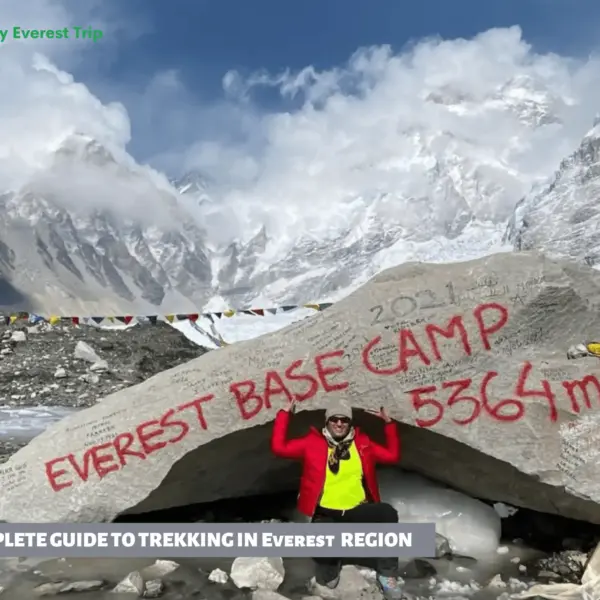
Everest, Blog, Trekking in Nepal
A Complete Everest Trekking Guide
Everest Trekking Guide A Complete Everest Trekking Guide is many treks globally, but none are…
Read the full post
Blog, Everest, Trekking
Everest Base Camp Elevation Guide
Everest Base Camp Elevation is always on top of anyone’s mind; everyone dreams of being…
Read the full post