




When people talk about the world’s tallest mountains, Mount Everest is usually the first name that comes to mind. It is the highest point above sea level, but it is only one of fourteen peaks that rise above 8,000 meters. The other major summits are found across the Himalaya and Karakoram ranges of Asia.
This guide ranks the top ten by elevation above sea level. It also explains where each mountain stands, how high it is, when it was first climbed, and why it matters in mountaineering and local geography. The list follows the classic ranking of the principal 8,000-meter peaks. Heights may differ by a few meters between surveys, especially when sources use different measurement methods.
The highest mountains on Earth are not automatically the easiest or hardest to climb in ranking order. Height is only one part of a mountain’s character. Weather, route design, avalanche exposure, technical terrain, remoteness, and rescue access all shape the expedition experience.
This list of the tallest mountains in the world is arranged by summit elevation, not by the height of the mountain above its surrounding valley. They are concentrated in a small part of Asia, where major tectonic forces have created long, high ranges.
Quick Overview of the 10 Highest Mountains in the World
| Rank | Mountain | Height | Location | Range |
| 1 | Mount Everest | 8,848.86 m | Nepal and Tibet, China | Himalaya |
| 2 | K2 | 8,611 m | Pakistan and China | Karakoram |
| 3 | Kangchenjunga | 8,586 m | Nepal and India | Himalaya |
| 4 | Lhotse | 8,516 m | Nepal and Tibet, China | Himalaya |
| 5 | Makalu | 8,485 m | Nepal and Tibet, China | Himalaya |
| 6 | Cho Oyu | 8,188 m | Nepal and Tibet, China | Himalaya |
| 7 | Dhaulagiri I | 8,167 m | Nepal | Himalaya |
| 8 | Manaslu | 8,163 m | Nepal | Himalaya |
| 9 | Nanga Parbat | 8,126 m | Pakistan | Himalaya |
| 10 | Annapurna I | 8,091 m | Nepal | Himalaya |
The International Climbing and Mountaineering Federation, known as the UIAA, recognizes the classic fourteen 8,000-meter mountains. It also notes that climbers and geographers continue to discuss what makes a summit an independent mountain rather than a subsidiary point on a larger massif.
1. Mount Everest: 8,848.86 Metres
Mount Everest is the highest of the tallest mountains in the world. It stands on the border between Nepal and the Tibet Autonomous Region of China. In Nepal, it is called Sagarmatha, while in Tibetan, it is Chomolungma. Nepal and China agreed on the officially announced height of 8,848.86 meters in 2020.
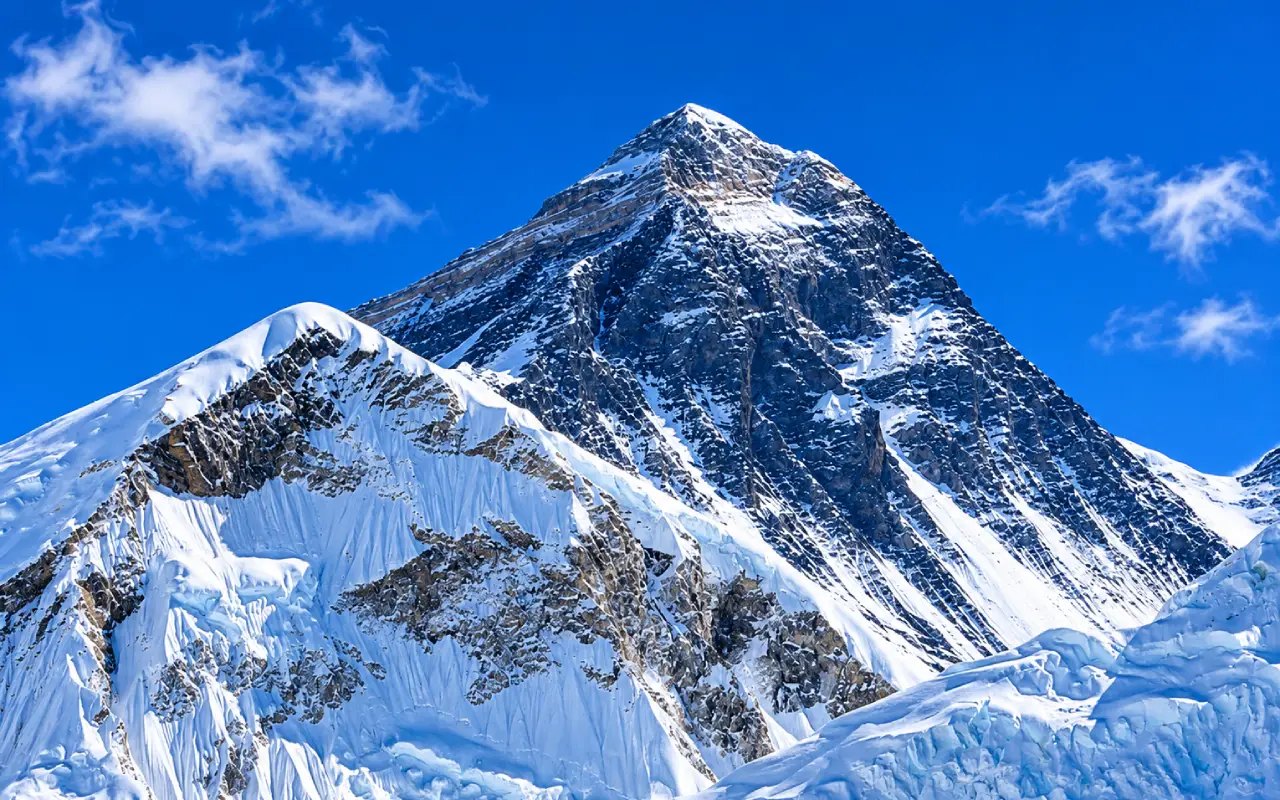
Everest belongs to the Mahalangur section of the Himalaya. The mountain has two main expedition approaches. The southern path starts in Nepal and goes through the Khumbu Valley, whereas the northern path starts on the Tibetan side. The Nepal route is well known for the Everest Base Camp trek and the large number of expeditions using the Khumbu approach.
The first successful ascent occurred on 29 May 1953, when New Zealand climber Edmund Hillary and Nepalese Sherpa guide Tenzing Norgay were the first to summit. Their success followed decades of exploration and earlier attempts. They used the South Col route, which remains one of the main climbing lines on Everest.
Everest is not technically the most difficult mountain on the list, but its altitude creates serious risks. Above 8,000 meters, the body cannot acclimatize fully. Cold, wind, low oxygen, exhaustion, and changing weather make both the ascent and descent dangerous. Commercial support has improved access, but it has not removed the need for experience, careful decisions, and respect for the mountain.
The Everest Base Camp trek provides access to the Khumbu area and views of the summit from trails near Namche Bazaar, Tengboche, and Kala Patthar, and it is available to travelers who do not plan to climb. A Base Camp trip does not include the summit, but it offers good views of the valleys, glaciers, villages, and climbing history surrounding the mountain.
2. K2: 8,611 Metres
K2 is the world’s second-highest mountain and the tallest peak in the Karakoram. It stands on the border between Pakistan and China. The mountain’s height is generally given as 8,611 metres, or 28,251 feet.
The name K2 came from the notation used during the Great Trigonometrical Survey of British India. The letter K referred to the Karakoram range and the number identified the peak in the survey sequence. Unlike several other major peaks, the survey name remained in common use rather than being replaced by a widely accepted local name.
Everest Base Camp Trek – 12 Days
When people talk about the world’s tallest mountains, Mount Everest is usually the first name that comes to mind. It is the…
K2 is often considered more technically demanding than Everest. The Abruzzi Spur, the most common route, includes steep rock, snow, ice, exposed ridges, and sections where climbers must move carefully beneath unstable seracs. The mountain also has a reputation for sudden weather changes and difficult descent conditions.
An Italian expedition led by Ardito Desio made the first confirmed ascent in 1954. Achille Compagnoni and Lino Lacedelli reached the summit on 31 July. The expedition approached the mountain from the Pakistan side through the Baltoro region.
The Karakoram setting adds to the logistical challenge. Climbers travel through remote valleys before reaching Base Camp, and rescue options are more limited than on Everest’s most developed routes. The mountain’s height is impressive, but its steep terrain and weather are what give K2 its reputation among experienced mountaineers.
3. Kangchenjunga: 8,586 Meters
Kangchenjunga is the world’s third-highest mountain and the highest in India. It stands on the Nepal–India border, between eastern Nepal and the Indian state of Sikkim. Its main summit reaches 8,586 meters.
The name is often translated as “The Five Treasuries of the Great Snow,” referring to the mountain’s five principal peaks. The massif has a complex structure, with long ridges and several high summits. The mountain is located about 120 kilometers southeast of Everest.
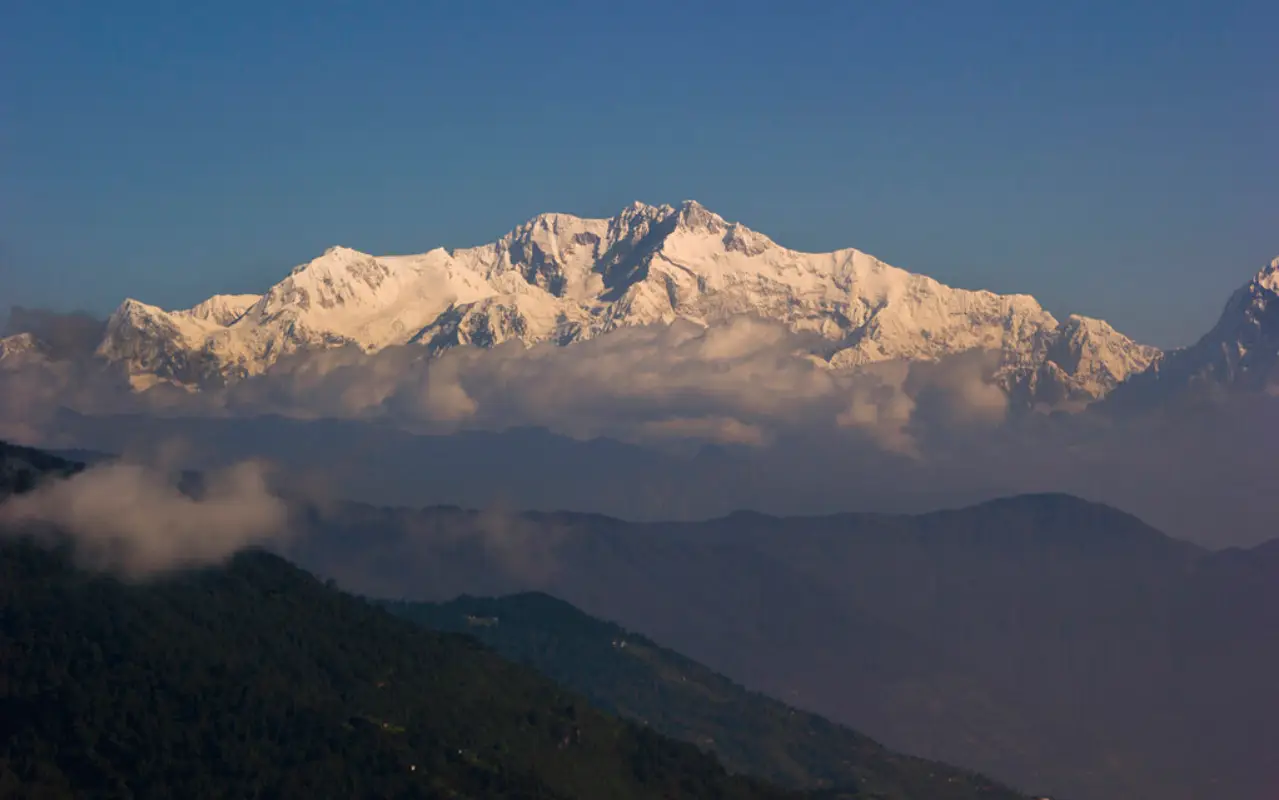
Kangchenjunga was thought to be the world’s highest mountain until the Great Trigonometrical Survey established that Everest was higher. The mountain’s position near Sikkim and Nepal has given it a strong cultural and spiritual importance. Local traditions regard the summit as sacred.
The first ascent took place in 1955 when British climbers Joe Brown and George Band reached just below the summit on 25 May. They stopped short of the top, keeping their promise to local authorities and local religious traditions, which regard the mountain as sacred. The following day, Norman Hardie and Tony Streather reached the summit.
The mountain is known for steep faces, avalanche-prone slopes, complex route finding, and difficult weather. It is less frequently visited than Everest, partly because of access restrictions and the greater commitment required from expedition teams. The approaches on the Nepal and India sides each offer different logistical and climbing conditions.
4. Lhotse: 8,516 Metres
Lhotse is the world’s fourth-highest mountain. It connects to Everest via the South Col and stands on the Nepal–China border. Its main summit is 8,516 meters high.
The name Lhotse means “South Peak” in Tibetan. Its position immediately south of Everest explains the name and also explains why the two mountains share much of the approach from Nepal. Climbers on the Everest route pass through the Khumbu Icefall and Western Cwm before the Lhotse Face becomes part of the route toward Lhotse’s summit.
The first successful ascent of the main summit took place in 1956. Swiss climbers Ernst Reiss and Fritz Luchsinger reached the top on 18 May. The Lhotse Face remains a major technical feature, rising above the upper Western Cwm in a steep wall of blue ice.
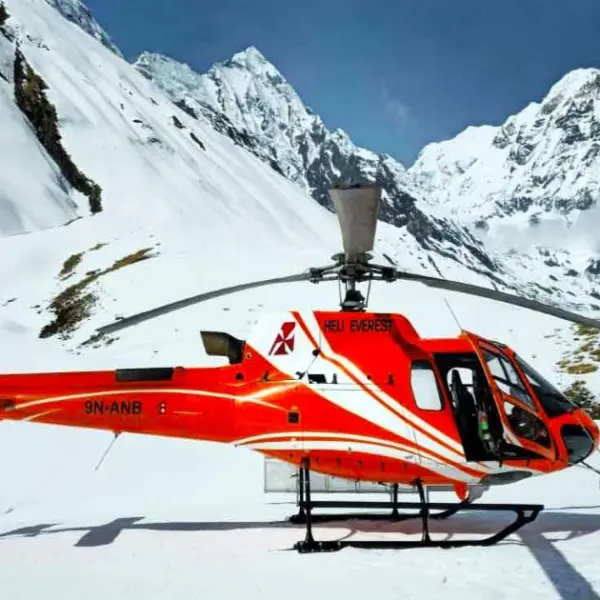
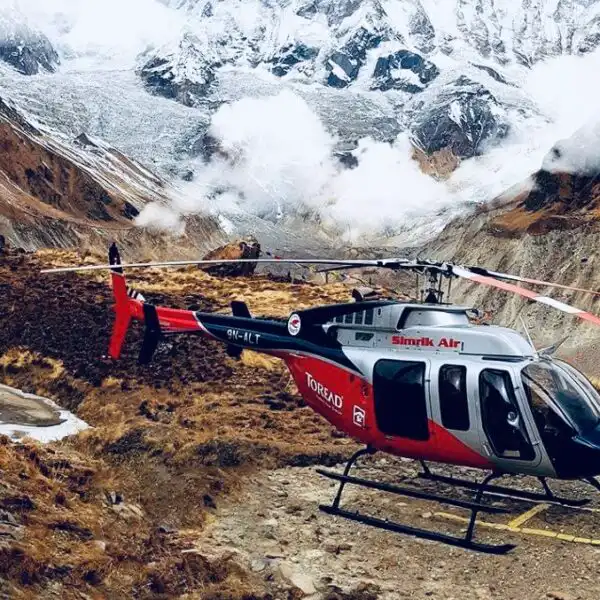
Annapurna Base Camp Helicopter Tour
When people talk about the world’s tallest mountains, Mount Everest is usually the first name that comes to mind. It is the…
Lhotse is sometimes overshadowed by its taller neighbour, but it is a separate expedition objective with its own risks. The final route to the main summit turns away from the Everest line and enters the Lhotse Couloir. Steep climbing, altitude, and exposure make the upper section demanding.
The mountain has several subsidiary summits, including Lhotse Middle and Lhotse Shar. Discussions about whether certain high points should be counted as independent peaks show why the definition of a mountain is not always simple. The UIAA continues to recognize the classic fourteen rather than expanding the list to every measured point above 8,000 meters.
5. Makalu: 8,485 Meters
Makalu ranks fifth among the world’s tallest mountains. It rises to 8,485 meters on the Nepal–China border, about 22 kilometers southeast of Everest. The mountain is part of the Mahalangur Himalaya.
Makalu has a distinct four-sided pyramid shape. Its steep ridges and exposed upper slopes make it look different from the broad snow mass of many other Himalayan peaks. The mountain is surrounded by remote valleys and is approached from the Makalu Barun region of Nepal.
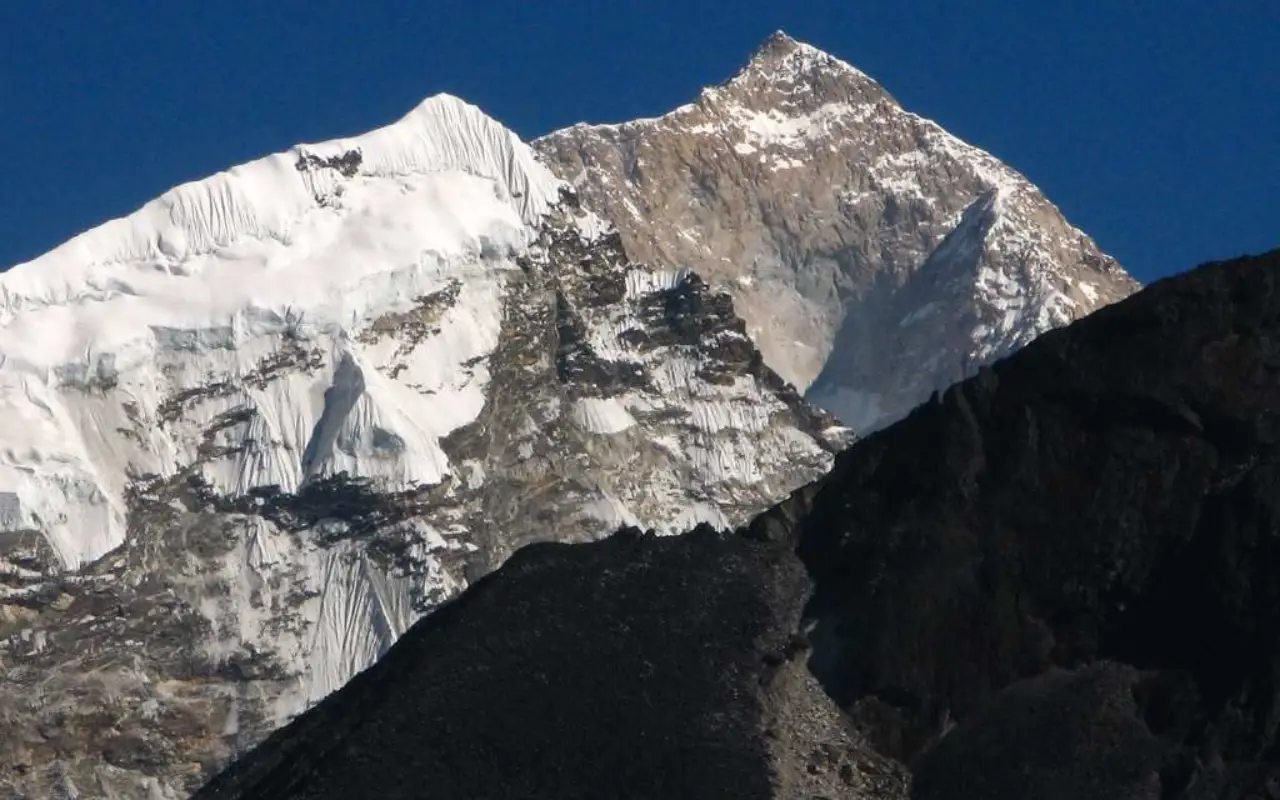
A French expedition made the first ascent in 1955. Lionel Terray and Jean Couzy reached the summit on 15 May, followed by other team members over the next two days. The success was unusual for its time because several climbers from the same expedition reached the summit.
Makalu’s normal routes include steep snow and ice, exposed ridges, and sections of mixed climbing. The mountain receives fewer expeditions than Everest, so teams often work in a more remote setting with less fixed infrastructure. Weather and route conditions can change quickly on the upper slopes.
6. Cho Oyu: 8,188 Meters
Cho Oyu is the sixth-highest mountain and one of the highest mountains on Earth. It stands on the Nepal–China border west of Everest and reaches 8,188 meters. The mountain is part of the Khumbu section of the Himalaya and lies near the Nangpa La pass.
The name Cho Oyu is commonly translated as “Turquoise Goddess,” although interpretations of Himalayan mountain names can vary. You can access the mountain’s northwest side from Tibet, while the southern side connects to the Nepalese Khumbu region.
When people talk about the world’s tallest mountains, Mount Everest is usually the first name that comes to mind. It is the…
The first ascent took place in 1954, when an Austrian expedition reached the summit. Herbert Tichy, Joseph Jochler, and Sherpa Pasang Dawa Lama completed the climb on 19 October. Their route used the northwest face and northwest ridge.
Cho Oyu is often described as one of the less technically difficult 8,000-meter mountains because its standard route has comparatively moderate slopes. That description should not be mistaken for easy. The summit is still more than 8,000 meters high, and climbers face low oxygen, cold, crevasses, avalanche risk, and the need for careful acclimatization.
Access rules on the Tibetan side can affect expedition planning. A team must verify border conditions, permits and travel regulations, and local decisions before committing to a route. A technically moderate mountain may be challenging to reach and climb.
7. Dhaulagiri I: 8,167 Meters
Dhaulagiri I is the seventh-highest mountain in the world. Its summit reaches 8,167 meters, and the entire mountain lies in Nepal. The name comes from Sanskrit words often translated as “White Mountain.”
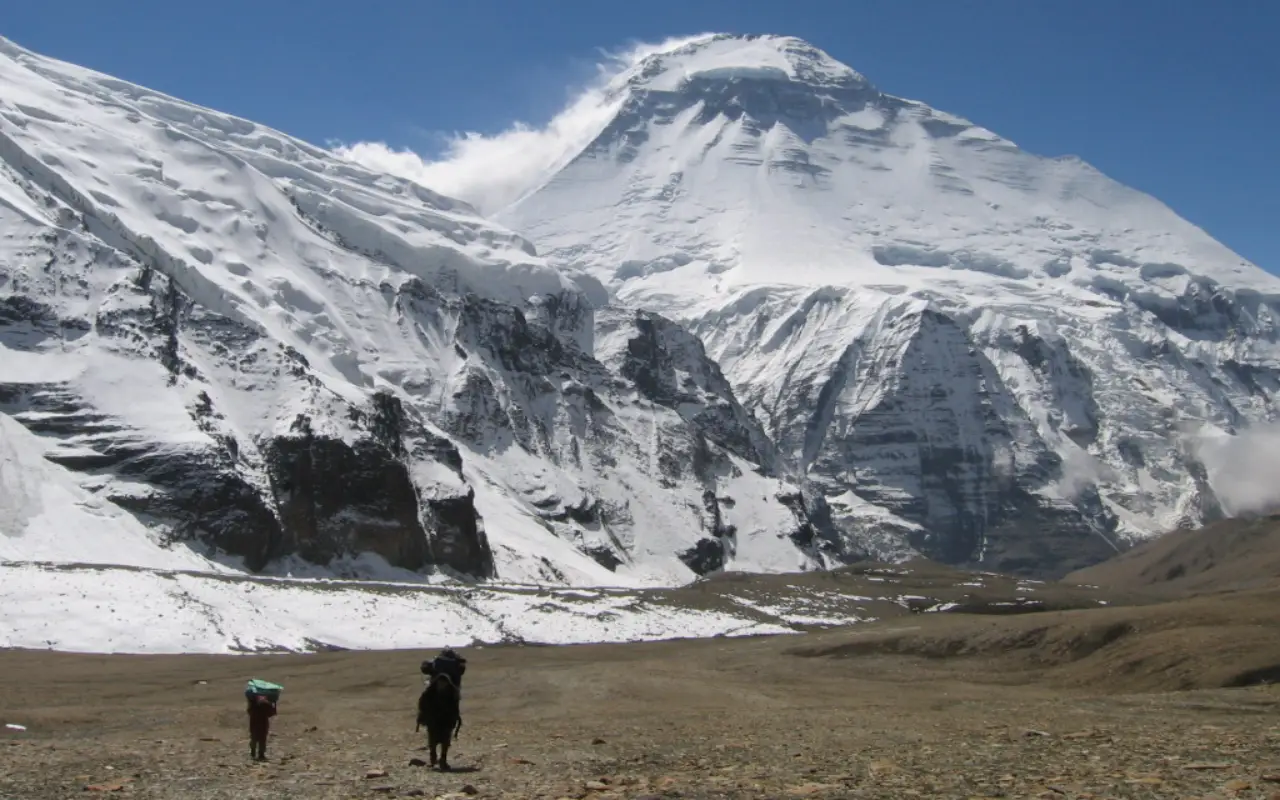
Dhaulagiri stands west of the Annapurna range, with the Kali Gandaki valley separating the two great massifs. The valley is often described as one of the world’s deepest gorge systems when measured between the surrounding high peaks and the river corridor.
The first successful ascent took place in 1960. A Swiss-Austrian-Nepali expedition reached the summit on 13 May, using a route through the northeast ridge area. Earlier attempts had struggled with the mountain’s steep faces, unstable snow, and difficult access.
The Dhaulagiri Circuit is a remote and demanding trekking route through high mountain valleys. The itinerary usually includes the French Pass, which reaches approximately 5,360 meters, although route conditions and the trekking schedule can affect the journey. Trekkers need proper acclimatization, suitable equipment, and an experienced support team for this challenging route.
8. Manaslu: 8,163 Meters
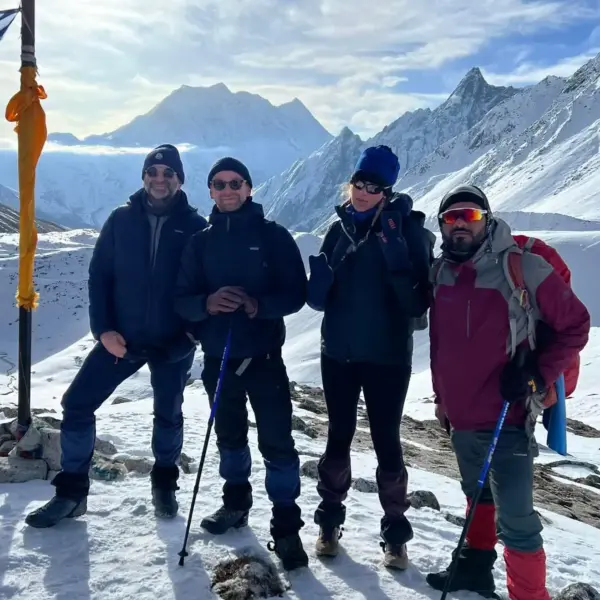
Manaslu is the eighth highest of the highest mountains on Earth. It reaches 8,163 meters and lies in Nepal’s Gorkha District. The name comes from the Sanskrit word “manasa,” commonly associated with the meaning “intellect” or “soul.”
When people talk about the world’s tallest mountains, Mount Everest is usually the first name that comes to mind. It is the…
The mountain rises within the Mansiri Himal, west of the main Everest region. It is surrounded by long ridges, glaciers, and deep valleys. The Manaslu Circuit trek has made the region more accessible to trekkers, although the route remains more remote than the classic Everest or Annapurna circuits.
The first ascent was completed in 1956 by Toshio Imanishi and the Nepali climber Gyalzen Norbu, members of a Japanese expedition. Earlier attempts had faced local opposition and difficult conditions. The history reflects the importance of understanding local communities and religious beliefs when organizing expeditions.
Climbers with previous high-altitude experience often choose Manaslu as a stepping stone toward an 8,000-meter objective. The normal route includes glaciers, steep snow, crevassed terrain, and avalanche exposure. Autumn is a common expedition season, although exact conditions vary from year to year.
9. Nanga Parbat: 8,126 Meters
Nanga Parbat is the ninth highest mountain in the world and one of the most prominent peaks in the western Himalaya. It reaches 8,126 meters in Pakistan’s Gilgit-Baltistan region. The mountain stands at the western end of the Himalaya.
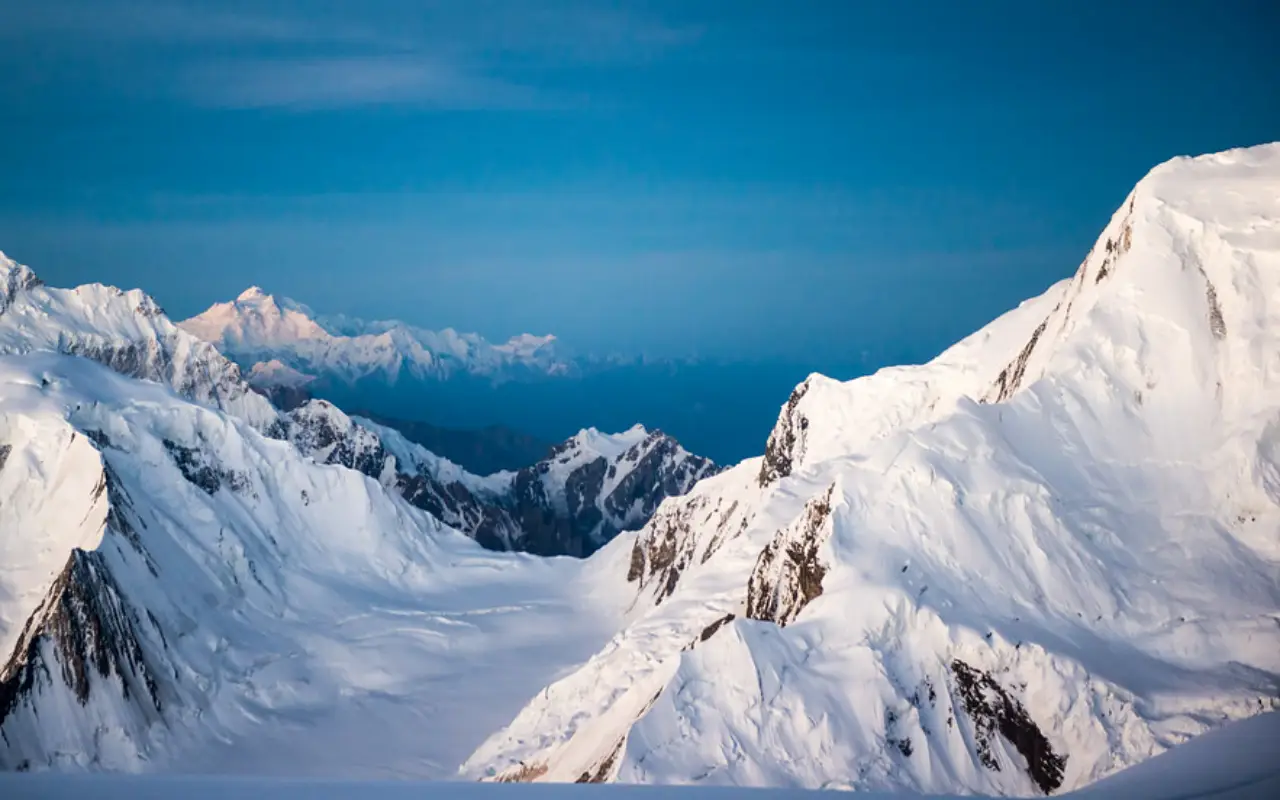
The name is derived from Sanskrit words often translated as “Naked Mountain.” Its local name, Diamer, is associated with a large or great mountain. Nanga Parbat rises dramatically above surrounding valleys, giving it an imposing appearance from several approaches.
The Rupal Face is one of its best-known features. It rises roughly 4,600 meters above the valley and is often described as one of the highest mountain faces on Earth. The mountain also has the Diamir Face, which has hosted important climbing routes.
The first successful ascent took place in 1953, when Austrian climber Hermann Buhl reached the summit alone after his team’s support had ended. His ascent is regarded as one of the major achievements in high-altitude climbing history.
10. Annapurna I: 8,091 Meters
Annapurna I completes this list of the world’s ten highest mountains, reaching 8,091 meters. It lies in north-central Nepal and is the highest point of the Annapurna massif. The mountain is well known for both its climbing history and the trekking routes that circle the wider range.
Annapurna I was the first 8,000 metre mountain to be climbed. A French expedition led by Maurice Herzog reached the summit on 3 June 1950. Herzog and Louis Lachenal made the ascent, although both suffered severe frostbite during the descent.
The mountain’s steep faces, glaciers, seracs, and avalanche exposure make it a serious expedition objective. Historical statistics about Annapurna’s danger are often repeated, but comparisons can be misleading if the time period, route, number of attempts, and definition of a successful summit are not stated clearly. Risk changes as equipment, weather forecasting, route preparation, and expedition practices change.
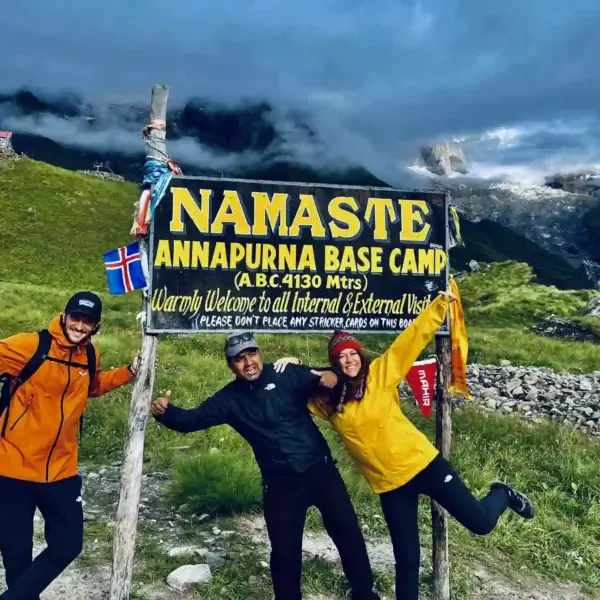
The Annapurna Circuit and Annapurna Base Camp treks are much more common than summit expeditions. They offer views of Annapurna I and neighboring peaks from trails through valleys, villages, forests, and high passes. A trek around the massif does not require the technical skills needed for a summit attempt, but it still requires preparation for altitude and changing mountain weather.
What Are the 8,000 Meter Peaks?
The term 8,000-meter peaks refers to the fourteen principal mountains with summits above 8,000 meters. All fourteen are located in the Himalaya or Karakoram ranges of Asia. The UIAA recognizes the classic list of Everest, K2, Kangchenjunga, Lhotse, Makalu, Cho Oyu, Dhaulagiri I, Manaslu, Nanga Parbat, Annapurna I, Gasherbrum I, Broad Peak, Gasherbrum II, and Shishapangma.
These peaks are often discussed together because they share extreme altitude, but each mountain has a different route and climbing history.
12 Days Annapurna Base Camp Trek
When people talk about the world’s tallest mountains, Mount Everest is usually the first name that comes to mind. It is the…
The number fourteen is not simply a list of every point that measures above 8,000 meters. Some high subsidiary summits are connected to larger mountains and do not have enough independence to be treated as separate principal peaks. This is why the UIAA has retained the classic list while acknowledging an ongoing discussion about prominence and mountain identity.
The Himalaya and Karakoram formed through the collision of the Indian Plate with the Eurasian Plate around 40 million years ago. The impact raised the Earth’s crust, forming the high mountain ranges we have today. Upward movement still continues, and erosion, glaciers, and weather slowly carve the peaks and the valleys.
Height Is Not the Same as Difficulty
The world’s tallest mountains are ranked by altitude above sea level. It does not rank the peaks by technical difficulty, safety, climbing success, or popularity.
Height alone cannot explain why some of the tallest mountains in the world are visited by trekkers while others are attempted only by experienced expedition teams.
K2 is lower than Everest but is widely considered more technical on its standard route. Annapurna I is lower than Manaslu, yet its avalanche exposure and historical expedition record have made it one of the most serious 8,000-meter objectives. Cho Oyu is often described as less technical than several other peaks, but its extreme altitude remains a major danger.
A mountain’s difficulty also depends on the selected route. A broad label such as “easy” or “hard” can hide important details about glacier travel, fixed ropes, weather, permits, approach distance, rescue access, and the experience of the expedition team.
Why Are All Ten in Asia?
The highest mountains on Earth are concentrated in two connected mountain systems: the Himalaya and the Karakoram. The Himalaya stretch across several countries, including Nepal, India, Bhutan, Pakistan, and China. The Karakoram lies mainly in Pakistan, India, and China.
The highest mountains on Earth also cross several national borders, so access, permits, and travel arrangements vary from one peak to another.
These ranges contain some of the youngest and fastest-rising mountains on the planet. The continuing collision of tectonic plates pushes the land upward, while erosion, glaciers, earthquakes, and weather reshape the peaks and valleys.
Other continents have very high mountains, but none reaches the 8,000-meter level. Aconcagua in South America, Denali in North America, Kilimanjaro in Africa, Elbrus in Europe under the common geographic convention, and Mount Vinson in Antarctica are the highest peaks on their respective continental lists, but they are lower than every peak in this top ten.
Planning a Visit to See These Mountains
People do not need to attempt a summit to experience the world’s major peaks. Treks to Everest Base Camp, Annapurna Base Camp, the Annapurna Circuit, Manaslu, and Dhaulagiri offer views from safer and more accessible routes. In Pakistan, the Baltoro trek provides access to the landscapes around K2, Broad Peak, and the Gasherbrum group without requiring a summit expedition.
We advise selecting a route based on your fitness, time of year, and interest in culture or scenery. Even a high-altitude trek will require acclimatization, the right gear, travel insurance, and a guide or support team who knows the area well.
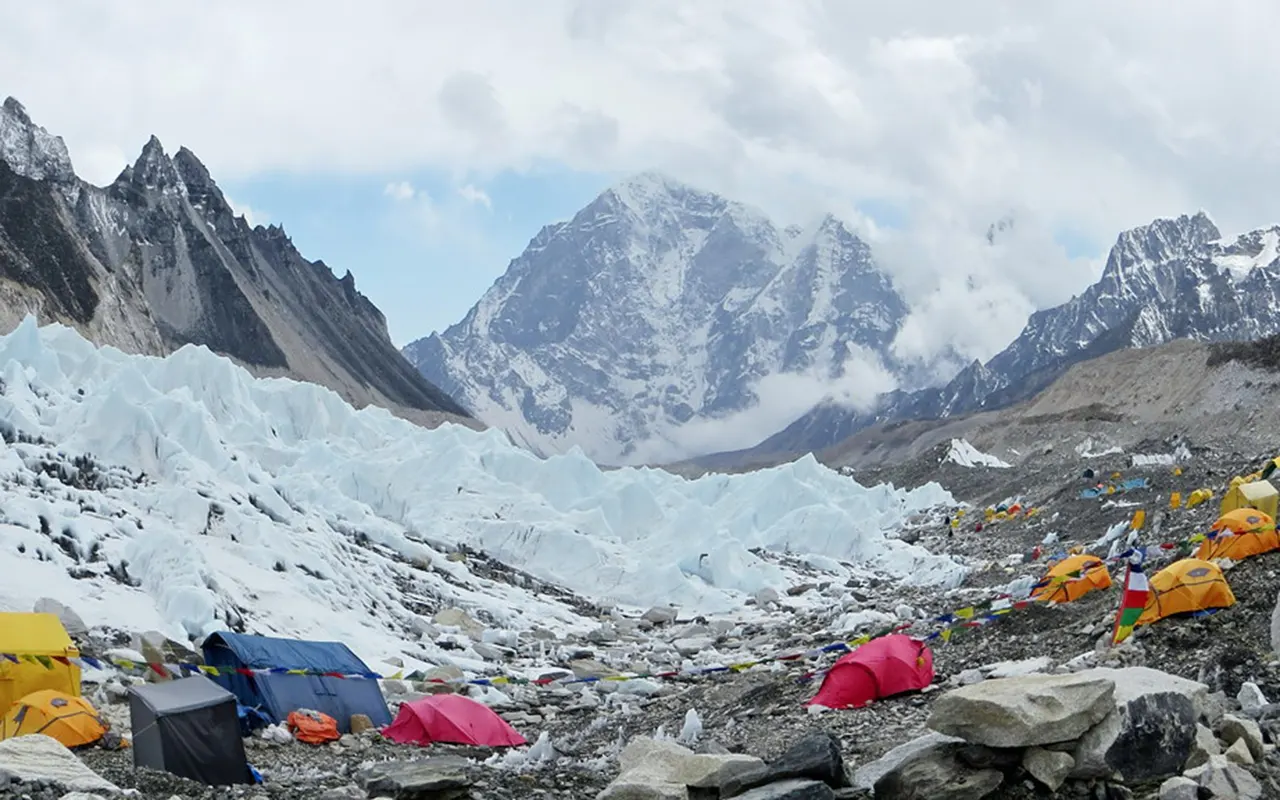
For a climbing expedition, preparation is much more demanding. Climbers must practice on snow and ice, have glacier-travel skills, understand altitude, be physically conditioned, have appropriate equipment, and work with a team that has a clear safety system. The presence of fixed ropes, porters, high altitude workers, or bottled oxygen does not remove the need for individual judgment.
Final Thoughts
The world’s tallest mountains are more than a ranking of numbers. Each mountain has its history, geography, culture, the nature of the route, and association with the people living in the area.
Mount Everest is the tallest, and K2 is considered technically challenging. Kangchenjunga is deeply spiritual. Lhotse shares the Everest region but presents a separate climbing challenge. Makalu and Dhaulagiri are known for steep and remote terrain, while Manaslu and Annapurna combine significant climbing history with popular trekking routes.
The world’s 8,000-meter peaks show how elevation, geology, weather, and human ambition meet in one part of the world. Whether you visit them on a trekking route, study their formation, or follow their expedition history, it is useful to look beyond the height printed beside each name.
These high mountains remain important not only to climbers but also to geographers, local communities, researchers, and travelers who explore the surrounding valleys.
For travelers planning a mountain journey, our team can help match the route to your experience and schedule. We will explain the permits, walking days, seasons, and safety arrangements before you travel.